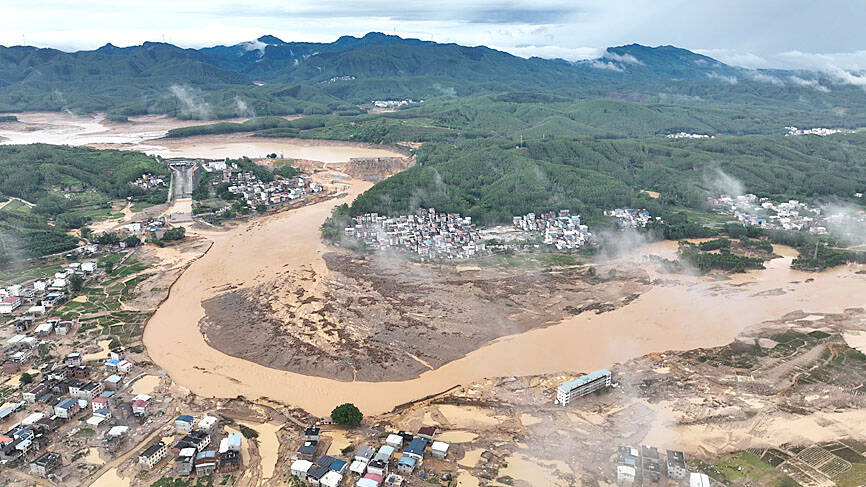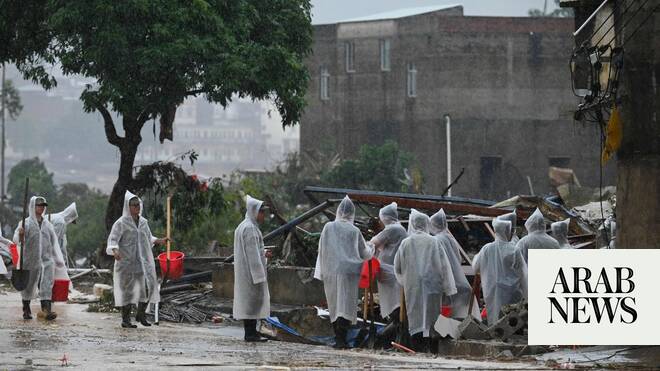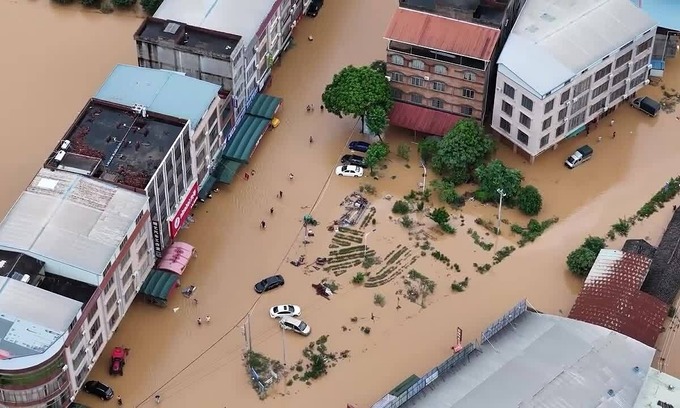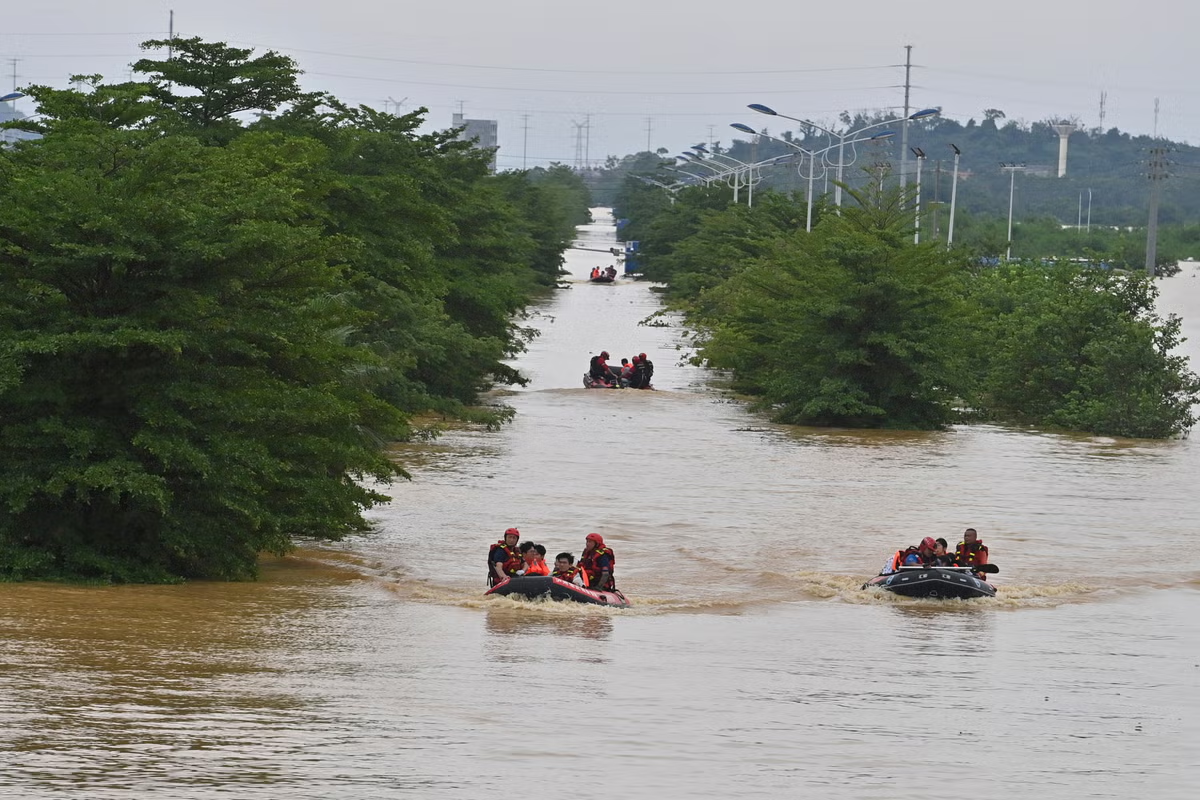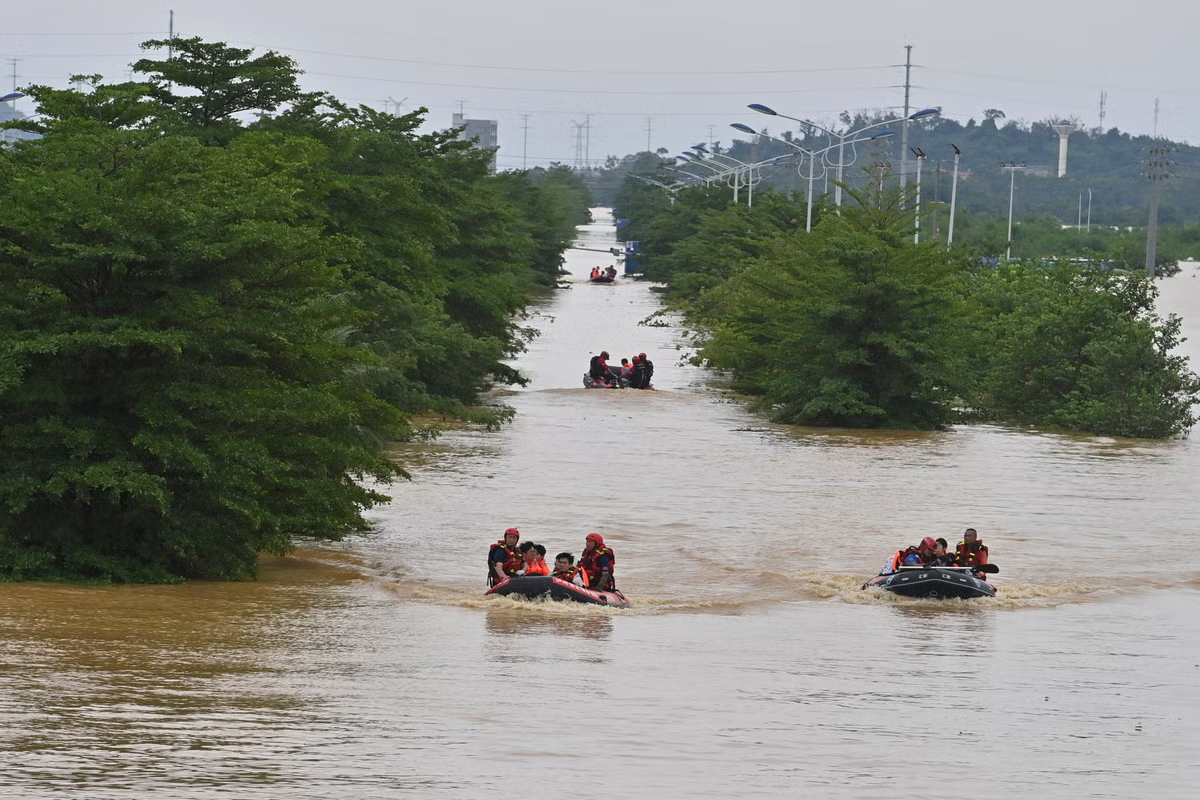
The death toll from flooding triggered by Tropical Storm Maysak in southern China has risen to 39, with nine people still missing, as the country braces for a second powerful storm bearing down on its eastern coast.Most of the deaths were linked to the breach of the Liulan reservoir in Nanning, the capital of the Guangxi Zhuang autonomous region, which claimed 26 lives, Ding Wei, the city's vice mayor, said. The previously announced death toll had been six. Nine people remain missing across the region, according to state news agency Xinhua.Maysak brought record rainfall to Guangxi, with cumulative rainfall of 10-40cm in some areas and more than 90cm in the hardest-hit locations, according to the National Meteorological Centre. The deluge breached reservoirs and left people stranded for days in homes and other buildings across the region, which borders Vietnam.More than 8,000 rescue workers and 5,700 boats have been deployed, with teams battling strong currents and debris to reach trapped residents. Drones have also been used in the operation. About 130,000 people have been evacuated across the region. Mr Ding said floodwaters were receding but more rain was expected in some areas over the next two days. Crews have been deployed to clear mud and debris and disinfect several towns in the hard-hit Hengzhou city, which is part of Nanning, and electricity has been restored to nearly 60,000 homes.The floods caused the walls of a snake breeding farm to collapse, allowing nearly 900 reptiles to escape in Hengzhou. Authorities deployed emergency teams to capture the reptiles and warned local residents to avoid flooded areas.Rescue workers evacuate residents after floods hit Yuzhong county in China's northwest Gansu province (AFP/Getty)China has been hit by successive weather disasters this week. At least 21 people were killed in a landslide in the northwestern province of Gansu on Tuesday, while thunderstorms and gale-force winds killed 11 people and injured more than 330 in the central province of Hubei.The country now faces a further threat. Super Typhoon Bavi, one of the most powerful storms in the region in years, is forecast to skirt northern Taiwan before making landfall in China's eastern Fujian province on Saturday evening. Scientists have warned the storm has been intensified by ocean surface temperatures running 2 to 3 degrees Celsius above average across the western Pacific, and that its damage "could be catastrophic" when it reaches land.
Death toll from China floods rises to 39 as Typhoon Bavi threatens more devastation
At least 26 deaths linked to breach of Liulan reservoir in Nanning city
394 words~2 min read