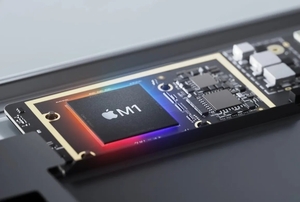
When Apple raised MacBook and iPad prices by up to 20 per cent in June, wiping US$263 billion (S$340 billion) off its market value in a day, it blamed “unsustainable” memory prices. Then it went to Washington to ask permission to buy dynamic random-access memory (DRAM) from a Chinese company sitting on a Pentagon blacklist.Kim Yang-paeng, a semiconductor researcher at South Korea’s state-run Korea Institute for Industrial Economics and Trade, does not think Apple actually wants to buy these chips. He thinks it wants to be seen trying.“From the consumer’s point of view, when prices go up 20 or 30 per cent, it looks like all of that is going straight into Apple’s pocket,” Kim told The Korea Herald. Apple, he said, can now tell a better story: That it shouldered political risk, went looking at Chinese memory and found nothing it could use.The Financial Times reported on July 8 that Apple has begun testing DRAM from ChangXin Memory Technologies (CXMT) for devices sold in China. Bloomberg had already reported earlier that chief executive Tim Cook took the case personally to Trump administration officials.The sell-off showed how seriously the market took the threat. Even after Samsung Electronics reported the best quarter in its history, its shares fell 6.25 per cent and SK hynix fell 5.68 per cent on July 8, because investors were not pricing the record earnings. They were pricing the possibility that South Korea’s grip on memory had finally found a challenger.The AI memory squeezeFor most of the last two decades, Apple sold memory the way airlines sell legroom. Base configurations stayed lean. Customers who wanted more paid a premium, and the premium was almost pure margin.Apple Intelligence ended that. Language models running on the device need their weights held in memory rather than pulled from storage, which is too slow, so Apple had to raise the floor on almost every product. The MacBook Air jumped from 8GB to 16GB in late 2024 with no change to its US$999 price, the first time Apple had ever doubled a Mac’s base memory outright.Such decisions repeated across multiple product line-ups mean Apple now buys far more DRAM per device than it did in 2023. And it buys into a shortage: Contract prices rose roughly 95 per cent quarter on quarter in early 2026, according to UBS, which expects the squeeze to last until at least late 2027.Three companies supply most of that memory. Two of them are from South Korea. Apple, in other words, is paying soaring prices to suppliers it cannot easily replace, and CXMT is its attempt to find a fourth.China isn’t ready – yetThat attempt runs into a wall, and the wall has two sides.The first is the chips. Apple’s testing, said Ray Wang, who leads memory coverage at SemiAnalysis in Seoul, looks “closer to early-stage qualification than a near-term move toward commercial adoption”. Even that may not go far. “We do not expect meaningful adoption of CXMT’s Low-Power Double Data Rate (LPDDR) products at this stage, given the significant risk of geopolitical pushbacks,” he told The Korea Herald.The reasons run deeper than politics. On the qualities Apple depends on – power efficiency, yield and speed – CXMT’s low-power DRAM still trails behind Samsung, SK hynix and Micron, Wang said. Nor is it the cheap alternative that might justify the risk: CXMT sells DDR5 within 5 to 10 per cent of what the three leaders charge, according to SemiAnalysis, while its cost to make each bit runs more than 30 per cent higher.Bank of America also told clients on July 5 that even the likeliest target, a budget iPhone sold in China, “won’t be significant” because cheap iPhones sell poorly there.The second side is Washington. CXMT sits on a Pentagon blacklist, and lawmakers have made clear they will fight any deal. John Moolenaar, who chairs the House committee on China, called a partnership with a Chinese military company “a grave mistake”. Apple has been stopped here before: In 2022 it abandoned a plan to buy storage from Yangtze Memory after a senator named Marco Rubio warned it was “playing with fire”. Rubio is now the US Secretary of State.The real target is South KoreaIf the Chinese route is blocked on both sides, why did Apple pursue it so openly? Because Apple was not trying to switch suppliers. It was trying to be seen shopping.Testing an alternative, Wang said, lets Apple “signal to incumbent memory makers that it is exploring other options”. In other words, the CXMT talks are a bargaining card. The card never has to be played to be worth holding, and it works precisely because South Korea is winning: The more the world depends on South Korean memory, the more a buyer like Apple needs leverage against it.That leaves the longer term, and here Wang is more cautious. The real Chinese challenge, he said, is a question of when, not whether, and the near term is not it. CXMT’s factories already run near full, its output pre-sold to Chinese buyers, and new fabrication plants take years to build. SemiAnalysis sees its share of global output rising only from about 9 to 12 per cent by 2027.Even CXMT’s blockbuster earnings, Wang said, are the cycle’s doing rather than proof it has caught up: The first quarter profit surge came almost entirely from soaring memory prices, not from selling more chips or making them any cheaper than its rivals. What South Korea should watch instead, is the machinery underneath, the same that took solar and electric vehicles, patient state money and capacity that keeps compounding.“Even as CXMT expands,” Wang said, “it will remain supply constrained for at least the next two years”. THE KOREA HERALD/ASIA NEWS NETWORK
Why Apple wants Chinese memory it cannot use
Experts argue the tech giant was never trying to switch suppliers, but wanted to be seen shopping. Read more at straitstimes.com. Read more at straitstimes.com.
950 words~4 min read