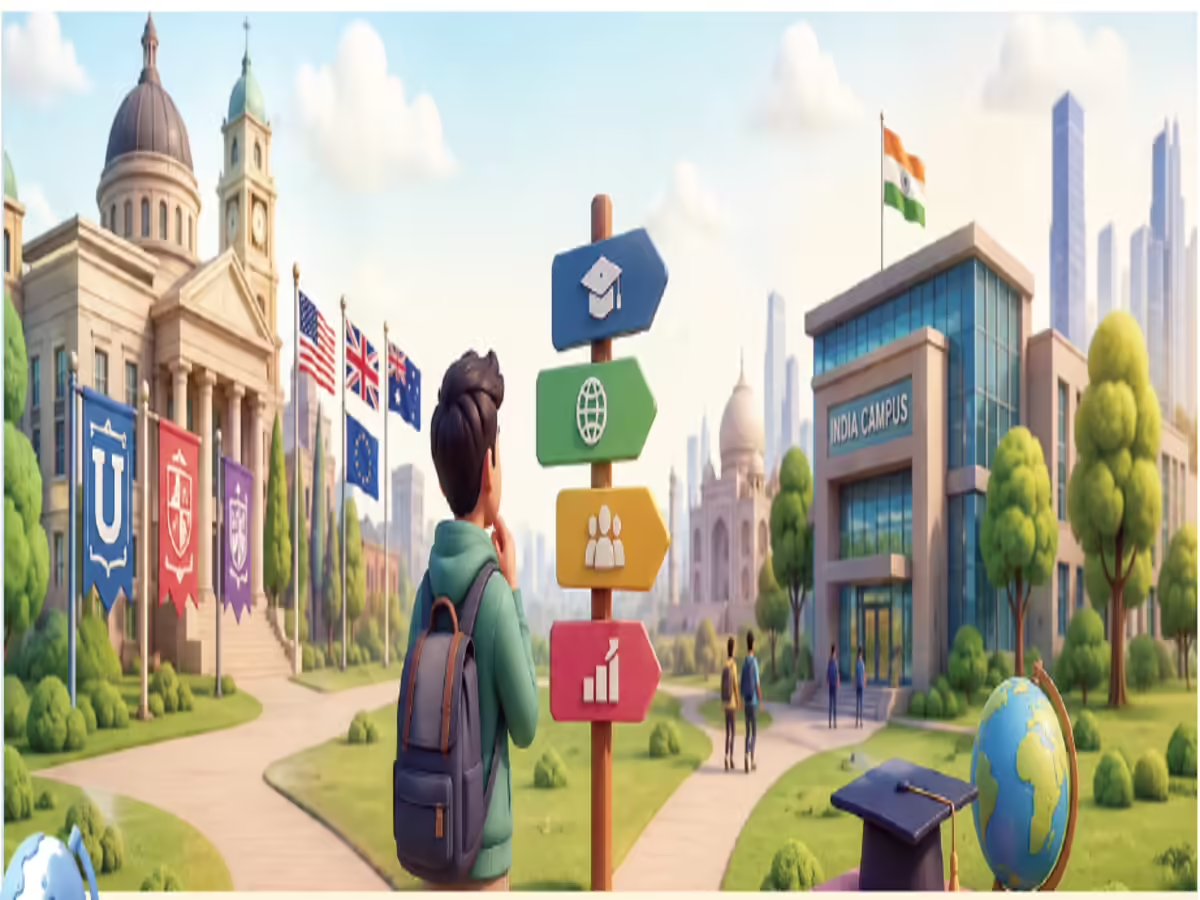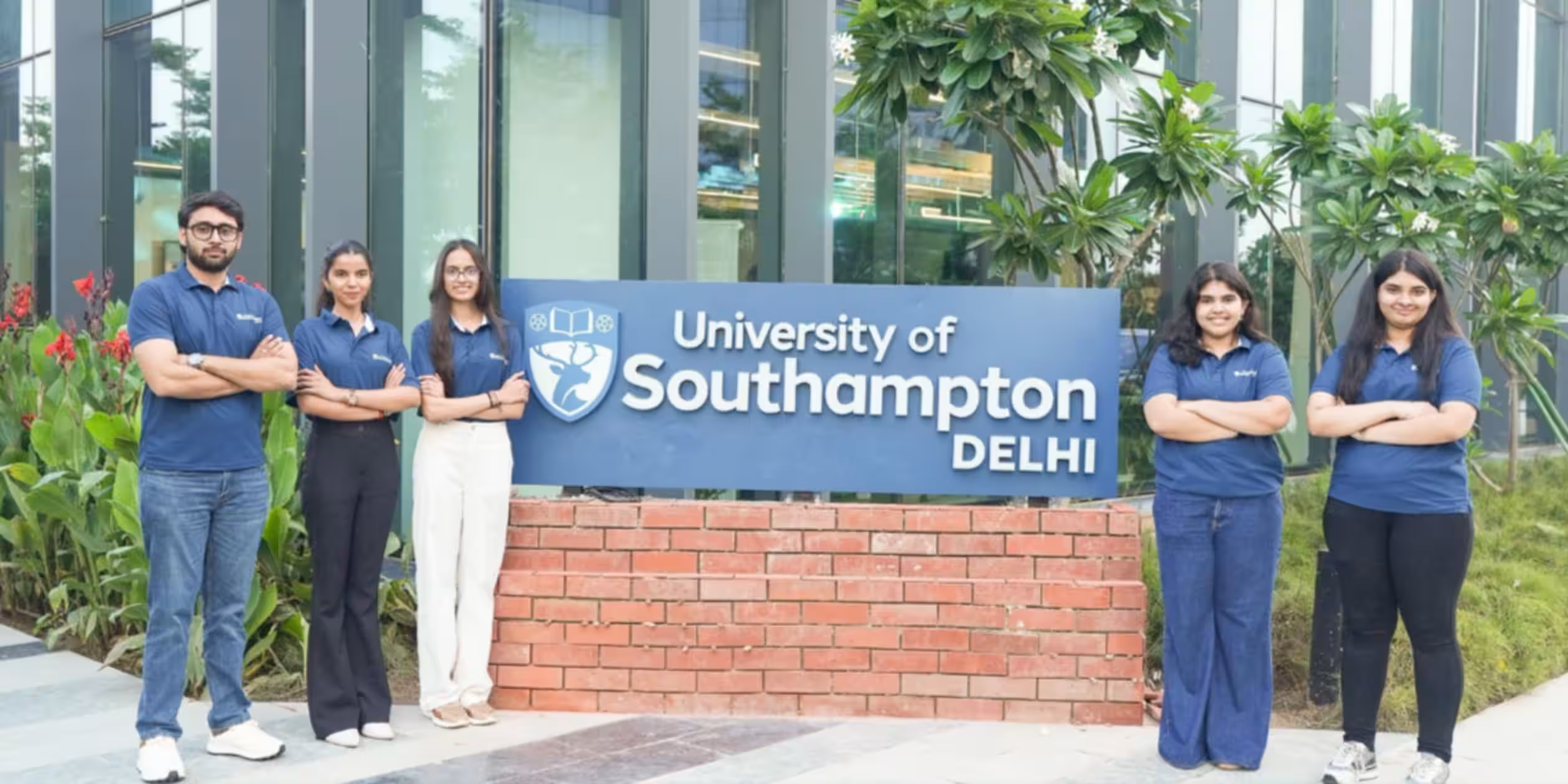
The British Council, which works with UK universities in India on education partnerships, shares five things students should know. India’s higher education landscape is undergoing a transformative shift, with leading UK universities establishing campuses across the country and creating new opportunities for students to access globally recognised degrees, international curricula, and industry-linked learning experiences without leaving India. Following the establishment of the University of Southampton campus in India and the recent approvals granted to the University of Liverpool, University of Bristol, and University of York, the momentum for transnational education continues to grow.British Council shares 5 things students should know about UK IBC's in IndiaThese developments align closely with the objectives of India’s National Education Policy 2020 and the India–UK Vision 2035, which seek to deepen academic collaboration, promote research and innovation, strengthen people-to-people ties, and position India as a global knowledge hub while expanding access to world-class higher education opportunities within the country.International branch campuses (IBCs) are becoming an increasingly important part of India's higher education landscape. The British Council, which works with UK universities in India on education partnerships, shares five things students should know.1. You Can Earn an International Degree Without Leaving IndiaOne of the biggest advantages of an international branch campus is the opportunity to earn a degree from a globally recognised university while studying in India. Students benefit from international academic standards, curricula, and teaching approaches, often at a lower overall cost than studying overseas. For many families, this creates a new and more affordable pathway to world-class education that combines global exposure with the familiarity and convenience of remaining in India.How a six-month CAT preparation plan helps build strong fundamentals and exam confidence?2. Students Can Choose from Industry-Relevant CoursesUK IBCs are expected to offer programmes across a variety of disciplines, giving students more choice than ever before. From business, economics, and finance to computer science, artificial intelligence, cyber security, engineering, life sciences, and the creative industries, students can pursue programmes that align with their interests and career aspirations. For example, universities such as University of York, University of Liverpool, University of Bristol, and University of Southampton are bringing programmes to India that reflect both student demand and the skills required in a rapidly changing global economy. Queens University Belfast offers post graduate models most in demand by corporates in GIFT city with whom they are co-located. By studying these internationally designed courses in India, students can gain access to global curricula, contemporary teaching methods, and learning experiences that prepare them for opportunities both at home and abroad.3. International Branch Campuses Are Designed Around EmployabilityA defining feature of many UK IBCs is their focus on industry engagement. Universities are developing programmes in consultation with employers and industry partners, creating opportunities for internships, research collaborations, and real-world learning experiences. For example, the University of Bristol's Mumbai Enterprise Campus has announced collaborations with organisations including Tata Consultancy Services and the Indian Institute of Technology Bombay to strengthen industry-aligned learning and research.UK-India emerging tech partnership: Why it matters in 2026?4. Students May Benefit from Global Mobility OpportunitiesInternational branch campuses are not simply standalone institutions; many are integrated into wider global university networks, enabling students to benefit from both local and international learning opportunities. For instance, the University of Liverpool's Bengaluru campus will provide eligible students with opportunities to spend a semester at its UK campus or transfer for their final year, subject to programme requirements. Similarly, universities are exploring ways to extend their academic and research strengths to India. York University, for example, has highlighted plans to bring high-quality research faculty to India for teaching and collaborative research. These models reflect a broader trend of international campuses serving as gateways to global academic ecosystems while allowing students the flexibility and affordability of studying in India.5. Scholarships Are Expanding Alongside International Education OpportunitiesAs more international universities engage with India, students may benefit from a growing range of scholarship opportunities. For students considering study with UK institutions, the University of Aberdeen offers a range of scholarships for Indian students, including merit-based awards that can significantly reduce tuition fees for eligible applicants. While scholarship structures vary by institution and campus, prospective students should regularly check university websites for the latest funding opportunities and eligibility criteria.Boost Your Brainpower: Harvard's top 5 superfoods for student successAs more UK universities establish a presence in India, students can expect greater access to globally recognised qualifications, innovative learning environments, and stronger connections to international academic and professional networks.For students, the message is clear: access to global education is no longer defined solely by studying abroad. Increasingly, world-class learning opportunities are being brought closer to home, offering students the chance to gain international qualifications, future-ready skills, and global networks while studying in India.For over a decade, the Hindustan Times Digital Streams – Education Desk has been a trusted source for accurate, in-depth, and timely news on education and careers. We bring the latest updates on board exams, competitive exams, results, employment news, study abroad, scholarships, and school and college admissions, helping students, job seekers, and educators make informed decisions. Our Coverage Areas 1. Board Exams & Results: Comprehensive reporting on CBSE, CISCE, and state board exams (UP, Bihar, Maharashtra, West Bengal, Rajasthan, Andhra Pradesh, Telangana, Karnataka, Tamil Nadu, and others), including schedules, admit cards, answer keys, results, and career opportunities. 2. Competitive Exams: Insights into major exams like UPSC, JEE, NEET, GATE, CAT, SAT, and state and central government services. Exam Results: Timely updates on UPSC, SSC, SBI, IBPS, NTA, IIMs, and other competitive exam results. 3. Employment News: Notifications on government and private sector jobs, vacancies, eligibility, application processes, and results. 4. Study Abroad: Information on top universities, courses, tuition fees, scholarships, visa regulations, and career prospects for international students. Features & Analysis: Opinion pieces, expert explainers, deep-dive reports, and interviews with key figures in education. 5. Breaking Education News: Real-time updates on major policy changes, institutional reforms, and trends shaping the education sector. 6. With a commitment to factual, unbiased journalism, HT Digital’s Education Desk has seen continuous growth in readership, offering credible and engaging content tailored for students, parents, and professionals. Meet the Team 1. Nilesh Mathur – News Editor A journalist with 24 years of experience, including 18+ years at Hindustan Times, Nilesh leads editorial planning, ensures factual accuracy, and enhances audience engagement through strategic content. 2. Papri Chanda – Deputy Chief Content Producer With over a decade of experience in education journalism, Papri specializes in exam-related content, study abroad insights, and education trends. She also explores new opportunities in education that benefit students. 3. Bishal – Senior Content Producer Active in the education and jobs sector since 2019, Bishal focuses on tracking developments, analyzing trends, and crafting informative content for students and job aspirants. 4. Gaurav Sarma – Deputy Chief Content Producer A multimedia journalist with 9+ years of experience, Gaurav is skilled in research-based storytelling, feature writing, and reporting on competitive exams, online courses, and education trends. At Hindustan Times Digital Streams – Education Desk, we strive to be the go-to platform for students and professionals navigating the dynamic world of education and careers.Read More
British Council shares 5 things students should know about UK IBC's in India
The British Council, which works with UK universities in India on education partnerships, shares five things students should know.
1,184 words~5 min read