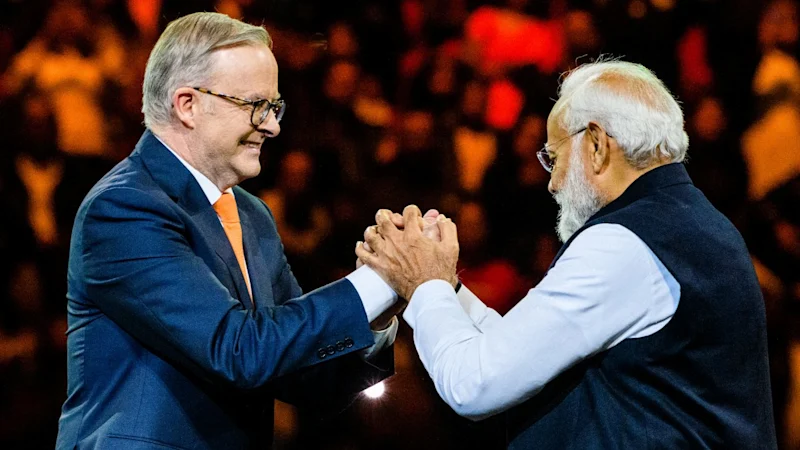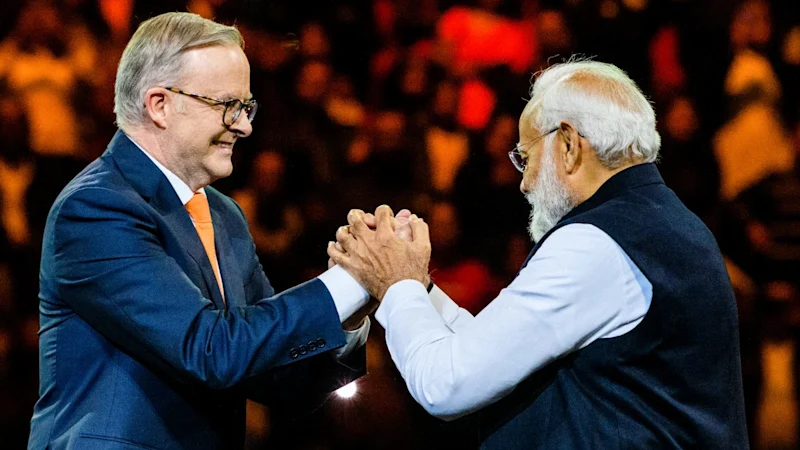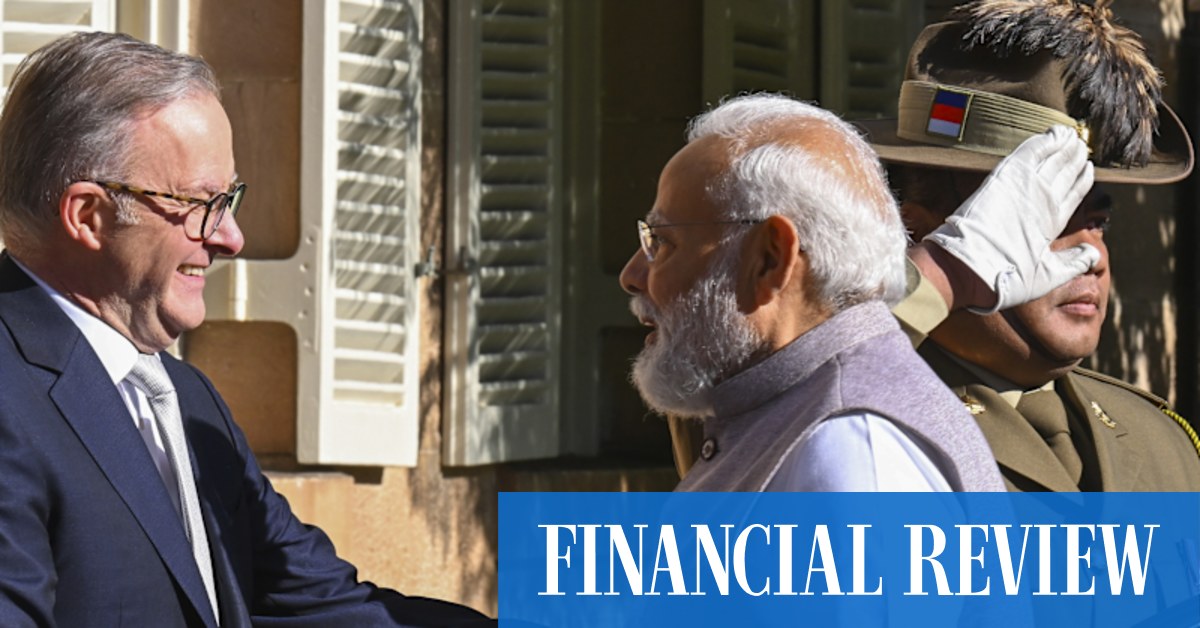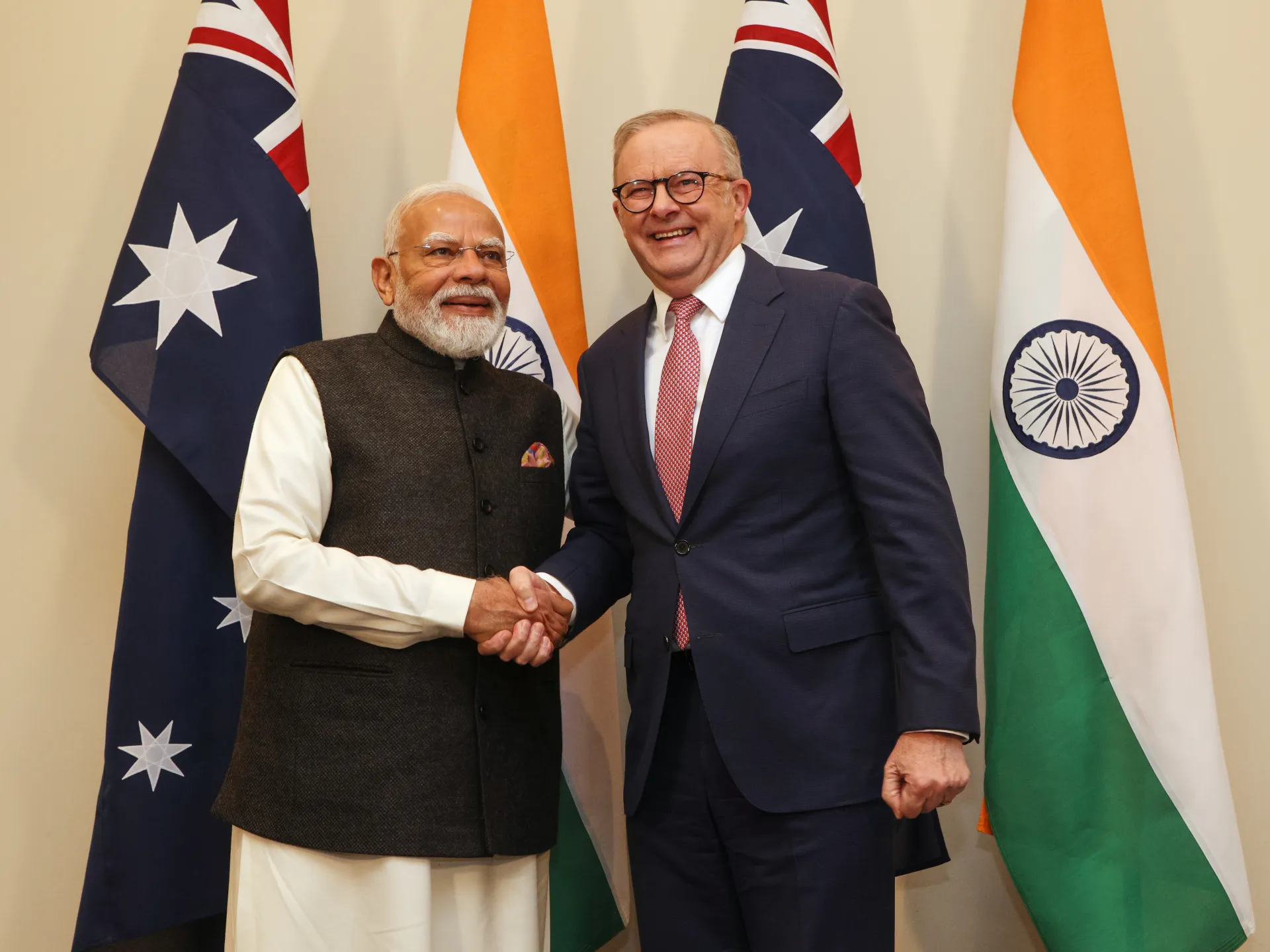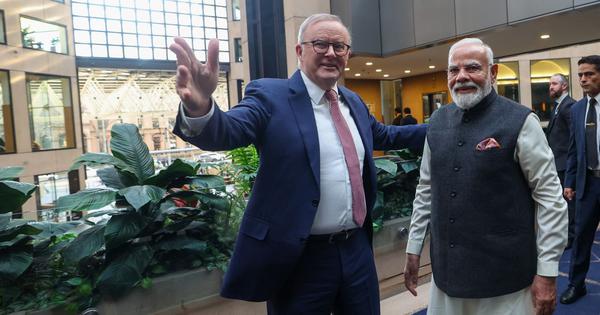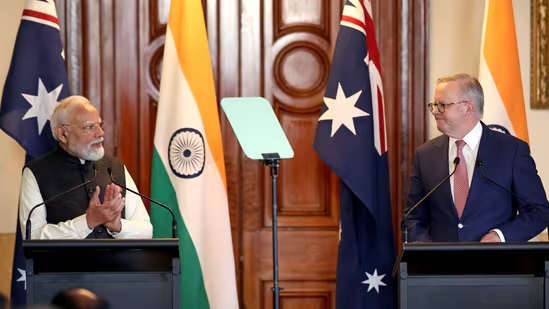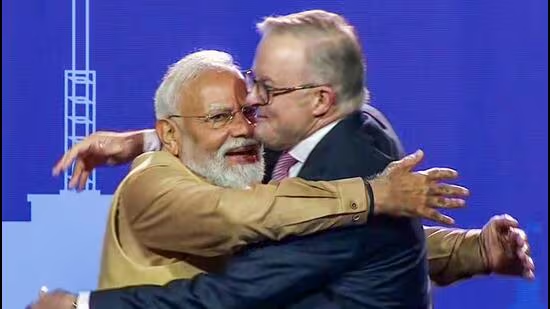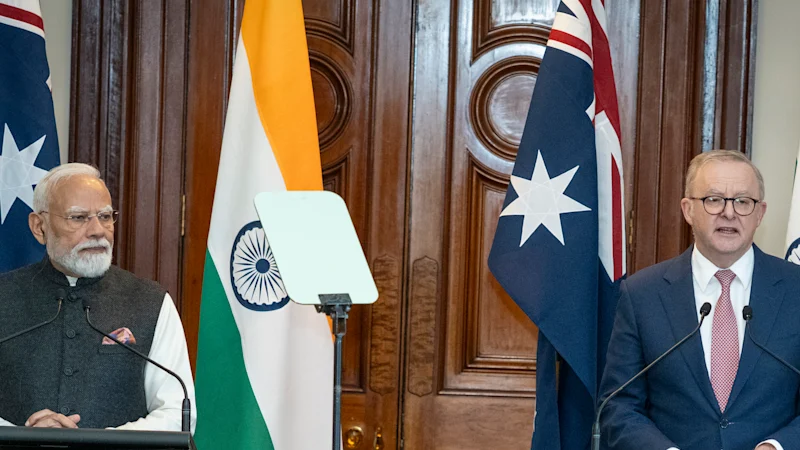
July 9, 2026 — 4:59pmIndia and Australia will fast-track negotiations on a sweeping free trade pact that would open up access for exporters to the world’s most populous country, after sealing an agreement to allow billions of dollars worth of Australian uranium to flow to India.Prime Minister Anthony Albanese hosted his Indian counterpart Narendra Modi in Melbourne on Thursday where they also agreed to deepen co-operation on defence and critical minerals.Australia and India launched negotiations on a comprehensive economic agreement in 2011, settling on a more limited trade pact in 2022 that left key sticking points unresolved.Prime Minister Anthony Albanese and Indian counterpart Narendra Modi are hoping to finalise a major free trade deal.Eamon Gallagher“We have now decided to work at a fast pace on a comprehensive economic co-operation agreement,” Modi told reporters, saying the pact “will be balanced, ambitious and win-win for both countries”.“We will also move forward at a fast pace on a bilateral investment treaty,” he added.India has traditionally focused on protecting its own agriculture sector, limiting overseas exporters’ ability to break into the market.Finishing negotiations on the ambitious economic pact would be a major win for the Albanese government, which sealed a free trade deal with the European Union earlier this year.Modi, who was preparing to appear before 30,000 members of the Indian-Australian community at Marvel Stadium on Thursday night, said the two nations had made “unprecedented progress over the last few years”.As foreshadowed before the meeting, the nations finalised administrative arrangements to allow significant quantities of Australian uranium to flow to India for the first time.Australia and India reached a historic nuclear co-operation agreement in 2014, but regulatory hurdles have choked off almost all uranium exports from Australia in the years since.Speaking at a business event in Melbourne earlier in the day, Modi said India was aiming to produce 100 gigawatts of nuclear energy by 2047 to meet the nation’s growing demand for power.“Australia’s huge uranium reserves are directly connected to India’s nuclear journey,” he said.India, home to 1.4 billion people, is planning a massive increase in nuclear power capacity to help reduce its reliance on fossil fuels and power the boom in data centres linked to artificial intelligence.Albanese said the agreement “facilitates Australian uranium exports to India to help increase the share of non-fossil fuel power capacity, providing an additional market for the Australian resources sector”.Narendra Modi and Anthony Albanese outside the Opera House in Sydney in 2023. James BrickwoodIndia must only use the uranium for peaceful civilian purposes.Australian Conservation Foundation campaigner Dave Sweeney said there remained “compelling reasons for Australia not to send uranium to India” given it has not signed the nuclear non-proliferation treaty.“Australian uranium would fuel radioactive risk and waste and potentially allow the diversion of domestic uranium reserves to fuel India’s nuclear weapons program in an already tense region,” he said.Minerals Council of Australia chief executive Tania Constable said “the supply of Australian uranium to India represents an immense opportunity” as she called on NSW, Western Australia and Queensland to overturn bans on uranium mining.Albanese said that “Australia’s relationship with India has never been more consequential than it is today. Our partnership has never been stronger.“Australia values India as a top-tier security partner. We will boost strategic co-ordination, increase the complexity of our defence exercises, and further build interoperability between our defence forces.“We undertake to consult on defence-related developments in the Indo-Pacific that affect our shared interests,” he said.Albanese added Australia had also agreed to a commission temporary space tracking terminal on the Cocos Keeling Islands to support India’s Gaganyaan human spaceflight program, the country’s first attempt to send astronauts to space.Cut through the noise of federal politics with news, views and expert analysis. Subscribers can sign up to our weekly Inside Politics newsletter.Matthew Knott is the foreign affairs and national security correspondent for The Sydney Morning Herald and The Age.Connect via X, Facebook or email.From our partners
India and Australia look to fast-track sweeping free trade pact after uranium export deal
The leader of the world’s most populous nation came to Melbourne on Thursday on a mission to expand economic and defence ties with Australia.
648 words~3 min read