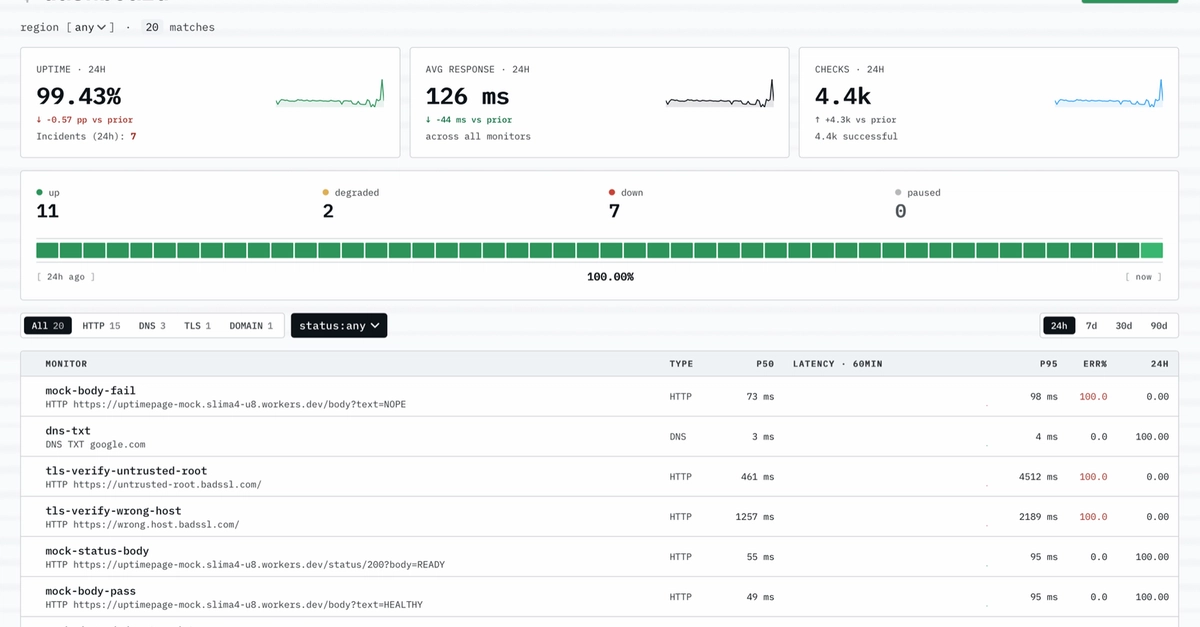
TL;DR. My uptime monitor keeps config and incidents in Postgres and check results in ClickHouse. The split is one rule: does a row ever change? Config gets edited, so it wants Postgres transactions and constraints. A check result is written once and never touched again, so it goes to ClickHouse, where the right codec, a careful sort key, and a per-row TTL make billions of rows cheap. Four tricks and a bonus below, useful even if you only ever run one database.
Every monitor I run writes a row every 20 seconds, from every region, and never stops. One monitor is about 4,300 rows a day, per region. Multiply by every monitor on the platform and the rows only ever go up.
That stream would slowly crush a normal Postgres table, and watching it is the whole product. So the check results do not live in Postgres. They live in ClickHouse. Everything else, the monitors and incidents and teams, lives in Postgres. The interesting part is the line between them.
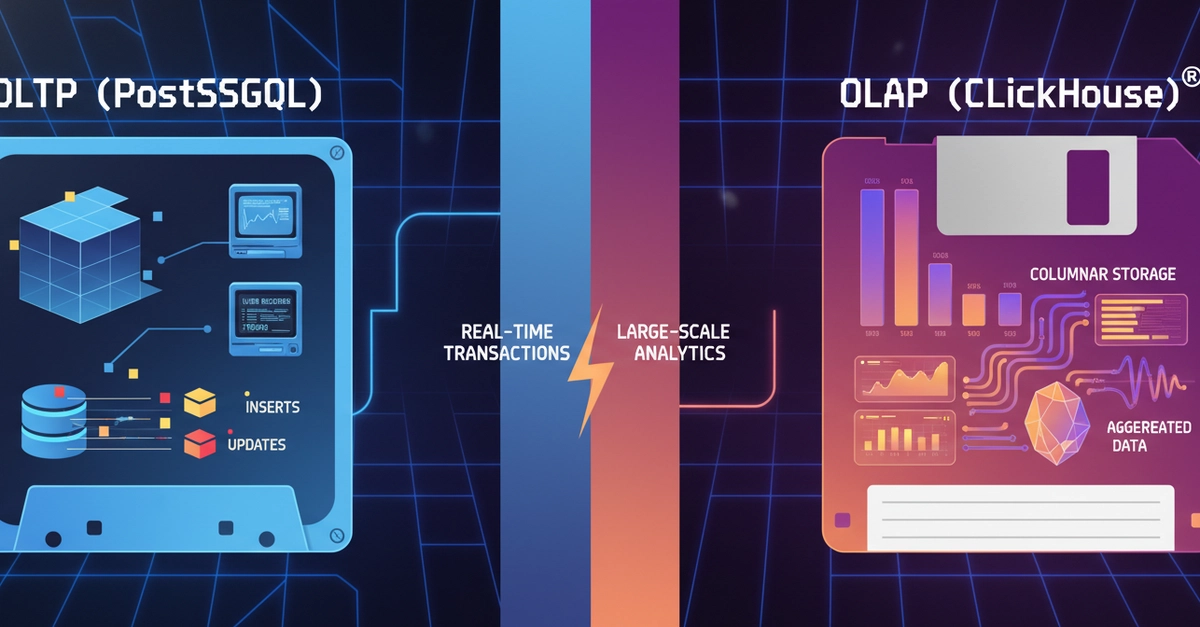
People ask why not one database. "Postgres vs ClickHouse" is the wrong question, because the two are not fighting over the same job. Here is the line I draw, and the one rule under all of it: split your data by how it is written, not by which engine is faster.