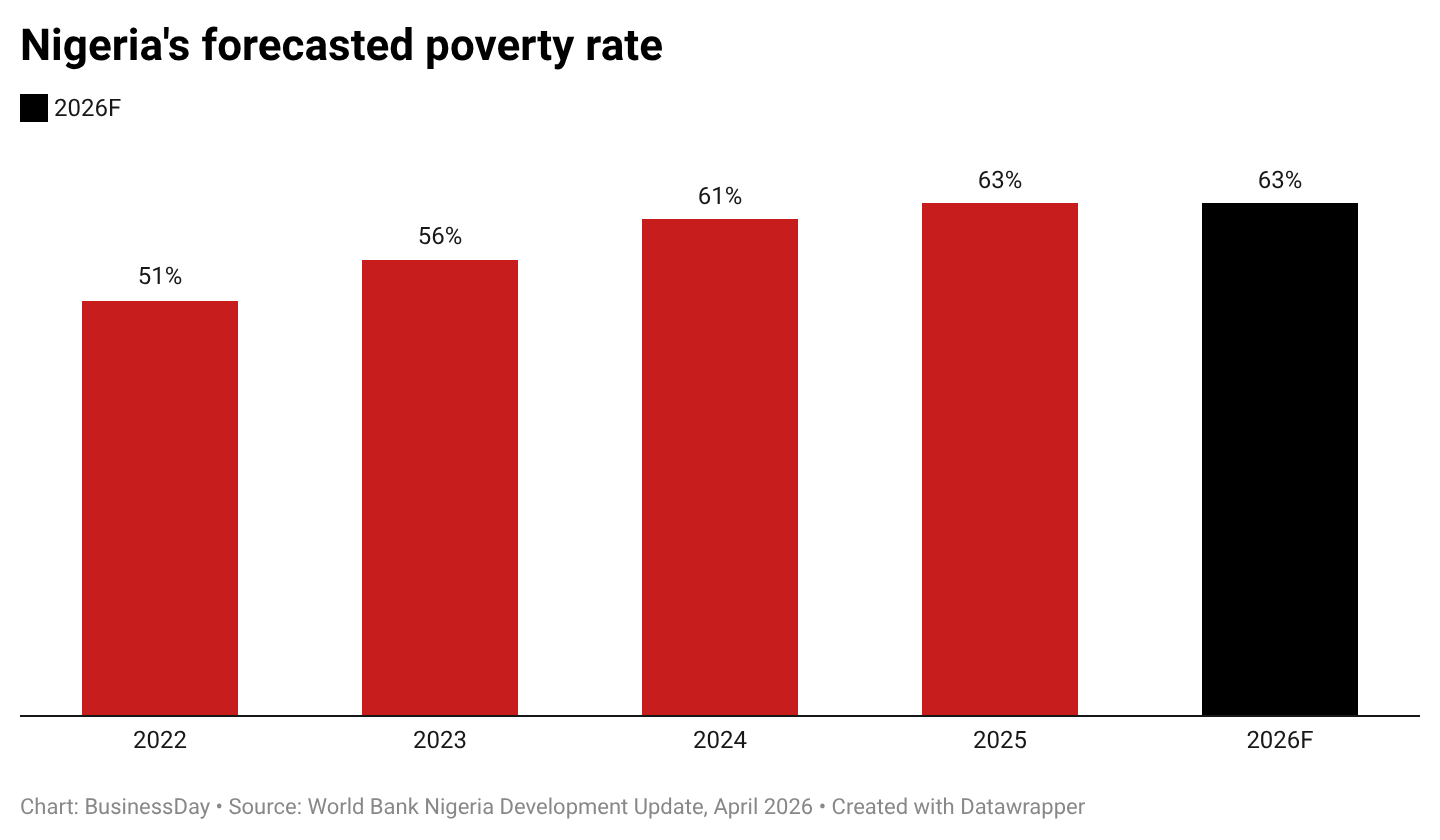
Nigeria’s improving macroeconomic stability and favourable terms-of-trade effects continue to support the national growth outlook, according to the International Monetary Fund (IMF). However, the Fund cautions that rising prices for essential goods are expected to deepen poverty and food insecurity across Africa’s largest economy.
“Nigeria is supported by improved macroeconomic stability and favourable terms-of-trade effects, though higher prices for essentials are expected to further aggravate poverty and food insecurity,” the IMF noted in its July 2026 World Economic Outlook Update. This assessment accompanies an unchanged growth forecast of 4.1 per cent for 2026 and 4.3 per cent for 2027—projections consistent with the Fund’s April outlook.
External shocks and commodity volatility
The favourable terms-of-trade effects identified by the IMF are largely linked to the conflict in the Middle East, which has driven global oil prices upward. The Fund’s baseline assumes an average petroleum spot price of $89 per barrel in 2026, representing a 32 per cent increase over 2025. While this dynamic benefits net energy exporters like Nigeria, it simultaneously exerts significant pressure on oil-importing economies across the continent.