Scientists at Johns Hopkins University have uncovered how humans develop sharp central vision before birth, identifying a carefully timed interaction between a vitamin A derived molecule and thyroid hormones in the retina. The discovery challenges a decades old explanation for how key light sensing cells form and could guide future treatments for macular degeneration, glaucoma, and other diseases that damage vision.
The research, which relied on lab grown retinal tissue, was published in the Proceedings of the National Academy of Sciences.
Lab Grown Retinas Reveal How Sharp Vision Forms
"This is a key step toward understanding the inner workings of the center of the retina, a critical part of the eye and the first to fail in people with macular degeneration," said Robert J. Johnston Jr., an associate professor of biology at Johns Hopkins who led the research. "By better understanding this region and developing organoids that mimic its function, we hope to one day grow and transplant these tissues to restore vision."
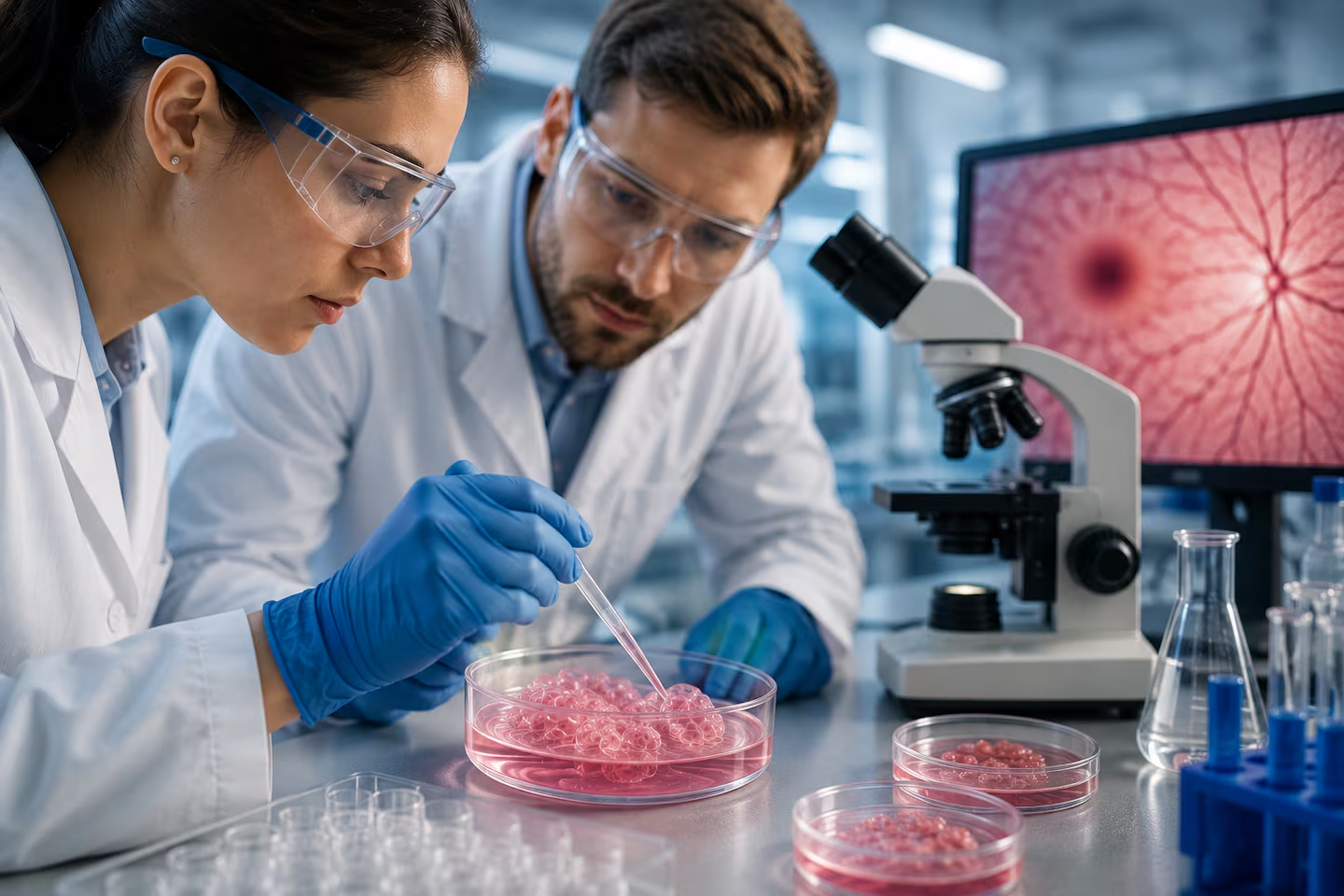
To investigate how the human eye develops, the researchers used organoids, small clusters of tissue grown from fetal cells that closely mimic parts of the retina. After observing these lab grown retinas over several months, the team identified the cellular events that shape the foveola, the tiny region at the center of the retina responsible for the sharpest vision.