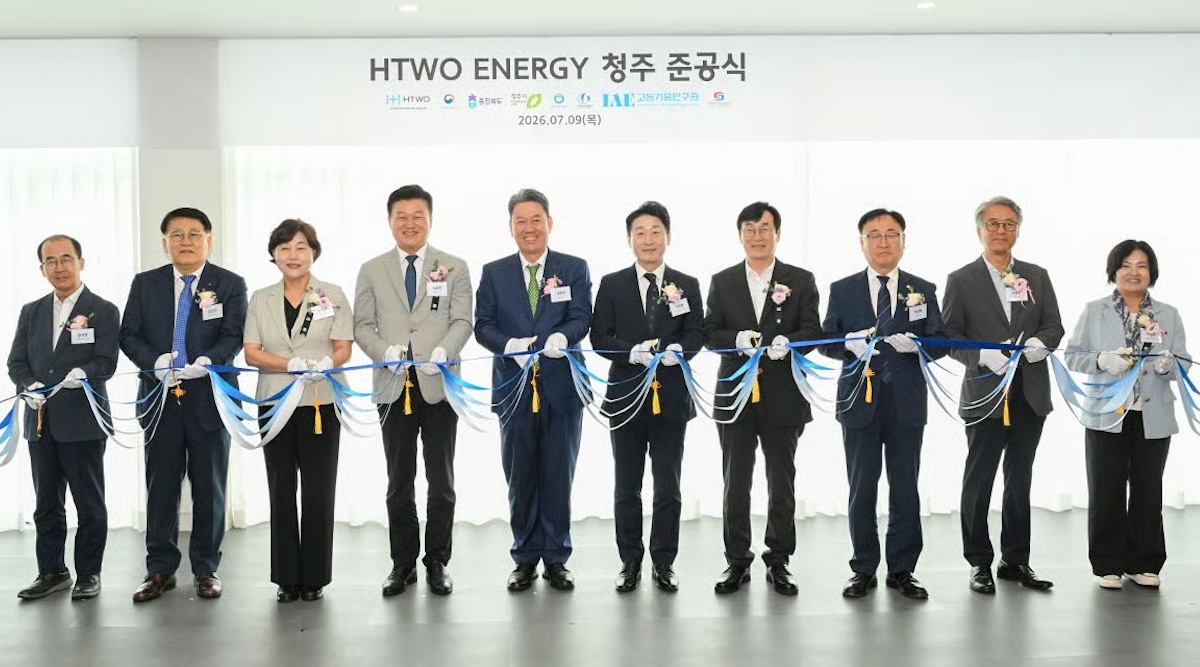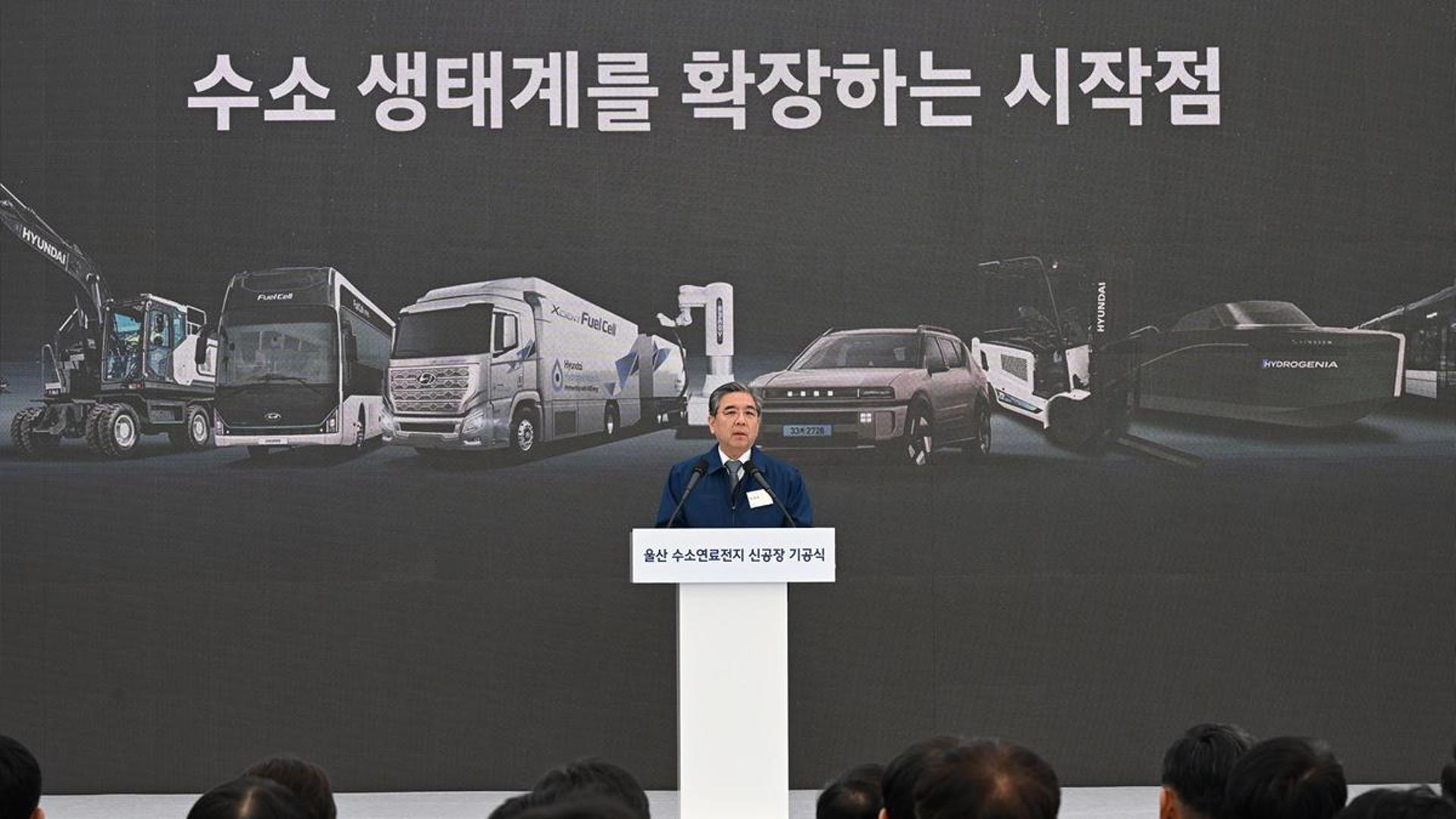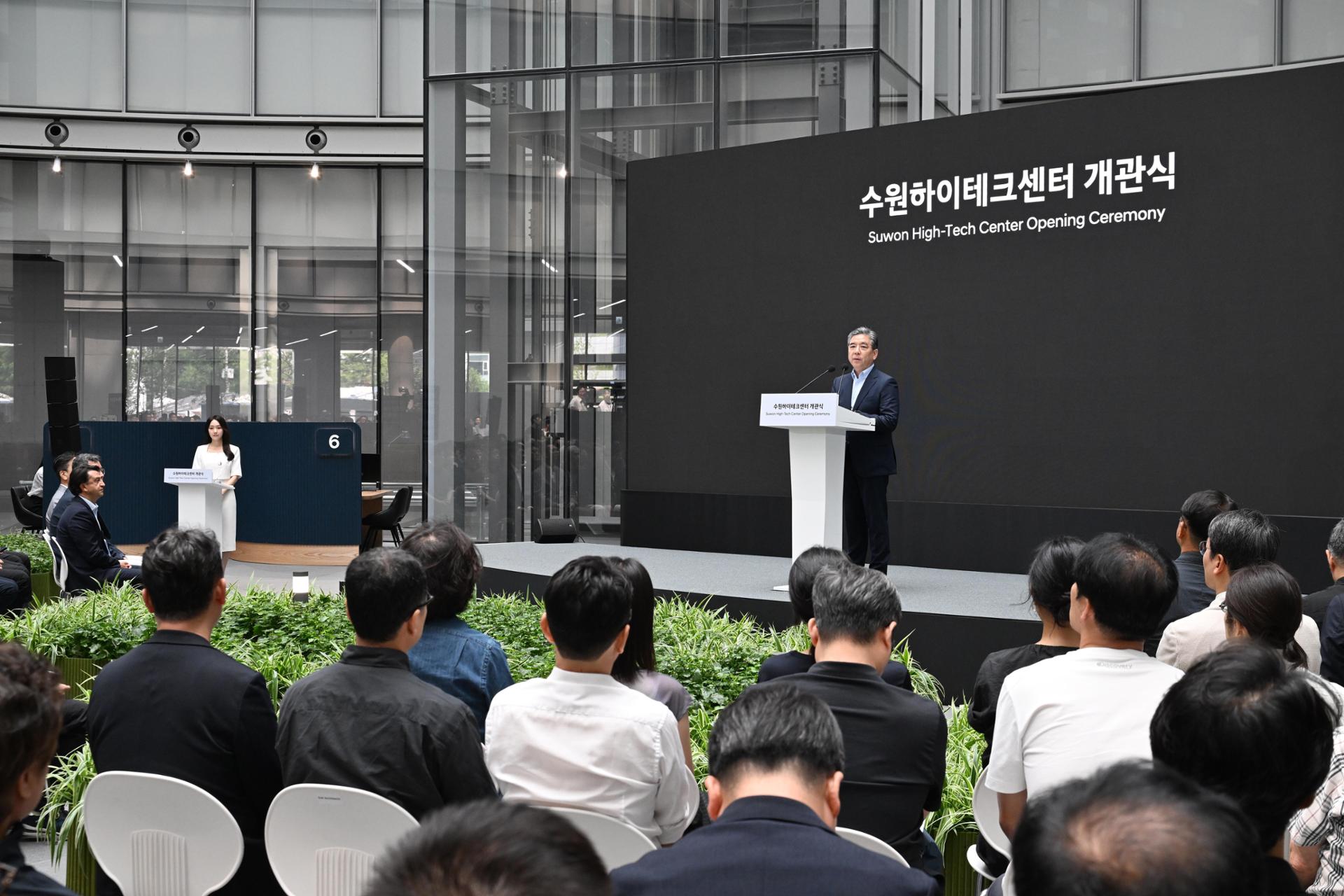
Waste-to-hydrogen refueling station at HTWO Energy Cheongju, North Chungcheong Province (Hyundai Motor Group) Hyundai Motor Group opened its first directly operated waste-to-hydrogen production and fueling complex in Cheongju, North Chungcheong Province, on Thursday, stepping up efforts to expand the use of hydrogen made from local waste.The auto group held a completion ceremony for HTWO Energy Cheongju on Thursday. The plant produces hydrogen using biogas extracted from sewage sludge generated in the city, turning local waste into fuel that can be supplied within the region.The ceremony was attended by Hyundai Motor Group President Seo Gang-hyun, Climate, Energy and Environment Vice Minister Lee Ho-hyun, North Chungcheong Province Governor Shin Yong-han, Cheongju Mayor Lee Jang-sub and other officials.“HTWO Energy Cheongju is an example of a circular economy model that converts local waste into clean hydrogen energy and consumes it again within the region,” Seo said. “Hyundai Motor Group will actively contribute to helping Cheongju establish itself as Korea’s leading inland hydrogen business city and use this as a starting point to expand the self-sufficient hydrogen production model into global markets.”Built on a 7,500-square-meter site at a public sewage treatment facility, HTWO Energy Cheongju has facilities equipped for biogas upgrading, hydrogen extraction, carbon dioxide recovery and liquefaction, hydrogen compression, storage and vehicle fueling.It can produce about 500 kilograms of hydrogen per day, enough to charge about 100 Nexo hydrogen fuel cell passenger vehicles or 30 hydrogen buses.The company plans to expand the plant’s average daily hydrogen production capacity to 2 metric tons by 2030.Hyundai Motor Group has been working with companies, institutions and local governments both in Korea and overseas on waste-to-hydrogen initiatives, as part of its wider push to build self-sufficient hydrogen ecosystems.In Korea, the group has carried out biogas-based clean hydrogen projects in Chungju, North Chungcheong Province, and Paju, Gyeonggi Province. Overseas, it is working on hydrogen ecosystem projects tailored to local markets in countries and regions including Indonesia and Hong Kong.
Hyundai Motor opens first waste-to-hydrogen facility in Korea
Hyundai Motor Group opened its first directly operated waste-to-hydrogen production and fueling complex in Cheongju, North Chungcheong Province, on Thursday, st
321 words~1 min read