People cool off in the Trocadero Fountain next to the Eiffel Tower as temperatures rise during a heatwave affecting a large part of the country, in Paris, France
| Photo Credit:
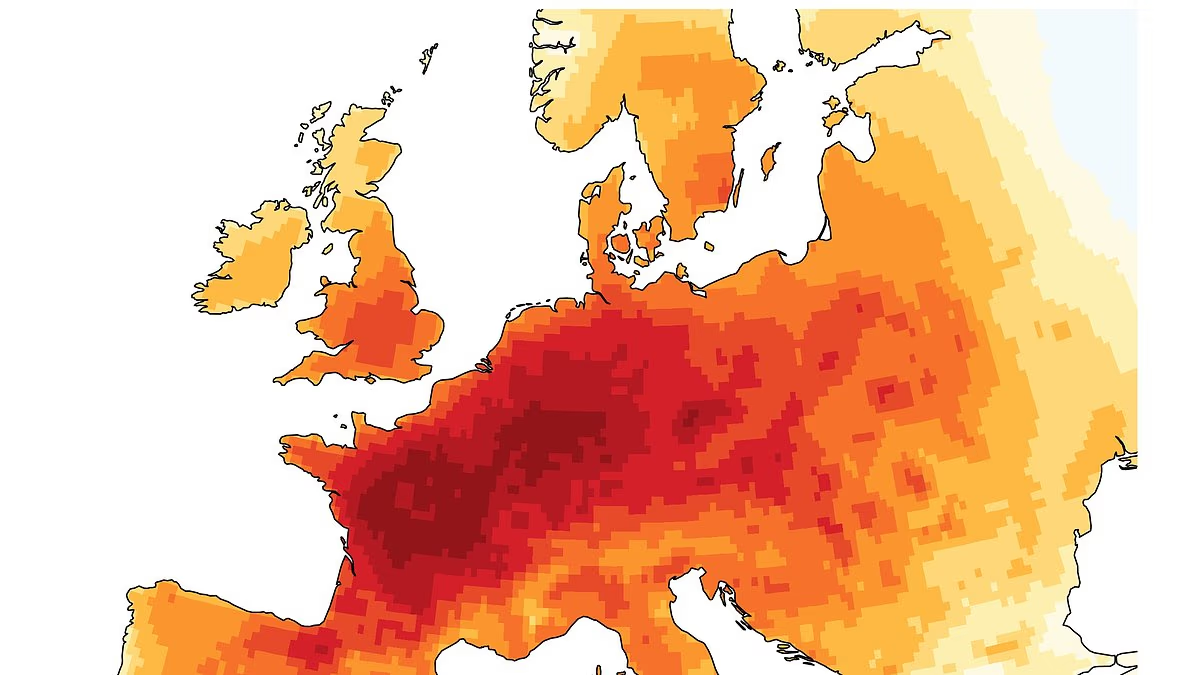
Globally, June 2026 was the second warmest June on record, with ocean temperatures reaching an all-time high, according to the Copernicus Climate Change Service (C3S), developed by the European Centre for Medium-Range Weather Forecasts (ECMWF).It was also the hottest June on record in Western Europe, with extreme heatwaves, worsening drought, wildfires and warming seas highlighting the increasing risks of a rapidly heating planet, partly driven by intensifying El Nino conditions.The monthly average Sea Surface Temperature (SST) for the extra-polar ocean (60°S–60°N) was the highest on record for June and was only 0.01°C above the previous record set in June 2024, in part reflecting the development of strong El Niño conditions in the equatorial Pacific.Scorching EuropeThe heatwave that swept across much of Europe in the second half of June followed just weeks after a particularly severe heatwave in May. The June heatwave shattered monthly and all-time temperature records in several countries in Europe, with significant health impacts, including heat-related deaths.Widespread dryness across Europe and extreme heat contributed to wildfire activity, especially in the Iberian Peninsula and southern France, and increased the risk of drought in parts of eastern Europe. The June heatwave followed a period of increasingly dry soils across western and central Europe, intensifying drought conditions that began to form during the May heatwave.For June 2026, the European land average temperature was 19.14°C, 1.78°C above the 1991-2020 average for the month, the second warmest on record for the continent (after June 2019).Western Europe, the area most impacted by the heatwave, recorded its warmest June on record, with an average temperature of 20.74°C, 3.05°C above the 1991–2020 average for June, beating the previous record set in June 2025.Samantha Burgess, Strategic Lead for Climate at ECMWF, commented: “June 2026 underscored how profoundly the climate is changing. Western Europe recorded its warmest June on record and continued record warmth in the global ocean. Together, these records reflect a climate system continuing to accumulate heat. The result is increasingly intense heatwaves, a persistently warm ocean, and growing risks for people, ecosystems and infrastructure across Europe and beyond.”Rising MercuryJune 2026 was the second warmest June on record in the ERA5 dataset, with a global average surface air temperature of 16.54°C, 0.56°C above the 1991-2020 average for the month and second only to June 2024 and 1.39°C warmer than the estimated pre-industrial (1850-1900) average.Warm OceansThe average sea surface temperature (SST) over the extra-polar oceans (60°S-60°N) in June 2026 was a record 20.86°C, slightly above the previous June record of 20.85°C set in 2024. El Niño conditions continued with SSTs remaining high over much of the tropical Pacific and are expected to develop rapidly over the next few months, the report added.Published on July 9, 2026