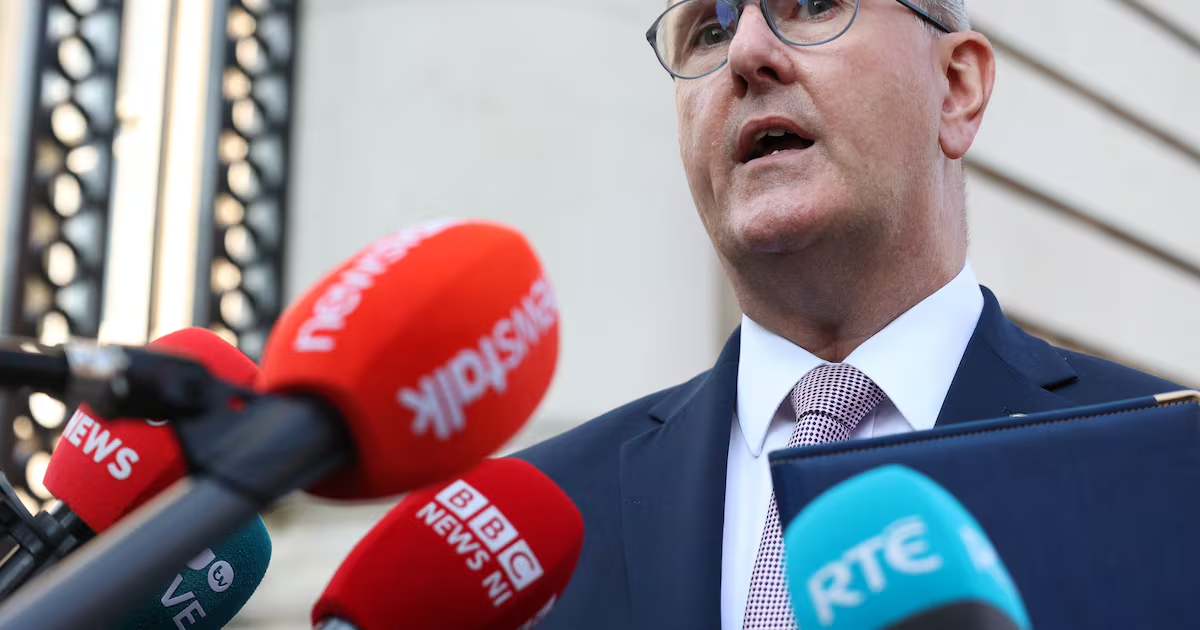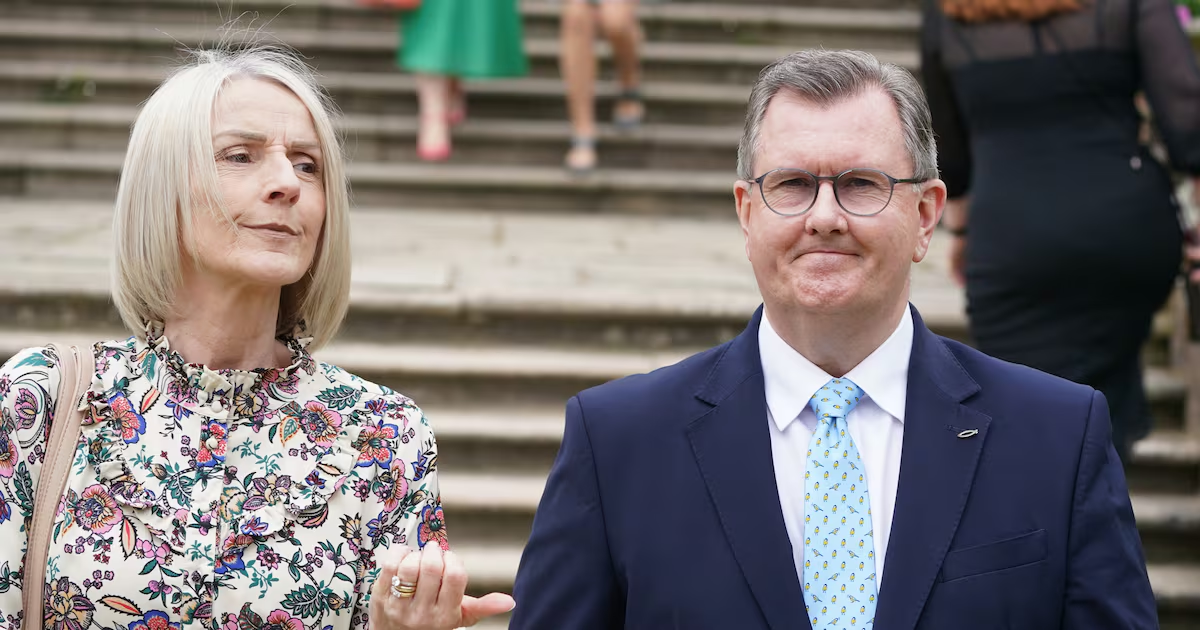
It is time to consider the serious possibility that the Democratic Unionist Party (DUP) will be destroyed by the Jeffrey Donaldson scandal.The party’s predicament is becoming worse by the day, with fresh accusations of who knew what dragging in more leading figures.Every other party in Northern Ireland is demanding answers. The DUP can dismiss criticism from Sinn Féin as hypocritical and an attack on unionists, but brushing off other unionist parties is a different matter.Within hours of Donaldson being found guilty of child abuse, Traditional Unionist Voice (TUV) leader Jim Allister said the British government and intelligence services must have been aware of his “proclivities” and may have blackmailed him into accepting the Brexit sea border.After two weeks of further revelations, the Ulster Unionist Party (UUP) is also twisting the knife. UUP leader Jon Burrows had already called for a full independent inquiry. He has now repeated this in a letter to the UK’s prime minister, noting it is the only way “to examine any relevant information held by police services, the security and intelligence agencies, government departments and political parties”.Burrows has not joined the TUV’s conspiratorial mutterings; he has challenged the authorities to debunk them. That is worse from the DUP’s perspective as it provides a respectable way to keep raising suspicions.Northern Ireland council and assembly elections are being held on the same day next May – the first time this confluence has occurred since 2011. The date is unlikely to change if the growing crisis over Donaldson causes Sinn Féin or the DUP to walk out of the executive, as recent rule changes mean that no longer causes an immediate collapse.Unofficial campaigning for May’s double-election has been under way for months. The DUP had been hoping for co-operation between unionist parties to reverse its declining fortunes. The UUP and the TUV had apparently been receptive. Although councils and the assembly use proportional representation, which limits the impact of electoral pacts, there is still some scope for gains at the margins. The DUP only requires a marginal improvement to achieve a huge psychological breakthrough – it is just one assembly seat behind Sinn Féin. The prospect of regaining the first minister’s post could pressurise other unionist parties into co-operation, bring unionist voters out to the polls and deliver a spillover boost in councils.All this has now been turned inside-out. The DUP will be campaigning on the defensive, while caught in a pincer movement between its two unionist rivals.The destruction of a political party almost never involves a rapid collapse, let alone a complete disappearance. The calamity facing the DUP is an electoral setback that relegates it from the premier league of Stormont parties to the middle ranks.This fate befell the UUP and the Social Democratic and Labour Party (SDLP) in 2003 and they have never recovered.The DUP’s position at Stormont was fragile even before Donaldson’s arrest last year. While it is only one seat behind Sinn Féin, it is much further behind on first preference votes, winning 21 per cent compared to Sinn Féin’s 29 per cent in the last assembly election four years ago.The DUP was careful with its voter management, but it was also lucky – while the transfer-unfriendly TUV was extremely unlucky.In the most recent opinion poll, conducted two months before Donaldson’s conviction, the DUP was at 18 per cent, a level it has been hovering at since its former leader’s arrest in 2024. This was already perilously low. The conviction and subsequent scandals only have to knock off another two or three percentage points to put the DUP in the relegation zone. If it loses that support, roughly equally, to the UUP and the TUV then all three parties would be of comparable size.Under the rules of the Belfast Agreement, it does not matter if unionism is represented by several similarly sized parties. The party with one extra seat, or one extra vote if tied on seats, takes either first or deputy first minister’s post.In reality, unionism and nationalism have always had one clear leading party each, significantly larger than the other parties in their designation.A gaggle of equally matched parties in one designation would be an unprecedented and unstable situation, especially if they are all at each other’s throats. As the DUP is still likeliest to be the largest unionist party next May, just about, its authority to lead unionism would be further sapped by ongoing scandal and recrimination.Unhappy voters do not always switch parties; many simply stay at home. Unionism could easily cease to be Stormont’s largest designation next May – it is only two seats ahead of nationalism.That would give weight to nationalist calls for a Border poll, and it is that prospect the DUP will almost certainly have to use to try to rally unionist voters behind it. Success is far from guaranteed.
Newton Emerson: There’s a thread that runs from Jeffrey Donaldson’s downfall to a Border poll
Unhappy voters stay at home, so unionism could cease to be Stormont’s largest designation next May
802 words~4 min read