Story audio is generated using AI
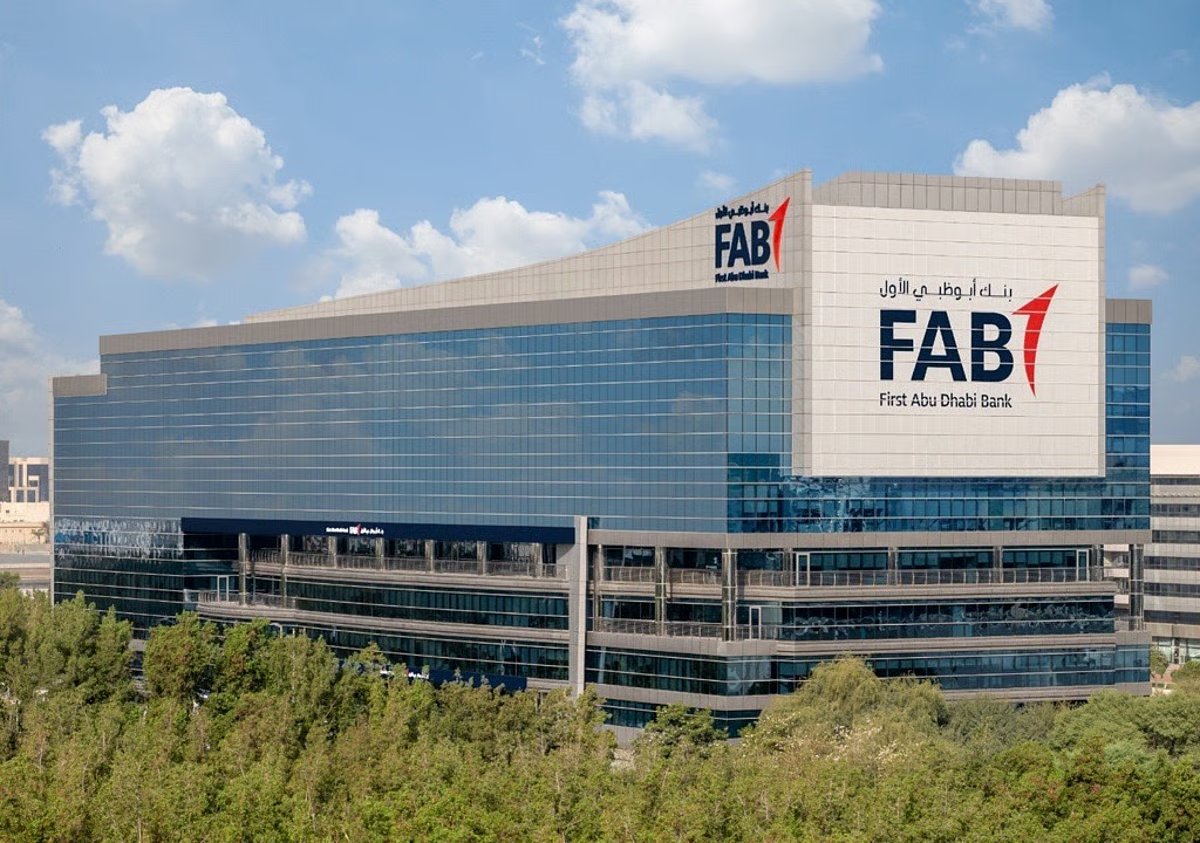
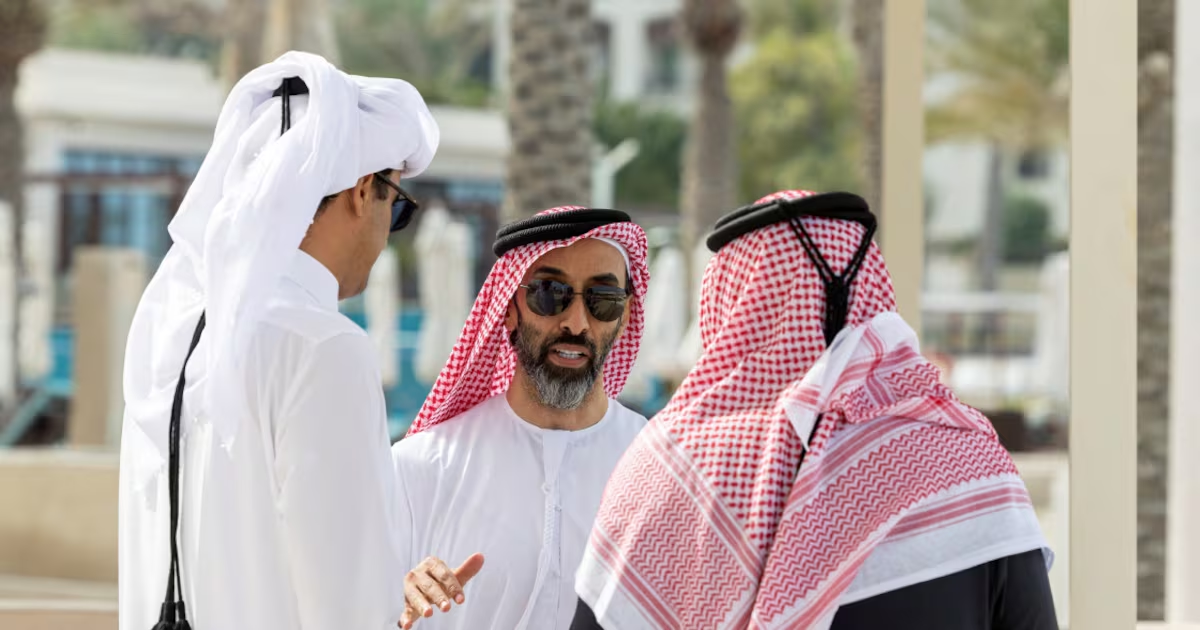
First Abu Dhabi Bank (FAB), the largest bank in the United Arab Emirates, has confirmed its intention to seek a banking licence in South Africa, provided its application to secure its trademarks in Africa’s largest economy succeeds.FAB, which marshals $406bn (R6.6-trillion) in assets — more than that of Standard Bank and FirstRand combined — confirmed its intention to the Supreme Court of Appeal, where it successfully fended off a legal challenge by FirstRand. The banking group argued that FAB’s trademark infringed that of its flagship subsidiary, FNB.The court’s majority judgment, handed down on Tuesday, notes that there is no reason to doubt that, should its trademarks be registered, FAB would comply with all necessary legal requirements to operate in South Africa, including applying for a banking licence.FAB told South Africa’s second-highest court that it sought to secure protection for its trademarks as the first step in expanding into the local market. The lender said it was financially prudent to first pursue trademark applications in South Africa before seeking a banking licence to avoid putting the cart before the horse.The dispute between FAB and FirstRand was first reported by Business Day in 2024. Despite its admission in court, FAB has remained tight-lipped to the media on its plans for South Africa.Headquartered in Khalifa Business Park in Abu Dhabi, UAE, FAB operates across five continents, providing banking services to local, regional and international businesses.Read: More drivers equal more cash: UAE’s Adnoc buys 600 Shell fuel stationsThe group operates across corporate, consumer, private and investment banking, as well as payments, wealth management, Islamic banking and real estate.Formed through the 2017 merger of National Bank of Abu Dhabi and First Gulf Bank, FAB is majority owned by sovereign wealth fund Mubadala Investment and members of Abu Dhabi’s ruling family.Mubadala has more than $276bn in assets under management.Sheikh Tahnoon bin Zayed Al Nahyan, deputy ruler of Abu Dhabi and the national security adviser of the UAE, chairs the bank. The sheikh also chairs the Abu Dhabi Investment Authority, the main sovereign wealth fund of Abu Dhabi, the UAE’s capital. It is said to manage assets of more than $800bn.FAB’s planned expansion comes as capital flows from the Gulf into Africa accelerate, creating opportunities that South African banks are also seeking to capture.Standard Bank, Africa’s largest bank by assets last year, established a representative office in Egypt to better position itself to assist its clients in the region.Offshore banks, particularly those looking to compete with African banks in the lucrative corporate and investment banking space, have found the going tough as domestic champions, led by South Africa’s banking majors, outfox the competition.This has seen the likes of Standard Chartered scale back operations significantly on the continent.The eurozone’s largest bank, BNP Paribas, and British multinational lender HSBC have over the past two years exited South Africa’s market, with the latter selling its domestic franchise to FirstRand.The Emirati ruling family, led by its patriarch Sheikh Mohamed bin Zayed Al Nahyan, has taken a liking to South Africa, where they have previously holidayed.Mohamed, who is president of the UAE and ruler of Abu Dhabi, reportedly funded the construction of a R20m runway in the Eastern Cape to accommodate his private jet and cargo aircraft.On Tuesday, an entity linked to the royal family, Adnoc Distributors, outbid rivals to emerge as the preferred bidder for Shell’s about 600 fuel stations in South Africa, in a $1bn deal, the entity’s biggest foreign investment yet.Adnoc Distributors is 77% owned by Adnoc Group, chaired by Mohamed.The UAE is South Africa’s largest trading partner among the Gulf Co-operation Council (GCC) countries, while South Africa is the UAE’s second-largest trading partner in Africa.