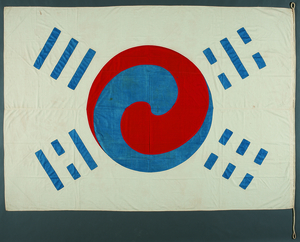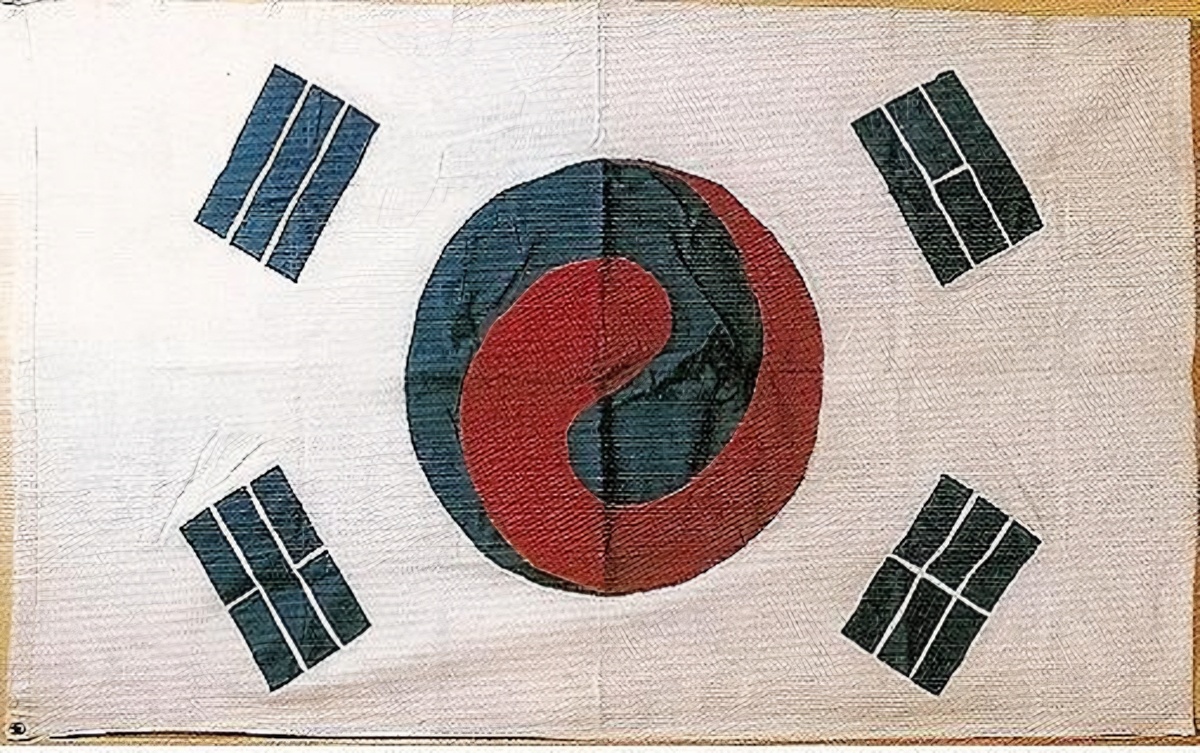
A historic Korean flag displayed during a 1942 independence movement gala at the Waldorf Astoria hotel in New York. The artifact, manufactured in the U.S. in the 1930s, recently underwent restoration to repair decades of structural decay. Courtesy of Korea Heritage Service
A rare, American-manufactured Taegukgi flag that served as a silent witness to diplomatic efforts on behalf of Korean independence in New York City during World War II has been successfully restored to its original state.
The Cultural Heritage Conservation Science Center, a subsidiary of the National Research Institute of Cultural Heritage, said Thursday that it finalized extensive scientific conservation work on the flag. Manufactured in the 1930s by the Manhattan-based textile firm the Copeland Company, the banner holds profound historical value as a physical artifact of Korean diplomacy in the United States.
The flag is deeply tied to the history of Korea’s liberation movement from Japanese colonial occupation (1910-45).
It was used by Syngman Rhee, who later became Korea’s first president, during a high-profile Korean independence dinner gala hosted at the Waldorf Astoria in 1942. The dinner, held at the height of World War II, served as a critical venue to gather international support for the recognition of a sovereign Korean provisional government.