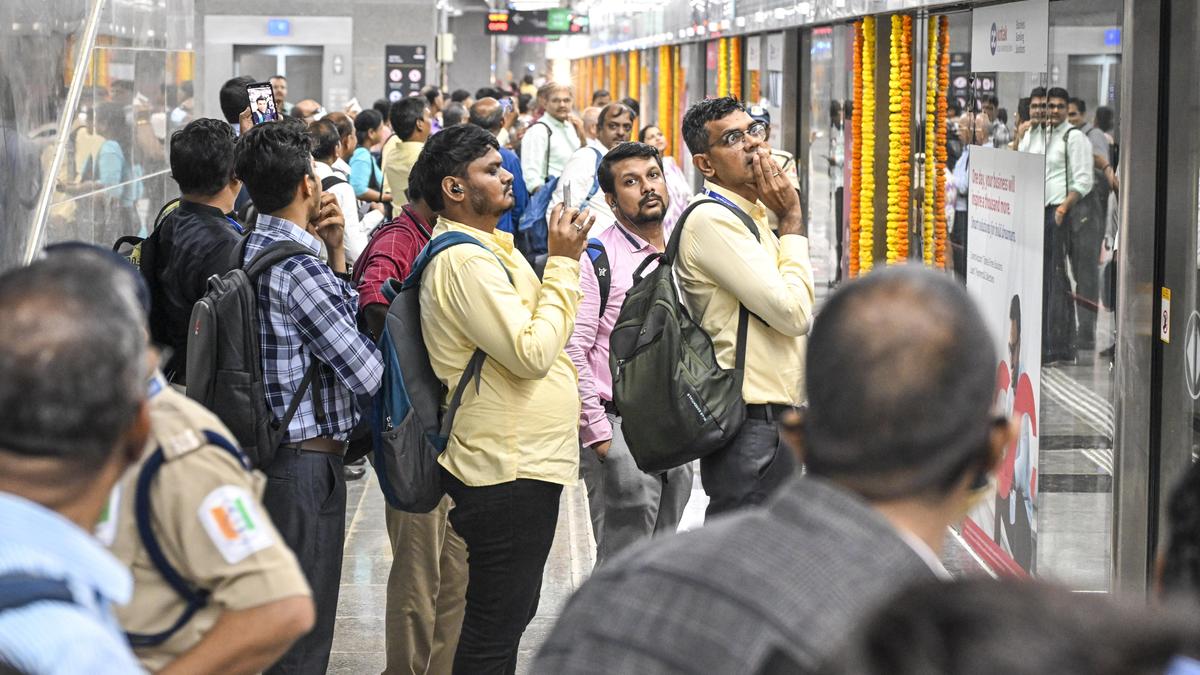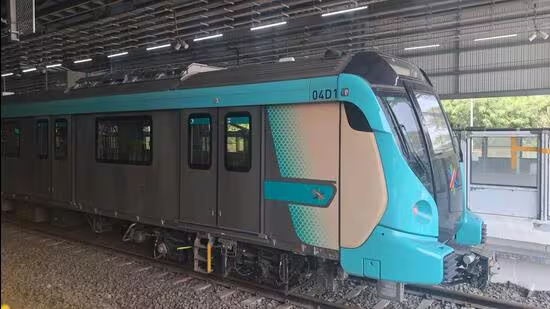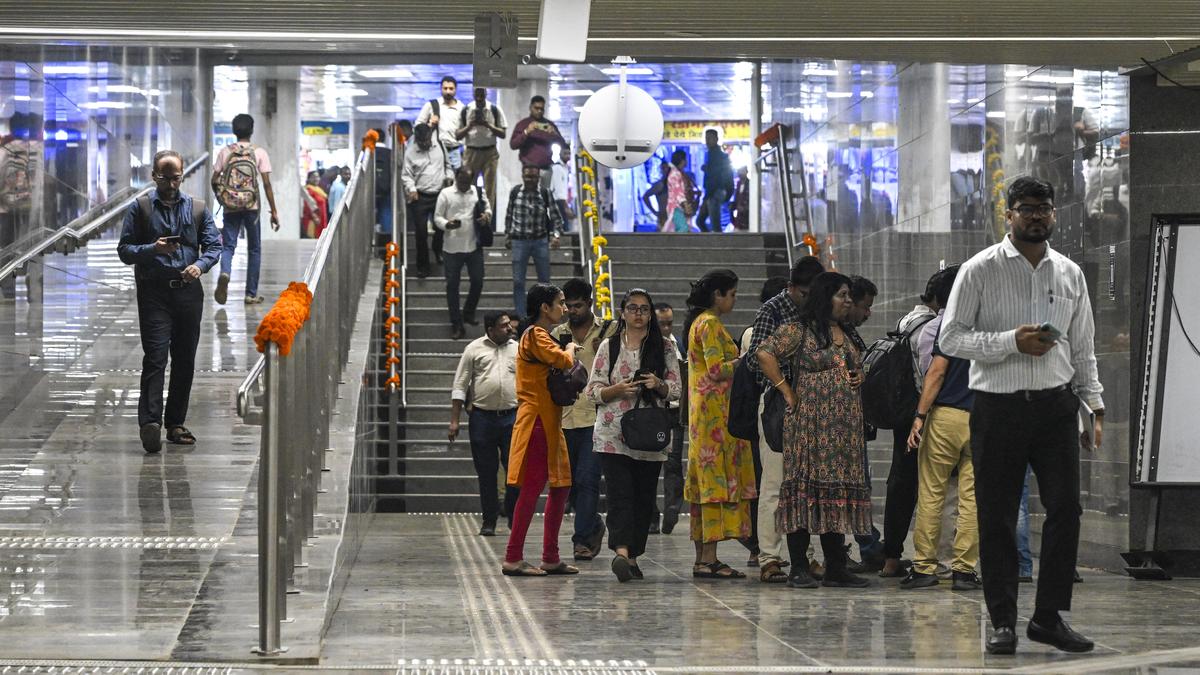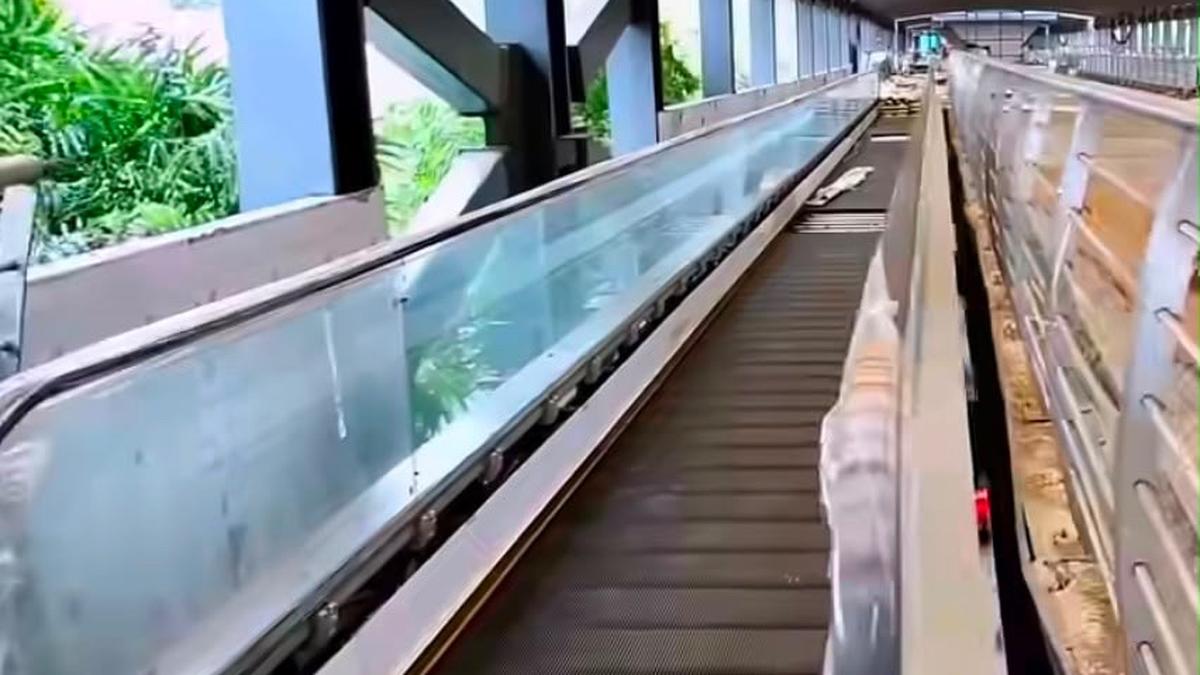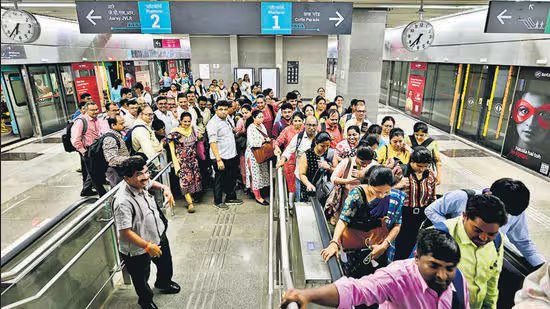
Mumbai: Long flights of stairs, inadequate escalators and poor last-mile connectivity are among the major accessibility gaps on Mumbai Metro 3, otherwise known as the Aqua Line, according to a study by non-profit Moneylife Foundation.The study found that while lifts and escalators are generally operational on the Aqua Line, accessibility could be improved through better planning of vertical mobility and clearer wayfinding. (Anshuman Poyrekar/HT Photo)The study, titled Accessibility and User-Friendliness of Mumbai Metro Aqua Line (Line 3), was conducted by Ashoka University interns Agamya Jain and Mihika Omseema, who surveyed all 27 stations along the 33.5-km metro corridor from the perspective of commuters.According to the report, accessibility varies considerably across station exits, with many requiring commuters to climb long flights of stairs. Downward escalators are available at only a limited number of exits, making station entry particularly difficult for senior citizens and passengers carrying luggage, it said. Last-mile connectivity was identified as one of the biggest concerns affecting the convenience of using the metro.The study also found that while lifts and escalators are generally operational, accessibility could be improved through better planning of vertical mobility and clearer wayfinding. Airport stations pose additional challenges for passengers with luggage because of long walking distances and limited availability of baggage trolleys.The report stated that these shortcomings affect not only persons with disabilities but also senior citizens, families travelling with young children, those carrying luggage and the wider commuting public.Based on its findings, the non-profit has recommended increasing the provision of downward escalators, improving wayfinding and accessibility signage, strengthening last-mile connectivity with other modes of transport and adopting accessibility-focused design principles in future metro projects.Moneylife Foundation said it has shared the report with the Ministry of Housing and Urban Affairs, the Mumbai Metro Rail Corporation, Maha Mumbai Metro Operation Corporation Ltd, the Mumbai Metropolitan Region Development Authority, the Maharashtra government, the Brihanmumbai Municipal Corporation, and other metro agencies and research institutions for consideration.Responding to the study, an MMRC spokesperson said, “As the detailed report is not yet available with us, it would be premature to offer specific comments. We will examine the report in detail and respond appropriately. The planning philosophy for Metro Line 3 has been to ensure station accessibility through an appropriate combination of lifts and escalators, depending on the site conditions at each entry and exit. The non-provision of twin escalators at all entry/exit is primarily due to physical space constraints, both at ground level and underground. However, whenever feasible, additional escalators may be introduced in the future.“All stations are equipped with a minimum of two lifts to ensure accessibility for wheelchair users. Amendments to built infrastructure is difficult. However, certain operational amendments and scheduling can further enhance accessibility. Multimodal integration work is in progress in close coordination with BMC, BEST and other stakeholders,” the spokesperson added.
Long stairs, poor last-mile links hamper Metro 3 access: Study
The study, titled Accessibility and User-Friendliness of Mumbai Metro Aqua Line (Line 3), included a survey of all 27 stations along the 33.5-km metro corridor | Mumbai news
466 words~2 min read