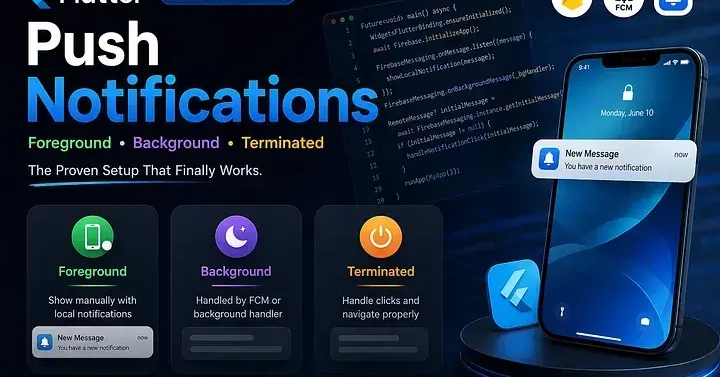
Day-one users saw the system permission dialog before they understood why notifications mattered. Opt-in landed under twenty percent. Product blamed "Flutter push setup." Engineering had wired FCM correctly. The timing was wrong.
Push notifications depend on permission state, platform rules, and when you ask. Apple and Google both punish apps that prompt on first launch with no context. This post covers UX patterns and Flutter implementation choices that protect opt-in rates, separate from store submission checklists or deep link setup covered elsewhere.
If you are still deciding platform scope, our iOS, Android, or cross-platform app planning guide covers when push-heavy products justify native or cross-platform builds. This article assumes you already need notifications and want them to actually reach users.
Mental model: three steps
Product value (user understands what notifications do for them)