"Think step by step" used to be a genuine insight. It isn't anymore — at least not as a complete prompting strategy.
The phrase triggers a reasoning mode, yes. But it gives the model zero constraints on how to reason. The model fills in the blanks the only way it knows: by pattern-matching to whatever sequential reasoning looks like in its training data. For simple arithmetic or well-structured problems, that's often enough. For ambiguous analysis, complex diagnosis, or high-stakes multi-variable decisions? The model steps its way to a confidently stated wrong answer.
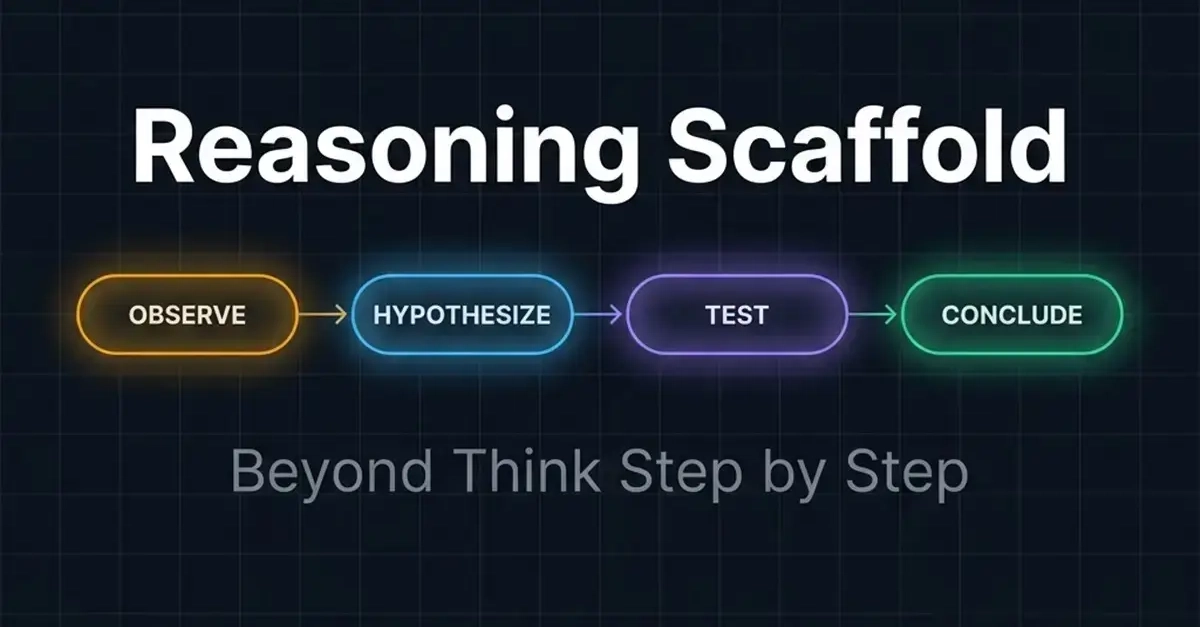
There's a sharper version of this technique. It's called a Reasoning Scaffold, and the difference isn't semantic.
What "Think Step by Step" Actually Does (And Where It Breaks)
To understand why generic CoT fails on hard problems, you need a clear mental model of what it does mechanically.