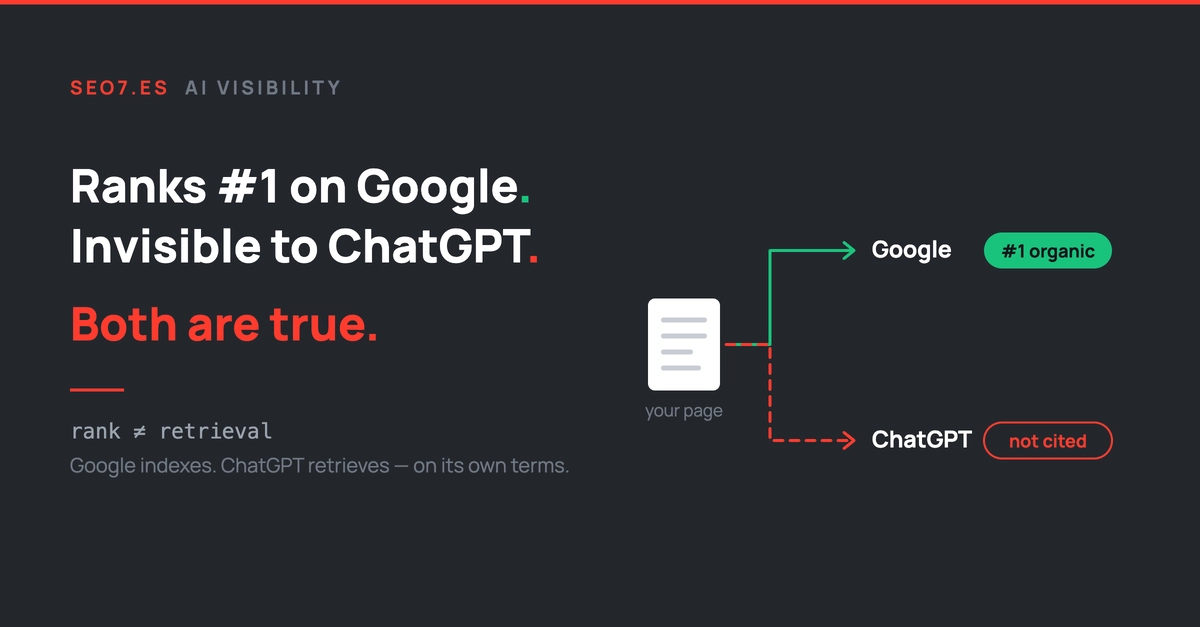
Your content can be brilliant, but if a search crawler receives a blank HTML shell and a bundle of JavaScript, none of it counts. Rendering strategy — where and when your HTML gets built — quietly decides whether Google sees a finished page or an empty stage. For anything that depends on organic traffic, this is the SEO decision that comes before keywords, links, or content. You can do everything else right and still be invisible if the crawler never sees your words.
The three rendering strategies
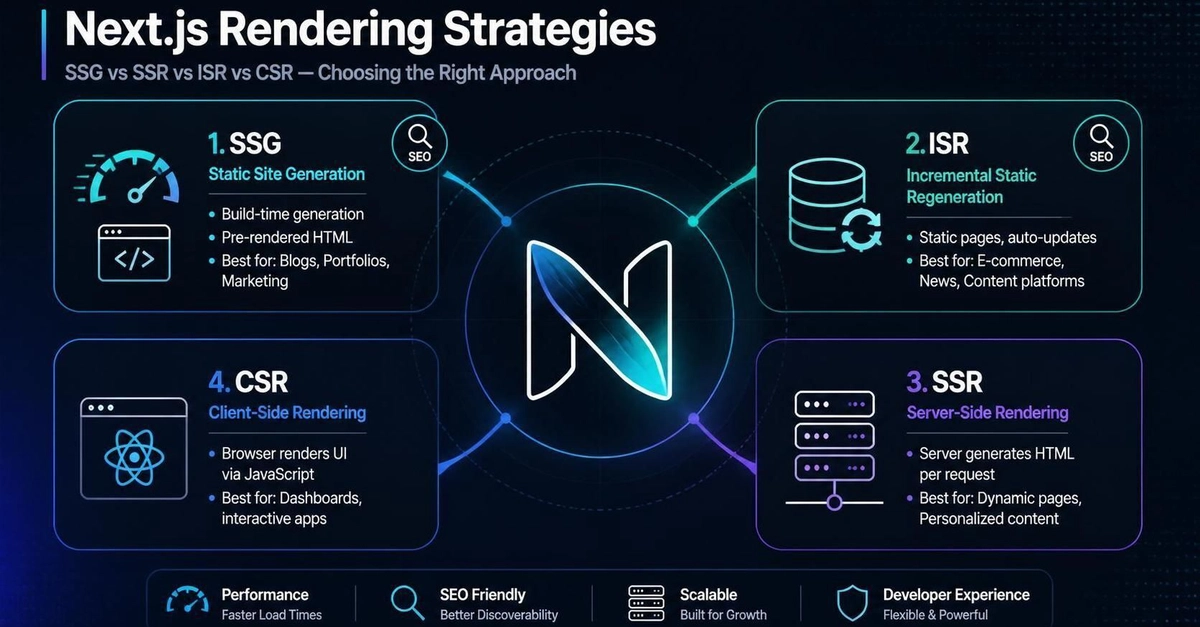
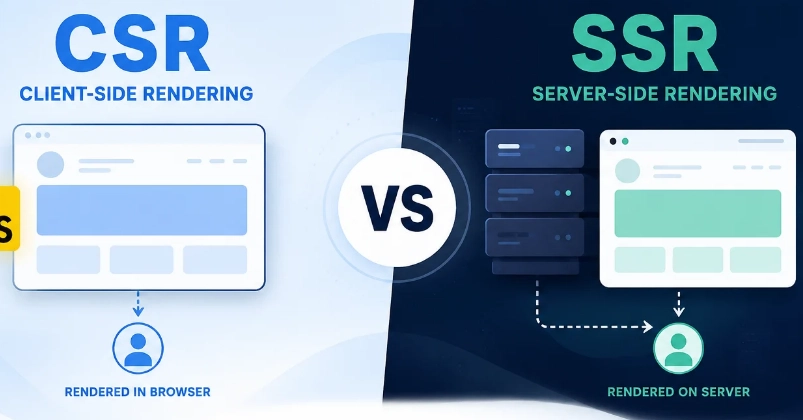
CSR (client-side rendering): the server sends a near-empty HTML file plus a JavaScript bundle. The browser downloads, parses, and executes that JavaScript, which then builds the page. Fast to develop and cheap to host, but the initial HTML — the thing a crawler reads first — is essentially blank.
SSR (server-side rendering): the server runs your application code and builds full HTML for each request, sending it ready to display. The browser paints it immediately, then "hydrates" it — attaching JavaScript to make it interactive.
SSG (static site generation): pages are rendered to HTML once, at build time, and served as static files from a CDN. Fastest of all and nearly bulletproof to serve, but content is frozen until the next build and redeploy.