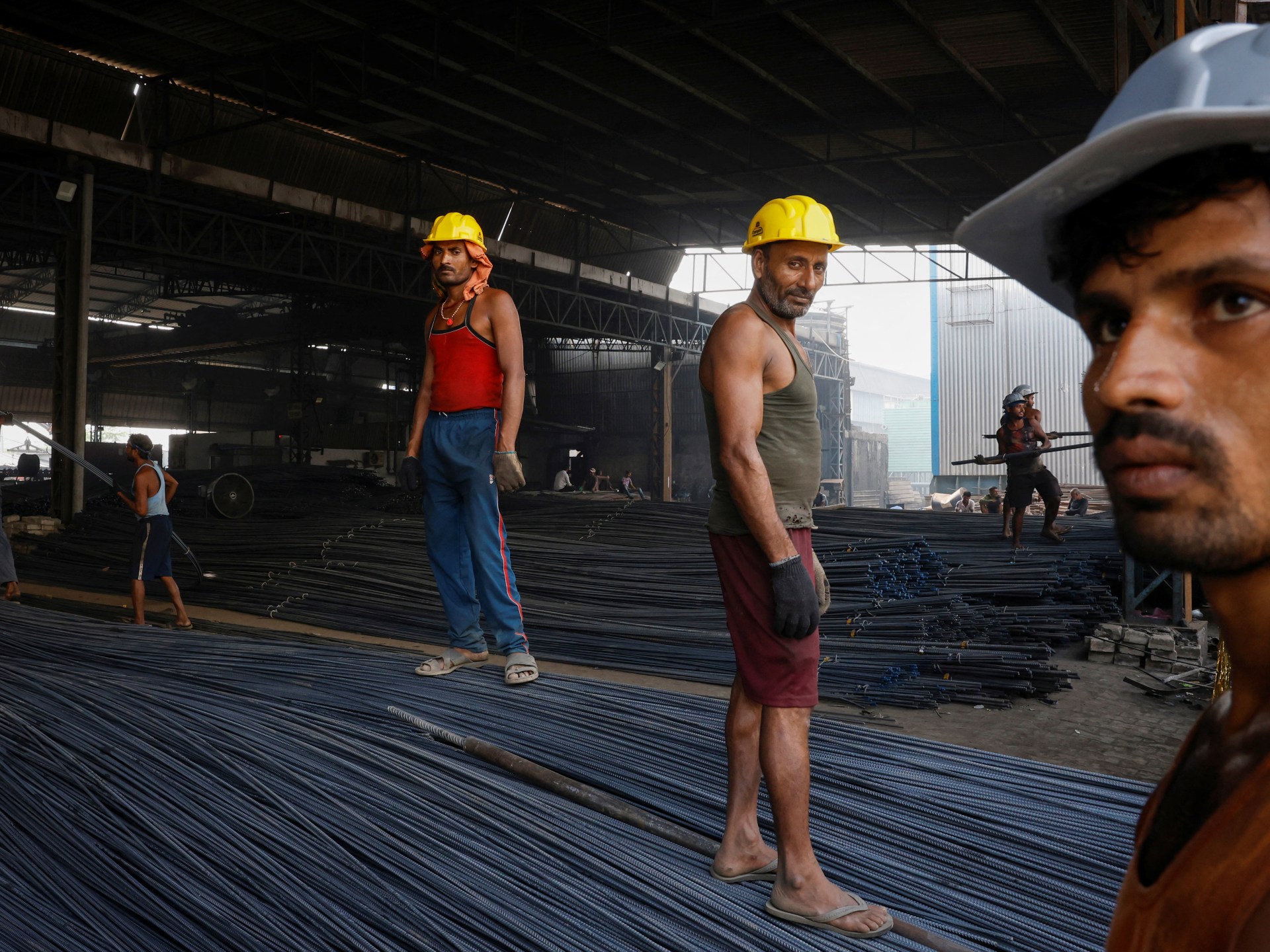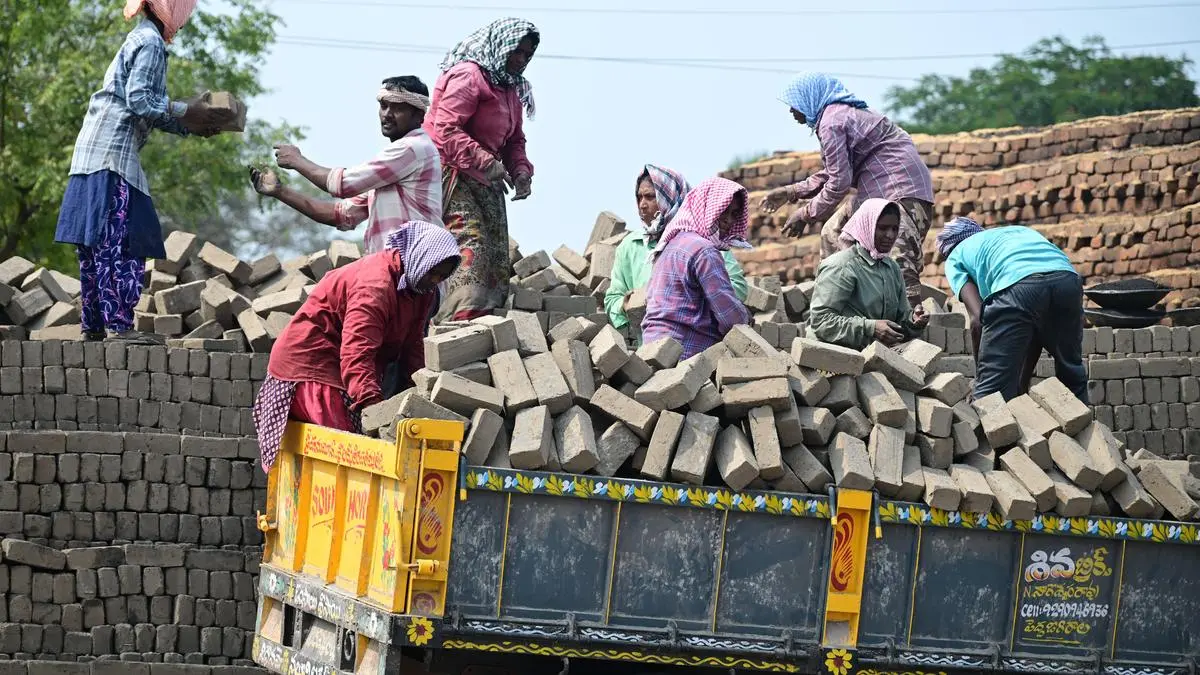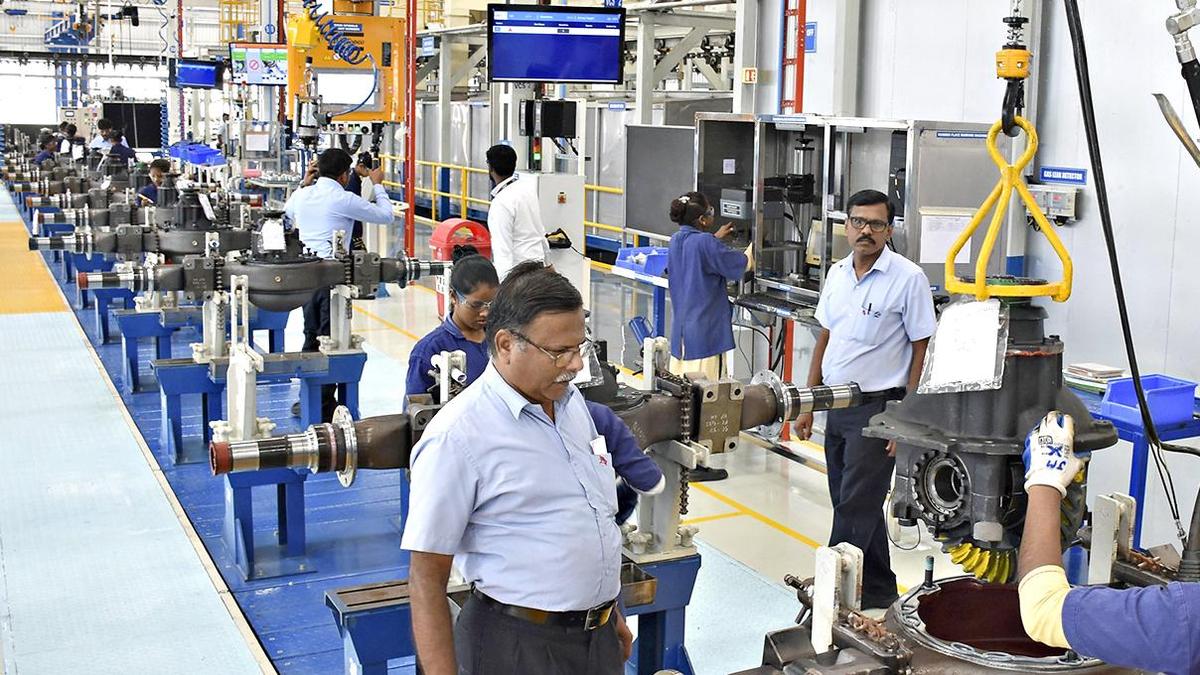
The bottom 50 per cent of India’s population receives only 15 per cent of national income
| Photo Credit:
More than two thousand years before India wrote its Code on Wages, Kautilya had already written one. The Arthashastra made the state the guarantor of a worker’s earnings, and treated underpayment not as a private quarrel but as an offence the state itself punished. The principle was quietly radical, and it still holds: what a person earns for their labour cannot be left to bargaining power alone. A worker with no land and no fallback does not negotiate a wage — they accept one. That is the test India faces today.The principle did not disappear with ancient India. Tata Steel introduced the eight-hour workday in 1912, provident fund in 1920 and maternity benefit in 1928 — decades before any became law in India. Some decisions therefore may appear costly when adopted but prove transformational over time. India today stands at a similar turning point.India’s economic rise has been powered by entrepreneurial spirit, cost competitiveness and a large labour force. More than 248 million people have moved out of poverty in the last decade according to NITI Aayog, while digital public infrastructure, particularly UPI, has transformed access and opportunity. Yet one uncomfortable reality is that many of the gains are concentrated at the top. The bottom 50 per cent of India’s population receives only 15 per cent of national income. Lakhs of workers are employed full-time and remain economically insecure. Economic expansion without wage security creates aspirations without any meaningful participation.Post-1991 India has created jobs at scale across logistics, retail, hospitality, among many other sectors. Many of these jobs remain precarious and low paying. Lack of awareness, informal negotiations, different State-level standards and poor enforcement have produced a labour market where wages often reflect bargaining weakness more than productivity. In many cases, workers are persuaded to prioritise immediate take-home pay over long-term social and medical protections. This is not an abstraction for us. At Apna, where millions of Indians come to find blue- and grey-collar work, the pattern is hard to miss, jobs that pay too little struggle to attract applicants, and the workers who do join often leave the moment a slightly better wage appears elsewhere.The most common criticism of a floor wage is that it distorts market forces and discourages hiring. Let’s be honest about what market forces currently look like. Mostly it’s a desperate migrant worker accepting any wages because the alternative is returning to a village with no work and no future. It’s negotiation at gunpoint. We have just agreed to call it economics.The question is not whether India can afford higher wages. It is whether India can build a durable consumption economy without them. Post-war US and the East Asian tigers expanded consumption by raising wages alongside productivity. When incomes increase at the bottom of the pyramid, the money does not disappear into financial assets. It returns immediately into the economy through spending on food, housing, education, healthcare and transportation.Wages and productivityA contrarian argument for floor wages may not be moral but managerial. Cheap labour often postpones the difficult decisions firms eventually have to make — automation, better processes and worker training. Over time, this weakens competitiveness. Countries that moved up the value chain did not do so by permanently suppressing wages; they did so by raising productivity alongside wages.A sensible floor wage can encourage efficiency, formalisation and transparency while rewarding firms that build sustainable systems rather than rely on labour vulnerability. Firms seeking government contracts, licences or institutional credit will face compliance requirements, giving them a direct incentive to formalise their workforce.A frequently voiced concern is that higher wages will drive away investment. This fear is overstated. Ask any serious investor what brings them to India, and you will hear about talent, market access and digital capability and not just wage rates. The fiction that India must stay poor to stay competitive has outlived whatever usefulness it once had.None of this is to pretend the cost falls on no one. For a small manufacturer or shopkeeper in a Tier-2 town running on thin margins, a higher wage floor is a real expense, not an accounting abstraction — and any honest case for it has to say so. The answer is not to abandon the floor but to phase it in, calibrate it by sector and region, and pair it with the formalisation benefits — credit, contracts, input-tax set-offs — that make compliance worth more than evasion. A floor imposed overnight punishes the smallest firms; one introduced with a glide path lets them adjust while still lifting the worker.Wage structures today vary so wildly across States and sectors that neither employer nor worker knows where they stand. A floor wage doesn’t erase that complexity — it gives it a foundation. States can still go higher; what they cannot do is let working become indistinguishable from charity. Much like GST attempted to unify indirect taxation, floor wages can gradually create a more coherent labour architecture. The objective is not to overtly centralise everything but to provide each constituent what they need: predictability for investors, transparency for employees and a level playing field for employers.Under the Code on Wages, the floor wage serves as a national minimum threshold below which States cannot go, while preserving their authority to prescribe higher wages according to local conditions. Properly implemented, it can extend wage protection across both organised and unorganised sectors.The writer is CEO of Apna.co. Views are personalPublished on July 9, 2026