See more Daily Mail on Google - save us as a Preferred SourceBy SOPHIE CHURCH Published: 00:01 BST, 9 July 2026 | Updated: 00:03 BST, 9 July 2026
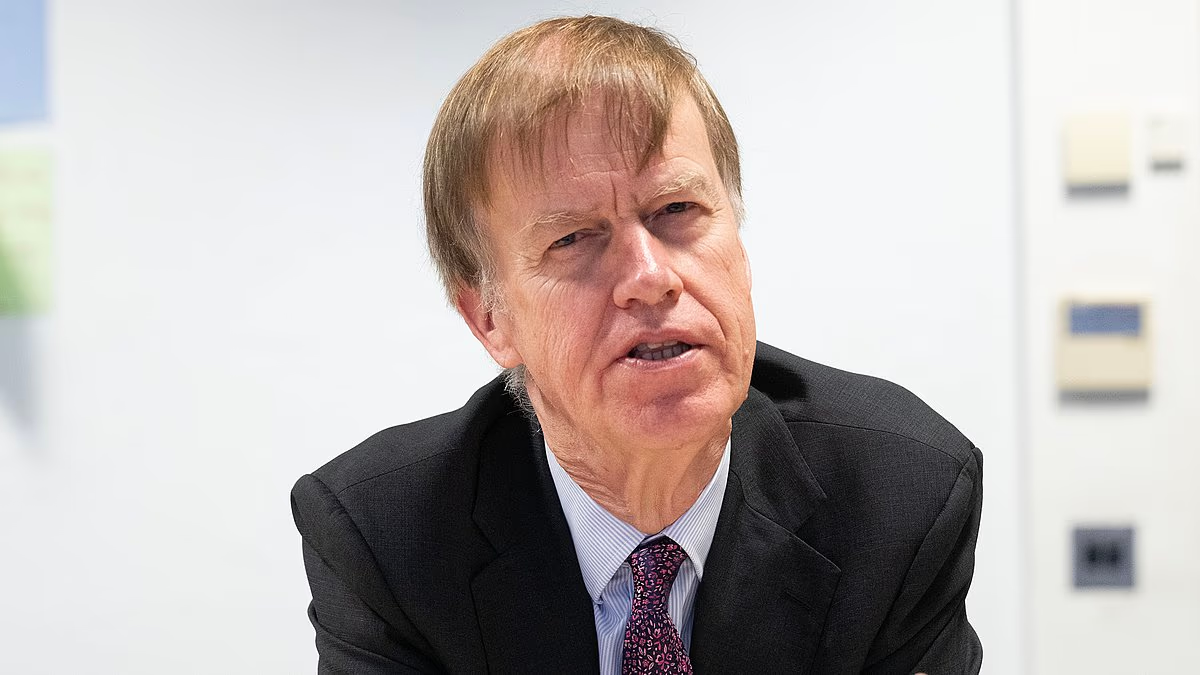
Labour was on Wednesday accused of being 'in denial' over the welfare state's drain on the economy after ministers failed to commit to cutting disability benefits.Britain's welfare bill will 'double' by the end of the decade because government's attempts to reform disability benefits 'rule out making any savings', the government was warned.This comes as Labour's review into personal independence payments (PIP), published on Thursday, neglects to mention whether Britain's bloated benefits bill would be cut.Instead, the review – which Keir Starmer launched last summer in embarrassment after u-turning on his benefits clampdown – merely claims that PIP payments are 'no longer fit for purpose' and must be overhauled.It adds that millions of Brits are being failed by the disability benefits system, which is stopping those with complex needs from working, exercising and socialising.Commenting on the findings, disability minister Sir Stephen Timms, who co-chaired the review, said PIP is 'not working as intended and needs fundamental change'.But Helen Whately, shadow work and pensions secretary, blasted Labour on Wednesday for being 'in denial about the welfare state'.She said: 'They have at last admitted it is broken – but what they mean is it's too hard to get benefits and not generous enough. They couldn't be more wrong. Sir Stephen Timms, who co-chaired the review, said PIP is 'not working as intended and needs fundamental change''The Timms Review rules out making any savings; worse, it makes the doubling of the PIP bill by the end of the decade inevitable. And it does nothing to tackle abuse of the system.'Keir Starmer had no plan for welfare and no backbone to get reform through his backbenchers. Andy Burnham must not make the same mistake.'And Reform UK chairman Lee Anderson said: 'Last year, Labour watered down welfare reforms. Now they're admitting the very system they're responsible for isn't fit for purpose.'The Government didn't need a lengthy review to reach that conclusion.'This comes as Work and Pensions Secretary Pat McFadden suggested this week spending on benefits is not a top priority for Government as it attempts to reform welfare.Speaking at a Good Growth Foundation event on Tuesday, Mr McFadden said: 'I'm not saying cost doesn't matter, but I want to get the cost under control down by putting work and opportunity at the heart of the system.'Mr Burnham, who is set to take the keys of No 10 in just over a week's time, said in June he is not 'squeamish' about wanting to cut the welfare bill.But in a worrying signal for Britain's crumbling economy, he said he would rule out making 'crude' short-term cuts – instead pointing to long-term plans to 'support people into work'.And left-wing think tank the Resolution Foundation agreed PIP reform should focus on 'how people actually experience disability, rather than on making short-term savings that have motivated the last two attempts at reform'.Yet Labour has approved an average of 40 PIP claims a day over the past two years where ADHD is cited as the main condition, it emerged this week – prompting concern the Government is disincentivising people to work.According to government forecasts, total PIP expenditure totalled £15 billion in 2019 to 2020, and £26 billion in 2024 to 2025. But spending is set to increase to more than £41 billion in 2030.A Department of Work and Pensions spokesperson said: 'This Interim Report, as its terms of reference clearly state, was not intended to set out the final shape of PIP or its costs – but highlight the issues around it, and what needs to be reformed ahead of solutions set to be published in the autumn.'We inherited a system of rising costs and poor outcomes for too many people, as well as a collapse in face-to-face assessments inherited from the previous government which we are rectifying.'We're already taking action to fix the broken welfare system, including by extending award review periods which will remove unnecessary pressure on disabled people and help to deliver savings of around £2 billion.'