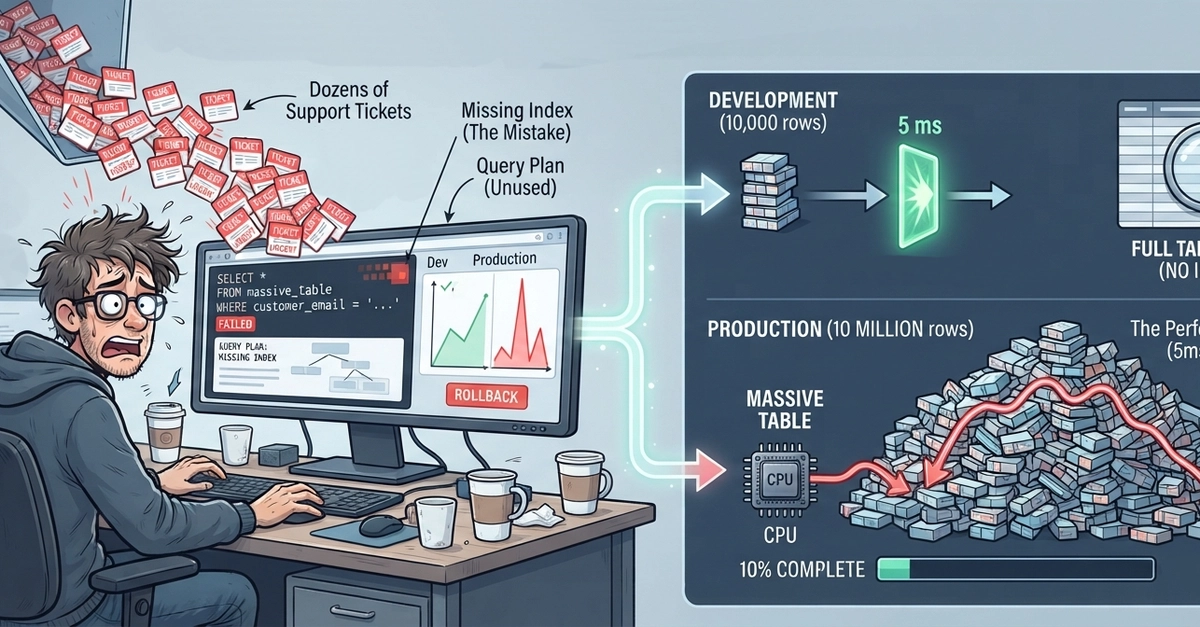
Almost every "the database is slow" complaint we investigate comes down to a missing or misused index. Indexing is the highest-leverage performance skill a developer can have, and yet it's often treated as arcane. It isn't. Once you understand what an index actually is and how to read a query plan, you can turn a ten-second query into a ten-millisecond one on purpose instead of by luck.
What an index actually is
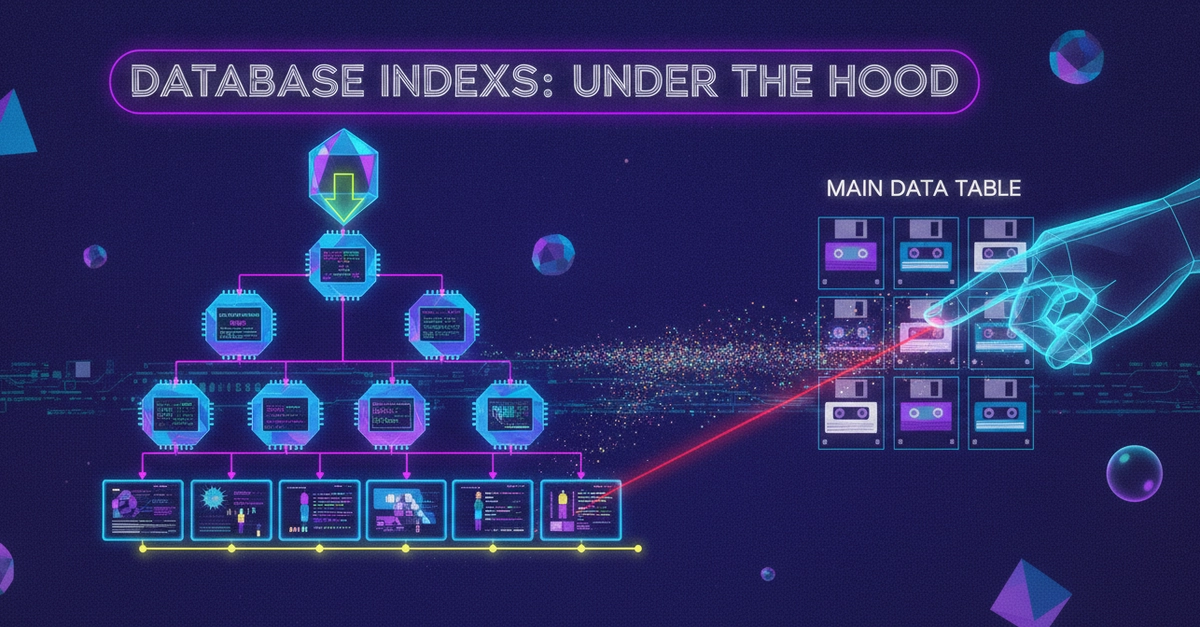
Think of an index like the index at the back of a book. Without it, finding every mention of a topic means reading every page — a sequential scan. With it, you jump straight to the right pages. In a database, an index is a separate, sorted data structure that lets the engine find rows without examining the whole table.
Most indexes are B-trees, which keep values sorted so the database can binary-search them. That's why a B-tree index speeds up equality (=\), ranges (<\, >\, BETWEEN\), sorting, and prefix matches — but does nothing for a leading-wildcard LIKE '%foo'\.
Index what you filter, join, and sort on