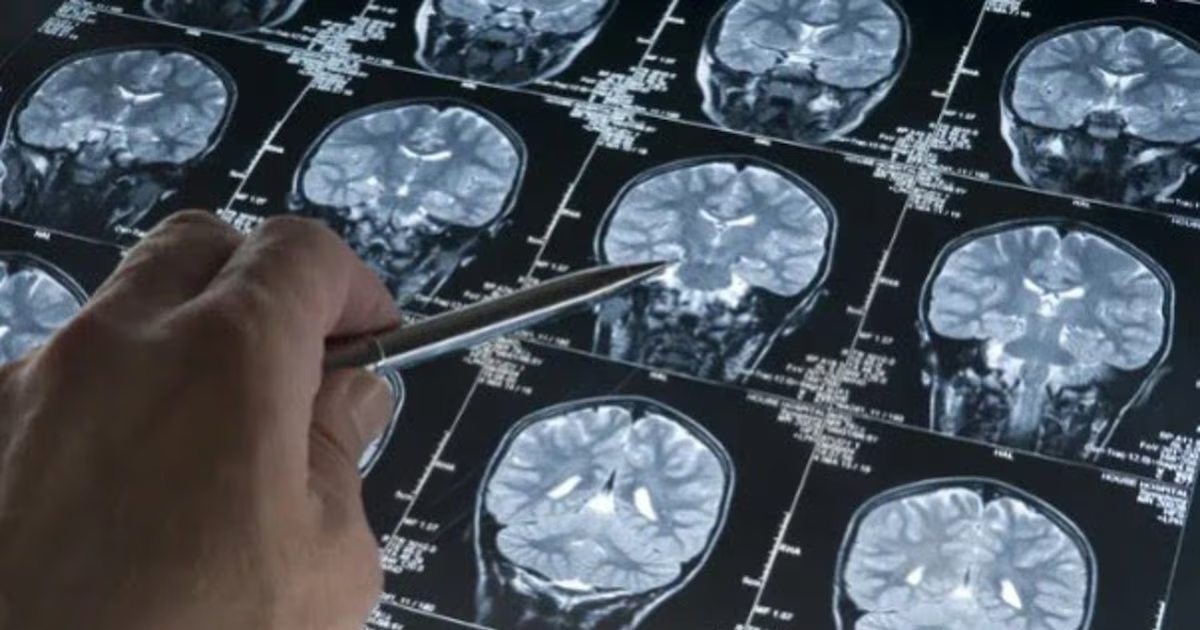
A new study found that National Football League players are four times likelier to die due to neurodegenerative disease than the general population. The cohort study of nearly 20,000 NFL players revealed that while players had lower mortality on average compared to national rates, they were four times more likely to experience neurodegenerative mortality. Results of the research from Mass General Brigham, Boston University, and the Concussion & CTE Foundation are published in eClinicalMedicine.
“This is the clearest population-level evidence we have ever had that NFL players are dying due to neurodegenerative disease at real and measurably higher rates,” said co-senior author Daniel Daneshvar, Harvard Medical School associate professor and chair of the Department of Physical Medicine and Rehabilitation at Spaulding Rehabilitation Hospital. “This study demonstrates that, when looking at athletes who have played in an NFL game, including nearly 20,000 players, across every official cause of death, the result is the same: NFL players are dying of dementia and Parkinson’s disease three to four times more often than they should.”
Neurodegenerative diseases, like dementia, ALS, or Parkinson’s, affect tens of millions of people worldwide. Typically, age is the biggest risk factor for developing neurodegenerative diseases, but studies have revealed individuals with repetitive head impact exposure — like pro football players — also have higher incidence of the diseases. In the biggest retrospective cohort study to date, researchers looked at health records of 19,824 NFL players who competed between 1960 and 2019 to determine exactly how much higher.