Rubies — seared in the popular imagination as sparkling adornments for Dorothy’s slippers in “The Wizard of Oz” and as loot spilling out of pirates’ treasure chests — are more than just ornaments. The precious gemstones help scientists understand the natural world.
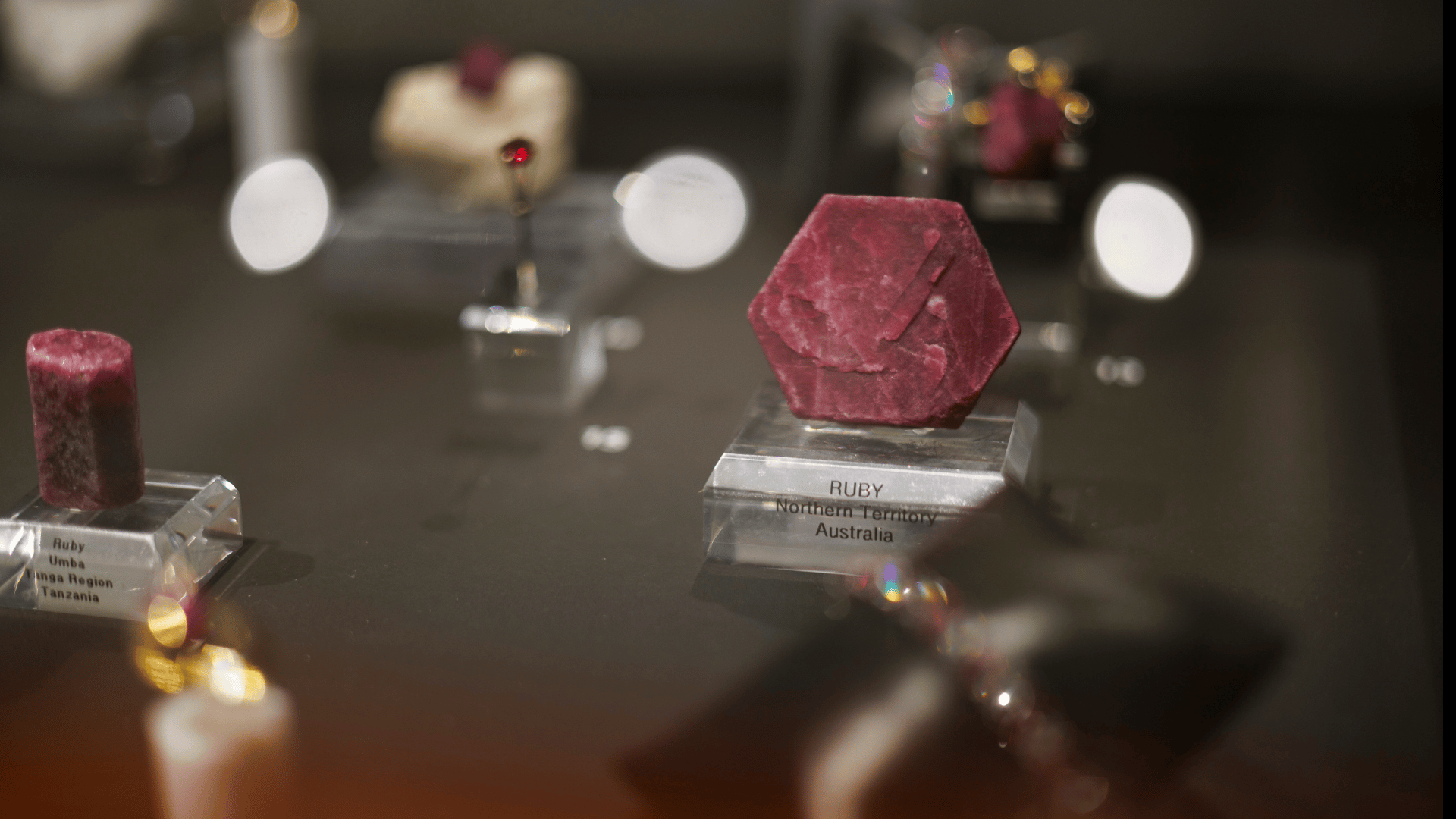
Newly displayed in the Earth and Planetary Sciences Gallery of Harvard’s Museum of Natural History are rubies big and small, sparkly and rough. They were mined from Harvard’s vast Mineralogical and Geological Museum collection, which includes more than 300,000 mineral specimens.
“We wanted to highlight both the gem specimen and the rough crystal that it comes from, so you’ll see some jewelry and some gems, but you’ll also see natural rubies,” said Rachel Gnieski, a collections manager at the Mineralogical and Geological Museum.
Rubies in their natural form have multiple material applications. Because of their strength, lower-grade rubies can be used as industrial abrasives. And the chromium in rubies allows for the emission of red light, making ruby crystals crucial components in lasers used in medical procedures, communication systems, and scientific research.
“The Soul of Flame II,” a brooch designed by Austy Lee.