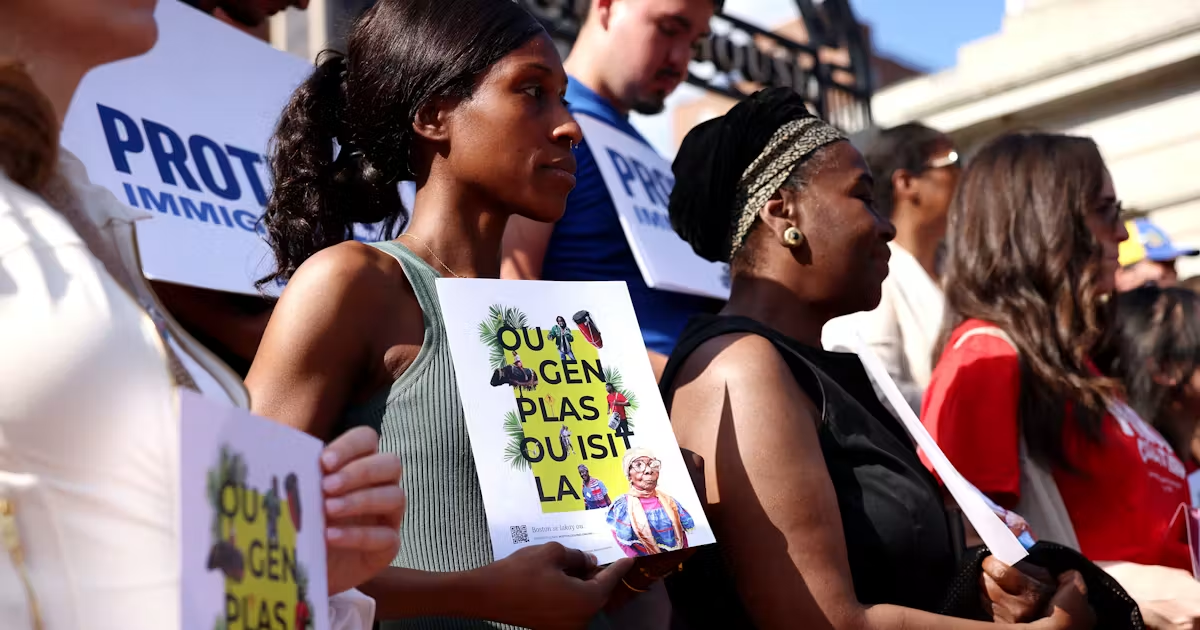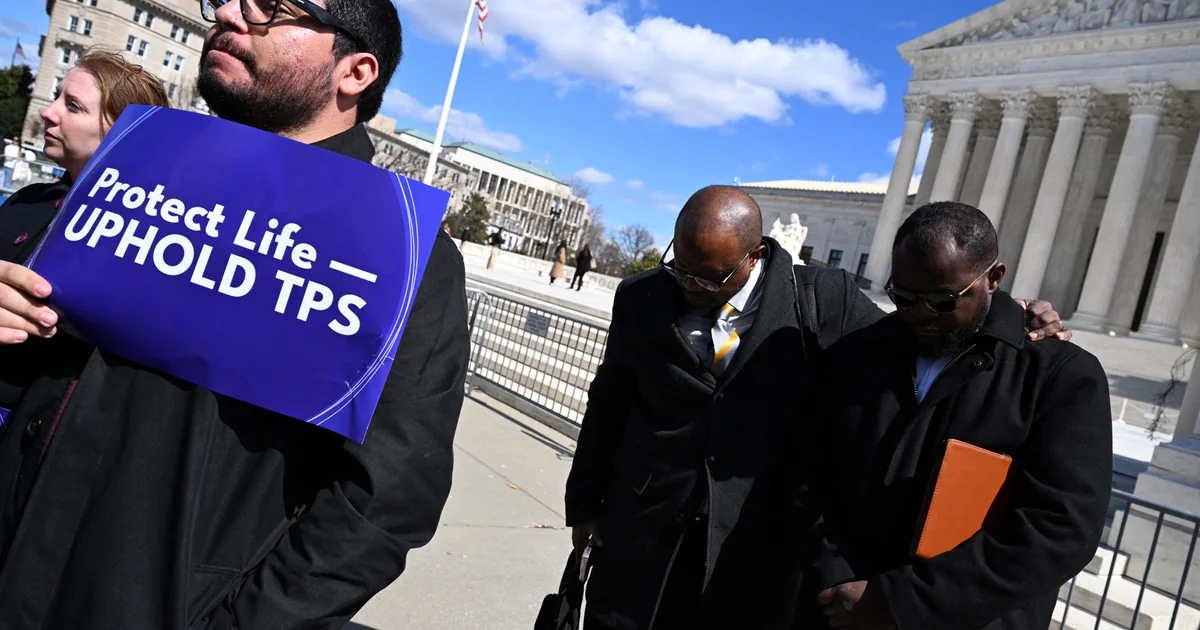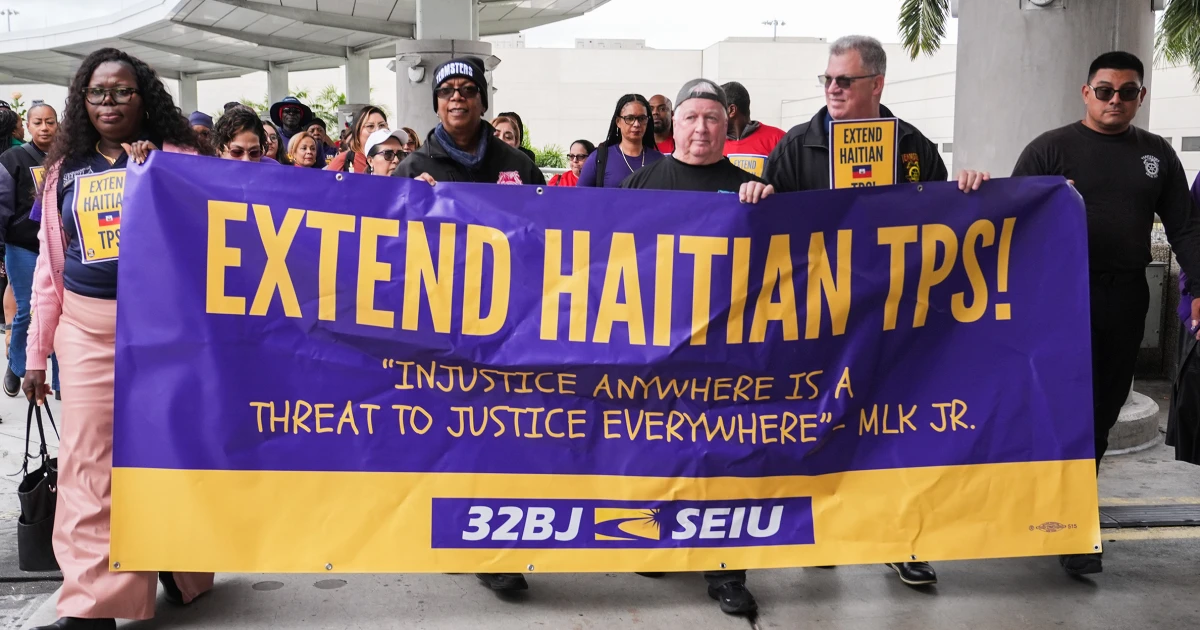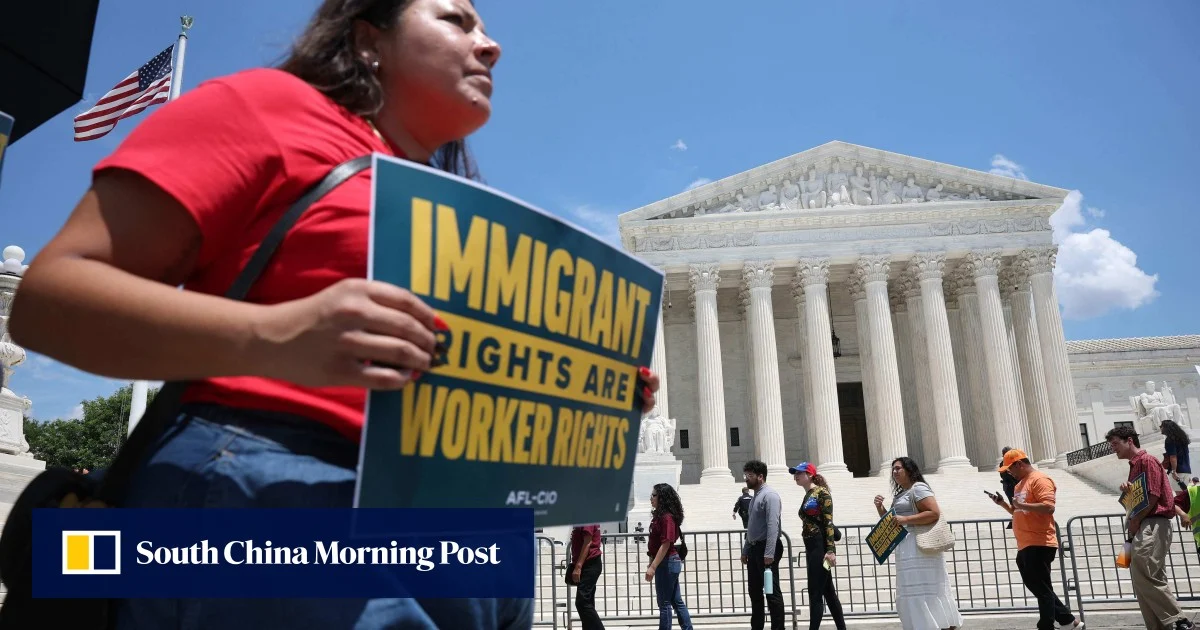
Earlier this summer the Supreme Court decided that the Trump administration can end temporary legal protections for Haitian and Syrian immigrants in the United States. This means something like 356,000 people could face detention and deportation. The Temporary Protected Status designation is for people who have come to the U.S. fleeing natural disasters or social unrest.At the same time, there's been a recent spike in immigration enforcement action around the country. The New York Times last week reported a surge: more than 10,000 people detained in a five-day stretch. This comes after the high-profile ICE raids in places like Minnesota from earlier this year and late last year.For more on what this all means for the U.S. economy, “Marketplace Morning Report” host Sabri Ben-Achour spoke with Zeke Hernandez, a professor at the University of Pennsylvania’s Wharton School. The following is an edited transcript of their conversation. Sabri Ben-Achour: So, this case was specifically about immigrants on Temporary Protected Status from Haiti and Syria, but a lot of experts believe this ruling is likely to extend to 1.3 million people who are currently on TPS from as many as 17 countries. Do you think that? Is that what you expect?Zeke Hernandez: Yeah, that seems to be the case, or at least the pretext that the administration is trying to use. So, I think we should assume that the intent is to affect a lot more people. Ben-Achour: Already then, basically, a magic wand has been waved, and 356,000 people are no longer allowed to legally participate in the economy. If that becomes 1.3 million people, what does this all mean for the economy?Hernandez: Yeah, however you look at it, it's not good for the economy, and that's an empirical statement. Several economists, including myself, have tried to calculate what the effect would be. I was part of a group of economists that signed an amicus brief on the case for Venezuelans and Haitians specifically, and we estimated billions of dollars in lost GDP, hundreds of thousands of lost jobs. And that's not the jobs lost because these people cannot legally work, we're talking about jobs that these people help create for other Americans because they're consumers, because they pay taxes, because they often start businesses of their own. And so, this is bad for Americans, not just for the people that are the targets.Ben-Achour: One argument you will hear some Americans make, the Trump administration will make, is that these people are not contributing to the economy — they're siphoning off resources from it. And that ending their permission to be here will open up jobs for Americans, push up wages. What are your thoughts?Hernandez: It's exactly the opposite. Again, we've seen this very clearly. I mean, the most famous anecdote would be Springfield, Ohio, right? And all the economic gains that have come to that place. It's not a coincidence that Governor Mike DeWine, a Republican, at some risk to his political career and his own party, has been very outspoken about the economic benefits that these Haitians have brought. One way that I often like to think about this is in terms of the five fingers of my hand, right? And each finger representing one of five key economic benefits that immigrants bring. Number one, investment. Immigrants bring more investment in the form of new businesses they create and investment that they attract, because they grow the economy. They bring talent that fills necessary jobs. They consume, they pay taxes, and of course many of them innovate — bring new products and technologies that benefit everybody.Ben-Achour: Your research suggests ICE raids — this kind of enforcement — affects economic activity. You want to explain how?Hernandez: What I found is that during the first year of the current administration, the ICE raids in targeted cities caused a drop of over 8 billion unique visits to business places. That's both people not showing up to work and people not showing up to shop. And that adds up in places that sell something, up to $14 billion in lost revenue. Those effects are persistent — that is, they didn't go away over time. They weren't just short-term blips. And they affected small and medium businesses way more than large businesses.Ben-Achour: Why do you think it affects smaller businesses — mom and pop stores — more than, say, bigger national chains?Hernandez: I think there's at least two reasons for that. The first one would be simply that independent businesses don't have a corporate headquarters that can come to the rescue, right? They can't, say, maintain their cash flow or subsidize an employee. The other reason might have to do something with ICE tactics, in that ICE is going to be more likely to target small businesses, like a corner supermarket. That's going to be less disruptive and put them in a less negative light in the media than targeting, say, a Walmart or a Target that has to shut down for a few hours. And so, I think both of those things may be going on, but I think the first one is the more important explanation.Ben-Achour: It makes sense, right, that economic activity would be disrupted, especially people who don't want to go outside, they don't want to be exposed. But I mean, does that not just shift economic activity to online, for example, or delivery — that kind of thing?Hernandez: I didn't find that people are just switching to online shopping. In fact, one of the interesting things I could track is if shoppers were using delivery apps like Uber Eats or Instacart. The use of those delivery apps actually went down as well after places were targeted by ICE. That's because this is not just a shock to spending — or where you spend — this is also a shock to people showing up to work. That's what's really dangerous about this: it threatens to kick off a downward spiral. Because if fewer people are showing up to work, they're making less income, they're spending less. If they're spending less, businesses have to cut back in hiring and selling, and it's really quite damaging.Ben-Achour: Are the economic consequences like a blip that we recover from, or do they hang with us, with the country for a while?Hernandez: I think one of the things that we have to understand better, and this is going to take time, is what is the effect of trauma? Right? I mean, what you're doing here is you're essentially creating an economy of fear. When a business closes, you can't just snap your fingers and open it back up, right? Workers have moved somewhere else. The capital is gone. It takes a while for us to recover that. So, I think if anything, the larger long-term effects could be more damaging. I'm thinking not just of business closure but think of how much are people going to invest in a community? Think of innovation, right? Think of people who are willing to bring new ideas, new businesses, new products to a location. We don’t even know what the effect on that is going to be.
How immigration crackdowns hurt the U.S. economy
ICE has ramped up immigration arrests. That, on top of changes to temporary protected status, could have huge economic implications.
1,189 words~5 min read