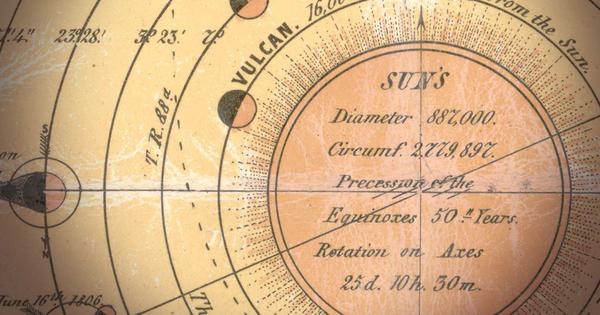
Limited by the knowledge of his time, the ancient Greek astronomer Ptolemy imagined that the planets and sun of our solar system orbited Earth. Every new observation that pushed against this image required a slight tweak to that theory, until centuries later Nicolaus Copernicus’s reimagining toppled it once and for all. A more elegant explanation proposed that all the planets orbited the sun, kicking off a scientific revolution that changed our understanding of the entire universe.
Simpler explanations have supplanted prevailing knowledge time and again – special relativity won out over the luminiferous aether, continental drift more easily explained similar fossils on separate continents than ocean-spanning land bridges that sank eons ago. This is the spirit of Occam’s razor, the principle attributed to the 14th-century friar William of Ockham, which tells us to opt for the simplest explanation that fits the facts.
But what if scientific progress doesn’t always work that way? What if it’s better to zoom out and start from complexity instead of simplicity? Only then might we begin to magnify the hidden structures that were previously invisible.
Cognitive scientist and philosopher Marina Dubova at the Santa Fe Institute in New Mexico, argues that Occam’s razor is just one of several rules of thumb obstructing our efforts to paint a true picture of reality. By building computer simulations and putting researchers in “micro-world” experiments, Dubova turns the principles of psychology and cognition on scientists themselves. She’s finding that some of the most cherished assumptions about the best way to search for truth are on shaky ground.