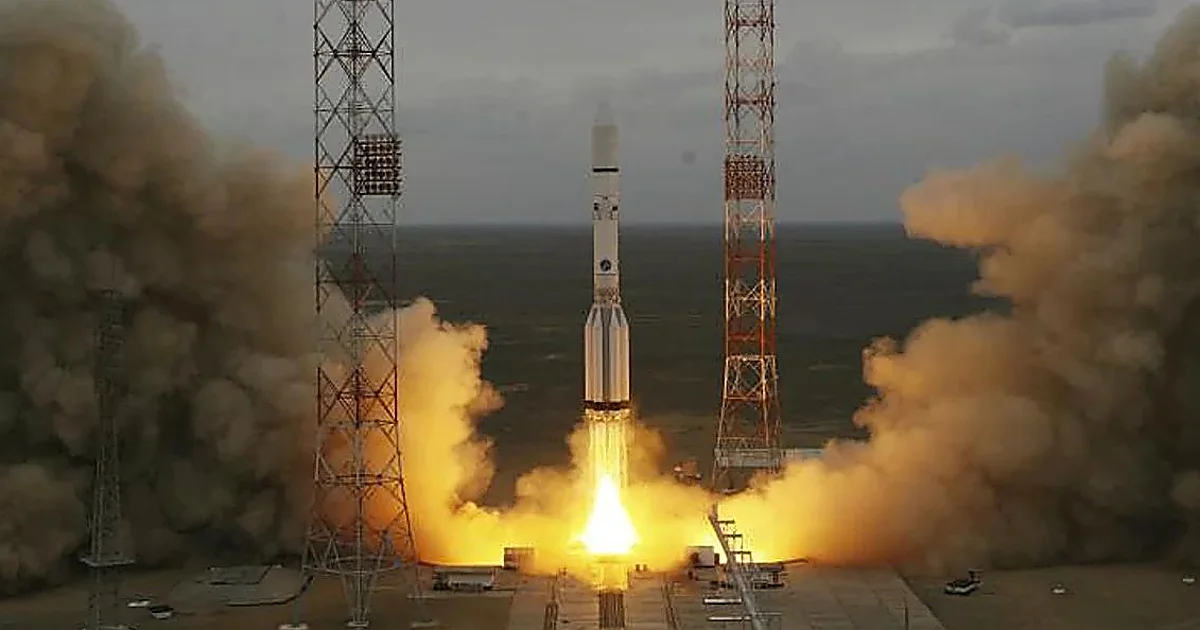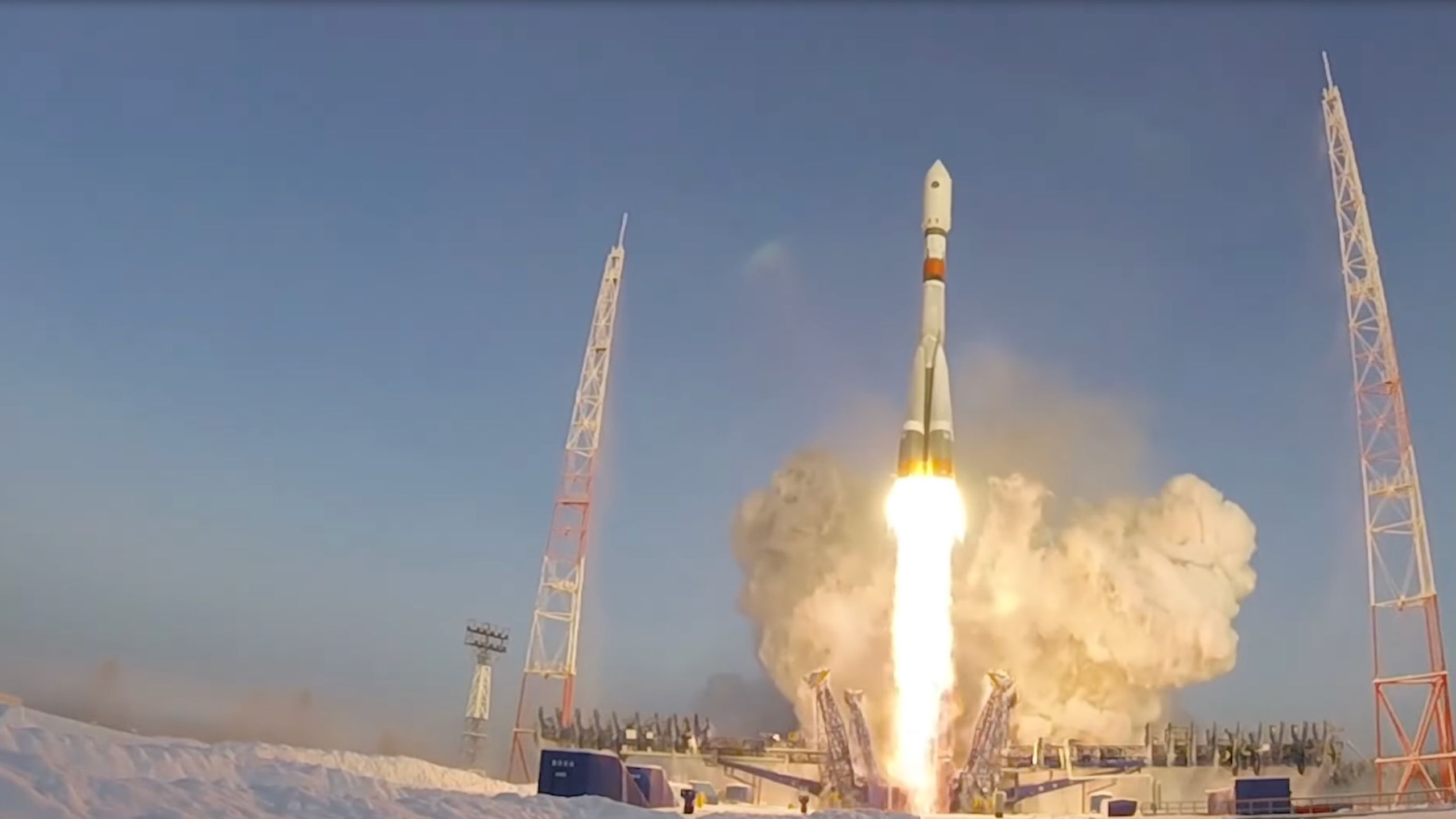
A Russian Soyuz-2.1a rocket launches the Kosmos-2553 satellite from Plesetsk Cosmodrome on Feb. 5, 2022. Some outside observers have speculated that Kosmos-2553 might be testing components for a future orbital nuclear weapon.
(Image credit: Russian Defense Ministry)
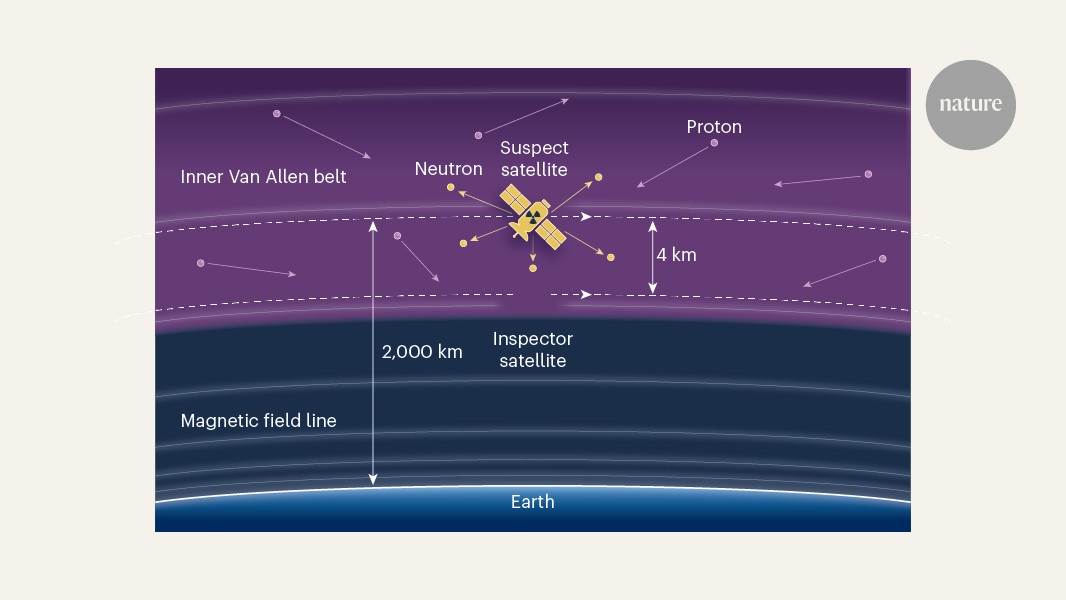
A constellation of cubesats fitted with special detectors could sniff out nuclear weapons hidden on satellites launched by adversary nations, according to a new study.In 2024, rumors began to swirl in military circles that Russia might be developing a space-borne nuclear weapon. At that time, two years into the war in Ukraine, Russia was well aware of how big a lifeline SpaceX's Starlink broadband constellation had been for the Ukrainians. Starlink has not only provided connectivity to ravaged cities and frontline troops but also helped Ukrainians counter-attack the Russian invaders more effectively.Drones fitted with Starlink terminals could reach much more distant targets than those controlled via conventional radio links. As the Starlink signal is almost impossible to disrupt by jamming, the idea that Russia might consider wiping the megaconstellation out by brute force didn't seem impossible.Researchers know that a nuclear detonation in orbit would flood the space around Earth with fast, energetic electrons. These particles would destroy most unhardened satellites within range, which would extend to orbits even hundreds of miles away from the explosion."It would make the low Earth orbit and very low Earth orbit — where the Starlink satellites are, where many reconnaissance and communications satellites are, and where the International Space Station is — uninhabitable for a long period of time," Areg Danagoulian, an associate professor of nuclear science and engineering at the Massachusetts Institute of Technology and the author of the new paper describing the proposed detection method, told Space.com."We would essentially not only lose the satellites in those orbits, we would lose those orbits for a few years," he added.Humankind has already seen the effects of a nuclear explosion in space. In 1962, the U.S. detonated a 1.4-megaton hydrogen bomb at an altitude of 240 miles (400 kilometers) above the Pacific Ocean. Radiation from the explosion, known as the Starfish Prime test, destroyed one-third of all satellites in orbit at that time. Admittedly, there weren't that many up there — fewer than 100 — but the impact was far-reaching.Today, a nuclear detonation in space would be a catastrophe. It would knock out internet-beaming constellations such as Starlink and Amazon Leo, as well as hundreds of Earth-observing satellites that keep an eye on the activity of adversary nations, the changing climate and areas struck by natural disasters.