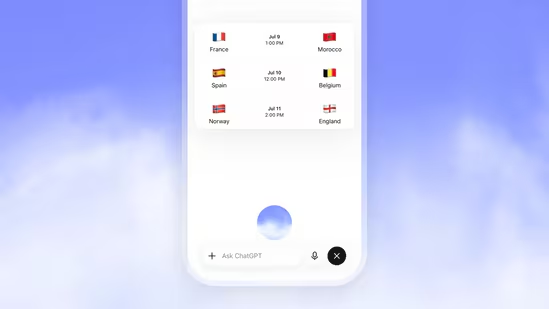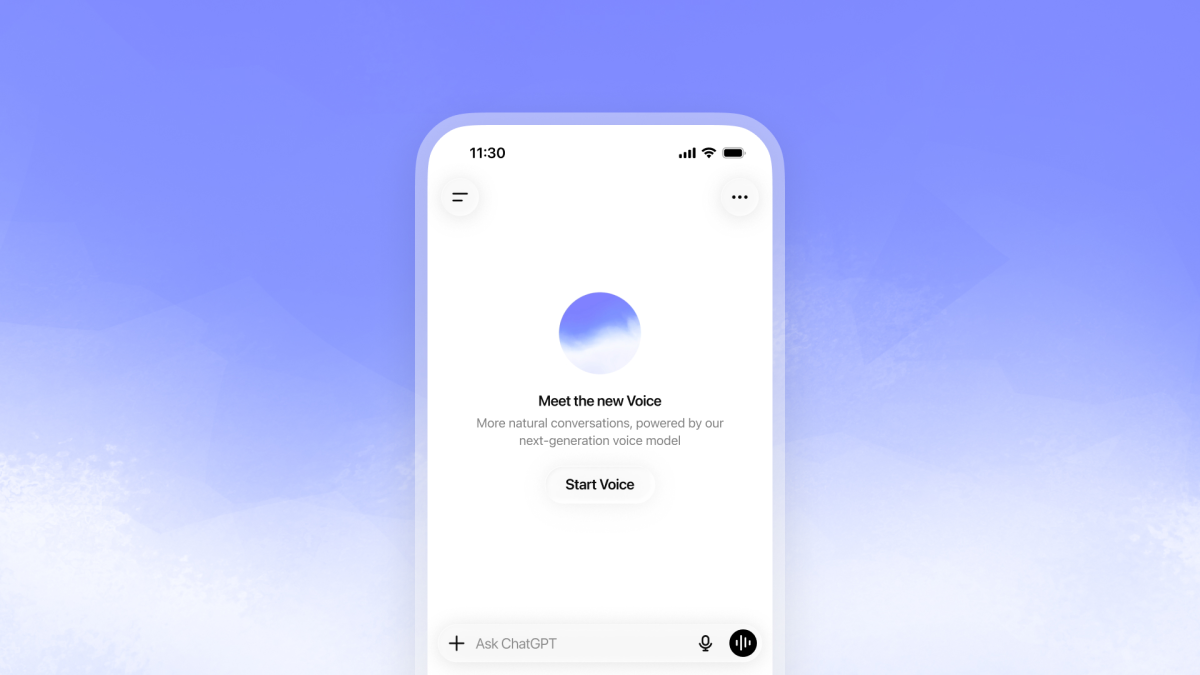
OpenAI is rolling out a new generation of voice models for ChatGPT, aiming to make conversations with its AI sound more natural while routing these queries to its best models.Why it matters: The company sees this as a step toward a future where voice is the primary way people interact with AI. Zoom in: OpenAI says its smartest voice models yet, GPT-Live-1 and GPT-Live-1 mini, make conversations feel more human by allowing users to interrupt naturally and pause speech without the model cutting them off.The voice models will now route queries to OpenAI's latest frontier text models, addressing what executives acknowledge has been a limitation for users. They can also listen and speak at the same time, aiding in language translation capabilities. What they're saying: "This is the beginning. Over time, we think this will also unlock the ability to use voice as kind of the primary interface to computing," Atty Eleti, product lead for ChatGPT Voice, said.It can also be used to "manage increasingly complex, long-running, agentic work."Follow the money: Voice is typically a more expensive and token-heavy way to interact with an AI model. OpenAI said inference costs have come down enough to make the economics of voice work, so they're rolling this out to free users starting Wednesday.The intrigue: Given the company's push into hardware, the focus on voice could be an indication of future plans for a device that users interact with primarily via voice. OpenAI said they did not have any hardware related news to share on a press briefing call with reporters about the voice models. Friction point: Audio is stored for 30 days for context and memory, though users can delete and export data any time. For voice, training models off of user queries is automatically turned off, and conversations will only be used in training if a user opts into that.
OpenAI bets voice will become AI's primary interface with new models
OpenAI is rolling out a new generation of voice models for ChatGPT, aiming to make conversations with its AI sound more natural.
309 words~1 min read