AP, BERLIN
They called themselves the “German driving school for experts,” but prosecutors say the true purpose of their Telegram chats was to brag about the women they raped and share tips about how to drug them.In posts that sometimes included photos and videos of their attacks on unconscious women, they referred to women as “cars,” sedatives as “fuel” and rape as “driving,” court documents showed.They called the women “dead pigs.”
The logo of the Telegram app is pictured in an arranged photograph on June 19.
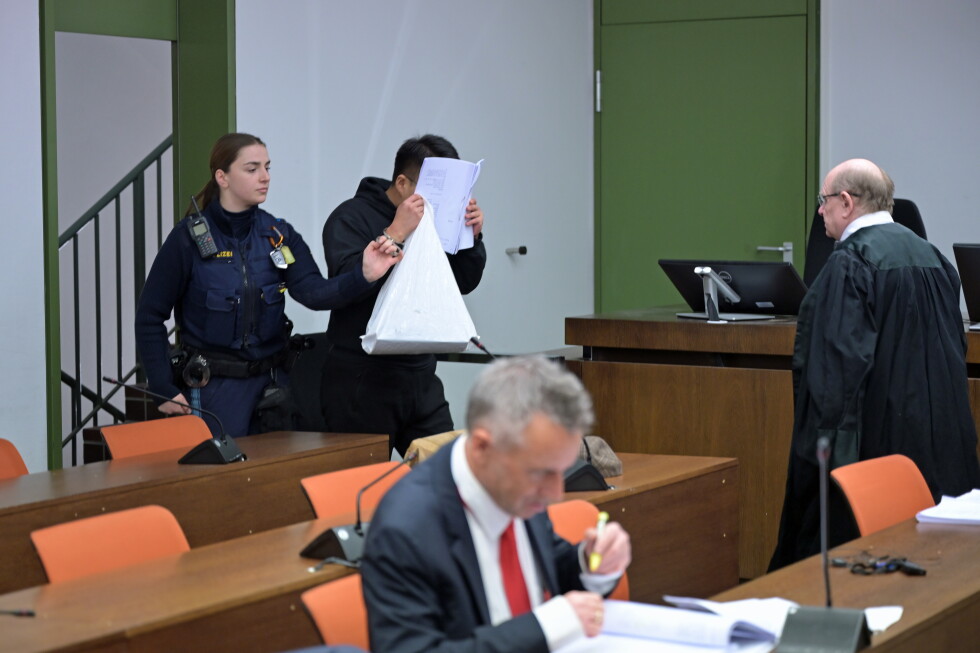
Investigators have been poring through several years’ of posts in roughly two dozen group chats on the messaging app that authorities believe served an online predator network of mainly Chinese men targeting mostly Chinese women in Germany.Their investigation has led to the convictions of three alleged inner circle members on rape and other charges, and the ongoing trial of a fourth man in Berlin.
“The perpetrators were characterized by a particular ruthlessness, an objectification of the victims and the perfidious planning of their crimes,” Frankfurt chief prosecutor Dominik Mies told reporters.Major details of the investigation remain unknown, at least to the public, including how many attacks and perpetrators have been linked to the German Telegram chats and how the chats, some of which reportedly had tens of thousands of members, could have operated for so long.It is also unclear if the chats are linked to a ballooning investigation in Europe and the Americas into drug-facilitated sexual assaults by online communities.Under German privacy laws, prosecutors are limited in what they can say outside the courtroom, documents are restricted and, in the ongoing case in Berlin, members of the public have been forced to leave the courtroom during parts of the trial.This might be why the investigation into the Telegram group has garnered less attention in Germany than might be expected.However, members of the country’s Chinese community, mostly women, have been attending court proceedings to show support for the victims even if they do not know them.“What makes one really angry is to see that such groups hate women, they have no respect,” said Fu Xiao, who traveled about 500km to Berlin last week to attend the trial. “Women aren’t seen as people.”In China, state media has covered the cases, but wider discussion about the prosecutions on Chinese-language social media like Rednote has been partially censored.The Chinese Ministry of Public Security and Rednote did not respond to requests for comment.Europol, the EU’s police agency, last week announced “Project Medusa,” an international operation designed to dismantle online networks that promote drug-facilitated sexual assaults.Law enforcement from Germany and the UK are leading the operation, which has already netted 57 arrests.The predator network thrived despite clear violations of Telegram’s terms of service, again raising questions about how the platform has been used for criminal activity.In 2024, the app’s founder was arrested in Paris over allegations that the platform was being used for illicit activity, including drug trafficking and the distribution of child sexual abuse images.He denied wrongdoing, blaming surging numbers of Telegram users that he said “caused growing pains that made it easier for criminals to abuse our platform.”The investigation is ongoing.“Sexual violence is explicitly forbidden by Telegram’s terms of service and such content is routinely removed,” the company said in a statement. “Telegram fulfils all of its legal obligations in relation to such harmful content, including everything set out by” the EU’s Digital Services Act.The company did not respond to questions about the German cases, including how photos, videos and comments about sexual crimes were posted for years in the app, whether Telegram was aware of the activity and what, if anything, it did to alert the authorities.Some of the German Telegram chats date back to at least 2020, court documents show.Attorney Magdalena Gebhard, who represented a victim in a previous Berlin trial that led to a conviction, said there was an inner circle of eight perpetrators, but that some of the chat groups had up to 50,000 members.Police only became aware of the network in 2024 after a man in Frankfurt, referred to by German courts as Dapeng Z, changed his tactics from drugging and sexually abusing female acquaintances to targeting strangers he met online, prosecutors said.German police arrested Dapeng Z, whom German and Chinese media have reported is the group’s ringleader, in 2024 in cooperation with Chinese law enforcement, according to the Chinese consulate in Frankfurt and the Beijing News.He was sentenced in February to 14 years in prison for aggravated rape, attempted murder and other offenses, although he has appealed.His attorneys did not respond to a request for comment.Although authorities have not publicly said how many women were targeted by the “driving school” network, they have said their investigation is ongoing, meaning there could be further arrests and additional victims.