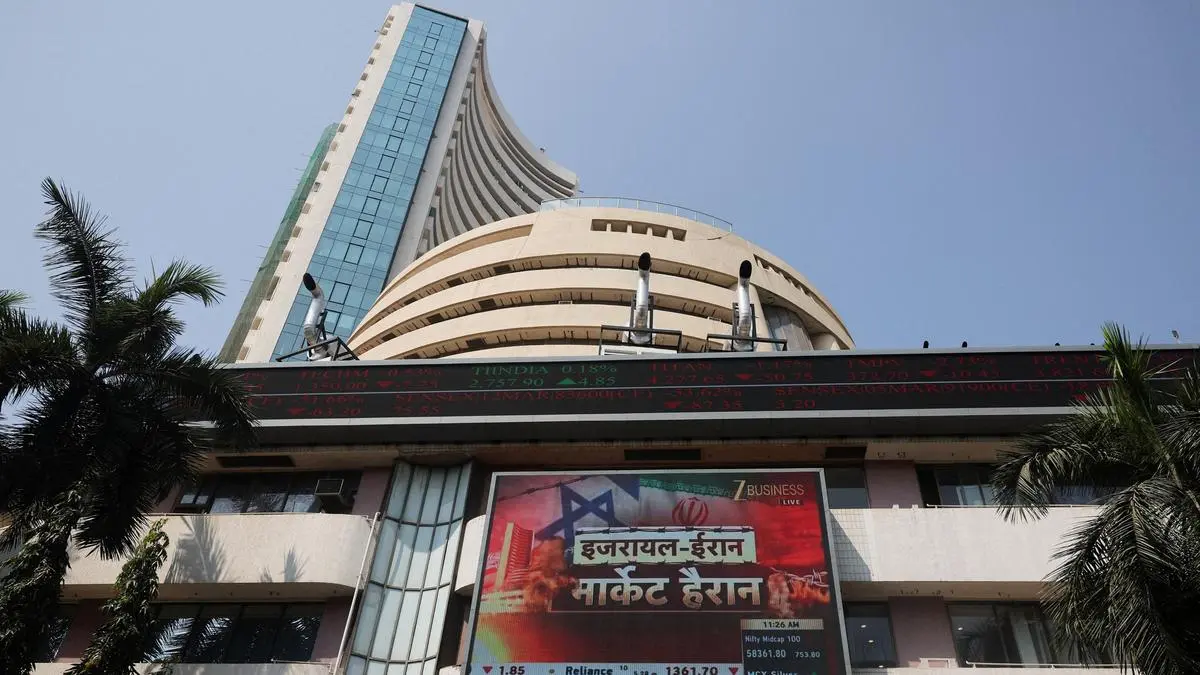
The BSE Sensex index plunged 1,677 points, or 2.15 per cent, to close at 76,504
The Indian equities witnessed their sharpest single-day decline in four months on Wednesday after a sharp deterioration in global risk sentiment triggered by US President Donald Trump’s remarks suggesting the ceasefire with Iran had effectively collapsed, raising fears of a fresh escalation in West Asia.The BSE Sensex index plunged 1,677 points, or 2.15 per cent, to close at 76,504, while the broader Nifty 50 index fell 517 points, or 2.12 per cent, to end at 23,882. The last steeper decline was recorded on March 30, when the benchmark index had dropped 2.22 per cent.The steep sell-off wiped out nearly ₹9 lakh crore of investor wealth, dragging the total BSE market capitalisation to around ₹471.2 lakh crore. Selling intensified during the final 90 minutes of trade as investors rushed to cut risk exposure amid mounting geopolitical uncertainty.Concerns over potential disruptions to global crude oil supplies pushed Brent crude above $79 a barrel, while the rupee weakened sharply against the US dollar, adding to pressure on domestic equities. The Indian currency posted its worst single-day decline in about a month, closing 60 paise weaker at 95.56 per dollar against the previous close of 94.96. During the session, the rupee touched an intra-day low of 95.60 per dollar.Risk aversionReflecting heightened risk aversion, India VIX surged 26 per cent to 14.68, its biggest single-day jump in 16 months since April 7, signalling expectations of elevated market volatility. Meanwhile, the benchmark 10-year government bond yield hardened by 7 basis points to close at 6.76 per cent.The sell-off was broad-based, with all 30 BSE Sensex constituents ending in the red. FMCG and private banking stocks emerged as the biggest losers. Midcap and small cap stocks also came under heavy pressure as investors shifted to a risk-off mode.Despite the market rout, institutional investors remained net buyers. Foreign portfolio investors purchased equities worth Rs 1,963 crore, while domestic institutional investors recorded net purchases of ₹790 crore.A Balasubramanian, Managing Director of Aditya Birla Sun Life AMC, said the conflict is unlikely to be prolonged as it would hurt all stakeholders. He added that sharp market corrections should be viewed as buying opportunities and expressed confidence that growth-supportive policy measures and a higher weightage for India in global indices could help attract foreign capital and support the rupee.Manish Bhandari, CEO and Portfolio Manager at Vallum Capital, said investors should get accustomed to higher volatility. “The three-year phase of largely unidirectional gains is behind us. Global capital is extremely mobile and markets are increasingly reacting to geopolitical events, trade disputes, oil prices and policy actions,” he said. However, he does not foresee a structural downside that could lead to a deep market correction.Market participants will now shift their focus to the June-quarter earnings season, with TCS results expected to provide the first major clues on demand trends and the broader corporate earnings outlook.Published on July 8, 2026