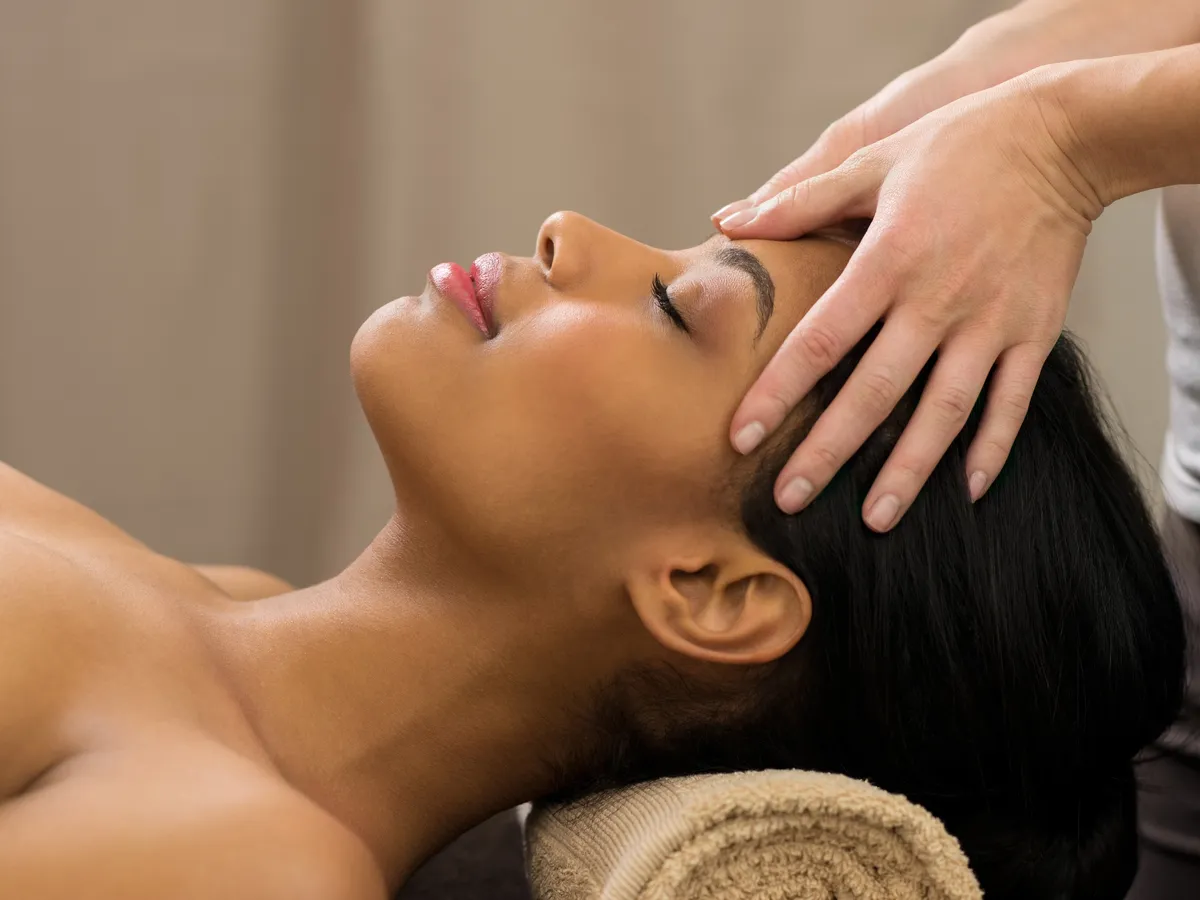
Skip to Content News Archives Economy Energy Oil & Gas Renewables Electric Vehicles Mining Commodities Agriculture Real Estate Mortgages Mortgage Rates Finance Banking Insurance Fintech Cryptocurrency Work Wealth Smart Money Wealth Management Investor Personal Finance Family Finance Retirement Taxes High Net Worth FP Comment Executive Women Puzzmo Newsletters Financial Times Business Essentials More Innovation Information Technology FP500 Podcasts Small Business Lives Told Tails Told Shopping Financial Post Store Obituaries Place a Notice Advertising Advertising With Us Advertising Solutions Postmedia Ad Manager Sponsorship Requests Classifieds Place a Classifieds ad Working Profile Settings My Subscriptions Saved Articles My Offers Newsletters Customer Service FAQ News Economy Energy Mining Real Estate Finance Work Wealth Investor FP Comment Executive Women Puzzmo Newsletters Financial Times Business Essentials HomePMN BusinessInside the rise of the US$4,000 anti-inflammation retreatA set of medical treatments has morphed into one of the wellness industry's most powerful marketing toolsAuthor of the article:Last updated Jul 08, 2026 You can save this article by registering for free here. Or sign-in if you have an account.Anti-inflammatory treatments claim to provide immediate rewards such as less puffiness or a more chiseled jawline. Photo by Getty Images/iStock PhotoThe commercialization of anti-inflammation has taken on a life of its own.Subscribe now to read the latest news in your city and across Canada.Exclusive articles from Barbara Shecter, Joe O'Connor, Gabriel Friedman, and others.Daily content from Financial Times, the world's leading global business publication.Unlimited online access to read articles from Financial Post, National Post and 15 news sites across Canada with one account.National Post ePaper, an electronic replica of the print edition to view on any device, share and comment on.Daily puzzles, including the New York Times Crossword.Subscribe now to read the latest news in your city and across Canada.Exclusive articles from Barbara Shecter, Joe O'Connor, Gabriel Friedman and others.Daily content from Financial Times, the world's leading global business publication.Unlimited online access to read articles from Financial Post, National Post and 15 news sites across Canada with one account.National Post ePaper, an electronic replica of the print edition to view on any device, share and comment on.Daily puzzles, including the New York Times Crossword.Create an account or sign in to continue with your reading experience.Access articles from across Canada with one account.Share your thoughts and join the conversation in the comments.Enjoy additional articles per month.Get email updates from your favourite authors.Create an account or sign in to continue with your reading experience.Access articles from across Canada with one accountShare your thoughts and join the conversation in the commentsEnjoy additional articles per monthGet email updates from your favourite authorsSign In or Create an AccountorPrivate members’ clubs are now hosting US$4,000 anti-inflammatory retreats. Hotels have redesigned menus around anti-inflammatory eating. Vibration plates, fitness devices promoted for lymphatic drainage that cause involuntary muscle contractions, are popping up across social media. If you see the phrase “lymphatic drainage” in a spa treatment, the I-word will almost certainly appear soon after.Anti-inflammatory treatments claim to provide immediate rewards such as less puffiness or a more chiseled jawline. The demand is now filtering through to doctor’s offices. Jason Schroder, a physician in Tulsa, Oklahoma, and founder of Craft Body Scan, says patients ask him about inflammation nearly every day.Get the latest headlines, breaking news and columns.By signing up you consent to receive the above newsletter from Postmedia Network Inc.A welcome email is on its way. If you don't see it, please check your junk folder.The next issue of Top Stories will soon be in your inbox.We encountered an issue signing you up. Please try again“Many come into my office saying they read something online,” he says. “They want to know if it’s something to be worried about. Most of my patients have no idea what it actually is but just know that it sounds bad.”Consumer interest has also surged online. TikTok has 340,000 videos under the “lymphatic drainage” hashtag, with before-and-after videos like one from an aesthetic nurse offering tutorials on how to go from a puffy face to “snatched face” with a 30-second massage technique. The video has 1.4 million views.Some doctors suggest that these types of sales pitches trade on the fact that many consumers don’t fully understand what purpose reducing inflammation serves. Schroder calls lymphatic-drainage massages helpful after surgery, especially for cancer patients or people dealing with a diagnosed lymphatic disorder. The evidence is weak, he says, for weight-loss purposes. There’s no harm in a relaxing massage, but its benefits are usually temporary and healthy people don’t usually need them.“Inflammation is designed to help us,” says Philip Calder, professor of nutritional immunology at the University of Southampton in England.The body’s inflammatory response plays an essential role in fighting infection, healing wounds and defending against injury, he says. Health problems can arise when inflammation becomes chronic, contributing to conditions including arthritis, diabetes and cardiovascular disease. Growing research into chronic low-grade inflammation has helped elevate the concept from a niche topic to a mainstream health concern. But somewhere along the way, Calder says, nuance has been lost.“People like a simple story,” he says. Inflammation becomes “harmful, so here’s what you need to do to fix it.”Beth McGroarty, director of research at the Global Wellness Institute, an industry group, says consumers can now find anti-inflammatory claims across skincare, recovery therapies, supplements, destination spas and even travel programming.“Everything you see — red light therapy, cold plunges, sauna — it all seems to either tack on or lead with a claim about systemic inflammation,” she says. “It’s kind of a gold mine of vagueness.”Luxury operators are responding to growing consumer demand.Surrenne, the wellness club owned by Maybourne Hotel Group, held its first anti-inflammatory Reset Retreat on the French Riviera in April. Guests followed anti-inflammatory menus rich in omega-3s and vegetables created by celebrity nutritionist Rose Ferguson. They did high-intensity, low-impact movement classes, went on guided coastal walks and attended workshops with Ferguson on topics like mindful eating. The program cost €3,400 (US$3,890) for three nights, plus the room rate at the luxurious Maybourne Riviera hotel.“Everybody is asking or talking about inflammation now,” says Hattie David-Wilkinson, Maybourne’s global head of wellness and longevity.At Surrenne, David-Wilkinson points to facilities including hyperbaric oxygen therapy, cold plunges, breathwork and lymphatic drainage treatments as tools associated with reducing inflammation.“I think everyone is so concerned about inflammation these days because of our lifestyles,” she says. “We’re stressed, we’re living in polluted cities, we’re eating convenience food that we know is bad for us.”David-Wilkinson says consistent changes happen through daily habits, not one-off vacations. She adds that Surrenne has a medical-based approach under the supervision of doctors and members can opt for an approach tailored to their own needs.Liza Osagie-Clouard, medical lead at Surrenne, says that for most healthy people, the most powerful anti-inflammatory interventions remain remarkably unglamorous: a good night’s sleep, resistance training, movement, metabolic health, nutrition, stress management and social connection. She adds that she does see value in carefully selected treatments like compression boots, heat therapy or cold exposure.Austrian wellness clinic Mayrlife has a weekly €4,295 anti-inflammation program. Triplebond, a new social wellness club opening in London in August, will have what it calls a dedicated lymphatic lounge. The resort World of Quercus in Gay, Georgia, has anti-inflammatory diet plans that it integrates into the amenities offered. Guests can get mini-rebounding trampolines sent to their cabins — the bouncing is thought to stimulate lymph movement, according to the resort’s founder, Chiara Visconti di Modrone. She says research doesn’t show that manual lymphatic drainage prevents disease or “detoxes” healthy people.“I still do these practices, and we offer the gentle versions to guests, because they make people feel good,” she adds. “Less puffy, more relaxed, more connected to their bodies. That is a real benefit, even when it is not a clinical one.”Consumers say they’re spending money on these treatments because they believe it makes them look and feel better.Daniela Phillips, a 43-year-old railway legislation specialist based in York, England, spends roughly £150 (US$200) every six weeks on lymphatic-drainage massage and pays an additional £20 weekly to use a lymphatic compression suit. She started doing the treatment after seeing before-and-after photos on Instagram.The massages can be uncomfortable, she says, occasionally leaving her bruised. But she keeps coming back because she believes the results are visible. “I feel so much lighter afterwards,” she says, adding that it helps her avoid water retention.Atlanta-based social media manager Ansley Earle, 27, is getting married next year and plans to get lymphatic-drainage massages before her wedding. She had one recently at newly opened studio the Tox in Buckhead. While she perceived a small difference in her body, the biggest change she noticed was psychological.“I walked in stressed and overwhelmed, and I walked out just feeling level-headed and refreshed,” she says. Her video about the experience got over 450,000 views on TikTok.In New York, Ariana Squillacciotti, 34, has built a routine around reducing inflammation. Every day the co-founder of boutique PR firm Bond practices gua sha, a traditional East Asian technique that involves scraping the skin with a smooth tool to increase circulation.She regularly books a 90-minute “brain detox” at a Japanese spa in Brooklyn that includes lymphatic-drainage massage, and she recently bought a US$110 vibration plate from Amazon, which now sits beneath her desk while she answers emails. She says even if doctors say healthy people don’t need a lymphatic-drainage massage, she believes in doing what feels good, and this works for her.“I notice that my energy levels have increased since becoming super strict with my drainage routine,” Squillacciotti says. “I see an immediate reduction in puffiness, and I swear it helps kick jet lag — something pretty helpful when you’re working across three time zones.” Join the Conversation This website uses cookies to personalize your content (including ads), and allows us to analyze our traffic. Read more about cookies here. By continuing to use our site, you agree to our Terms of Use and Privacy Policy.
Inside the rise of the US$4,000 anti-inflammation retreat
Private members’ clubs are now hosting US$4,000 anti-inflammatory retreats. Find out more.
1,646 words~7 min read