Some smaller manufacturers, however, improved their market presence despite lower volumes.
| Photo Credit:
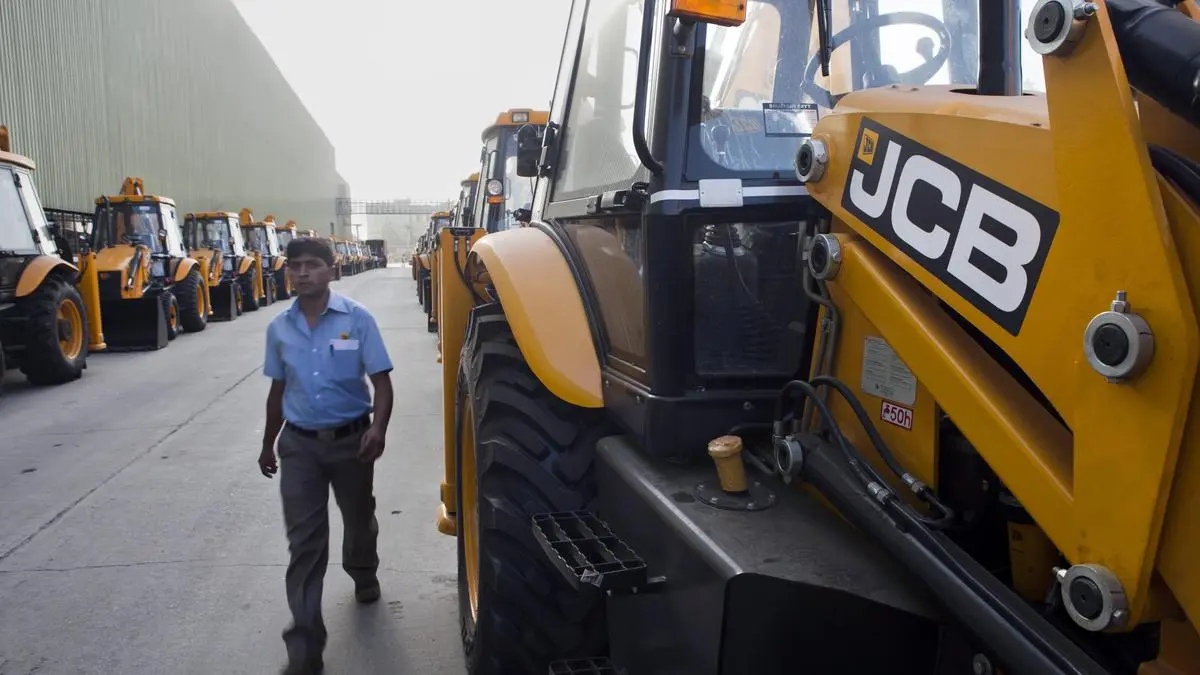
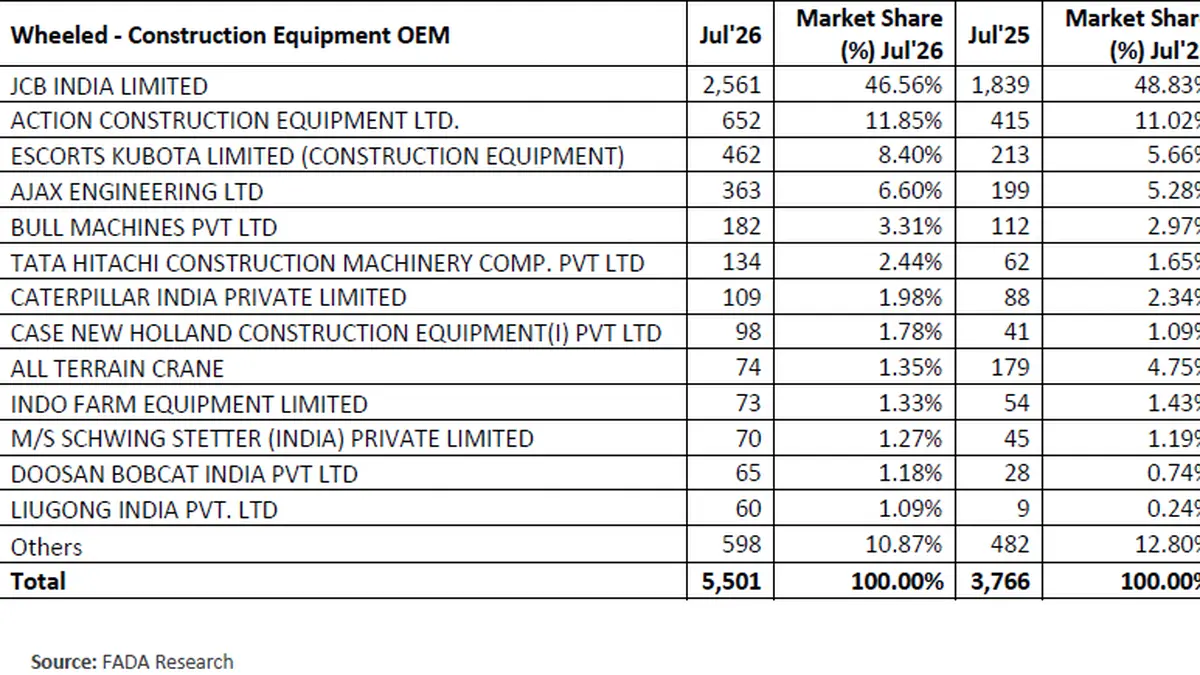
India’s construction equipment industry witnessed a sharp slowdown in June with retail sales falling 41 per cent year-on-year to 5,244 units from 8,879 units in the same month last year. Industry trackers attribute this to high base last year and subdued demand environment for construction equipment this year.On a sequential basis, retail sales rose 3.1 per cent to 5,244 units in June from 5,088 units in May, according to data from FADA Research.Industry leader JCB India was the only major OEM to maintain its sales volumes year-on-year at 2,416 units, while all other manufacturers registered decline. JCB’s market share consequently increased sharply to 46 per cent from 27 per cent a year earlier, says the data.The steep contraction across the industry enabled JCB to consolidate its leadership, with nearly one out of every two-wheeled construction equipment units sold in June bearing the company’s badge, said an industry official.Action Construction Equipment Ltd (ACE) retained the second position despite sales declining to 624 units from 901 units in June 2025. However, its market share improved to 11.90 per cent from 10.15 per cent, reflecting its relatively better performance compared with the broader market according to FADA data.Ajax Engineering sold 413 units, down from 660 units a year ago, while its market share edged up to 7.88 per cent from 7.43 per cent. Escorts Kubota Construction Equipment also improved its share to 7.25 per cent from 5.83 per cent despite sales falling to 380 units from 518 units.Stronger presenceSome smaller manufacturers, however, improved their market presence despite lower volumes. Bull Machines increased its market share to 3.11 per cent from 2.23 per cent.Poonam Upadhyay, Director, Crisil Ratings, said the YoY decline reflects a combination of high base and demand environment that remains subdued for wheeled construction equipment.Modest sequential improvement offers little change in the underlying narrative, particularly as monsoon months typically see slower project execution and lower equipment deployment. Demand continues to be weighed down by execution bottlenecks, land acquisition delays and uneven capex deployment, keeping fleet utilisation below levels that would justify fresh capacity additions, she said.Published on July 8, 2026