My grandfather dived for pearls before he ever saw an oil rig. My father spent his career in oil. In the United Arab Emirates, each generation makes its fortune on the resources of its age, and then, if it is wise, learns not to fall in love with it. The next such resource is already here, and it is compute: the racks of specialized processors, drawing gigawatts of power, that turn electricity and data into artificial intelligence.My country does not merely want to buy this resource. It wants to produce it, and to be the place its entire region comes to rent it. This is the most ambitious bet it has ever made, and the one most likely to fail. Anyone watching the Gulf should weigh both facts at once.The logic is almost embarrassingly simple. AI is an industrial process with three inputs: energy, capital, and advanced chips. The UAE has the first two in abundance. It has cheap power, half a century of oil savings sitting in sovereign funds, and lacks only the third. Most of the past two years has been the story of trying to convert energy and money into access to silicon.
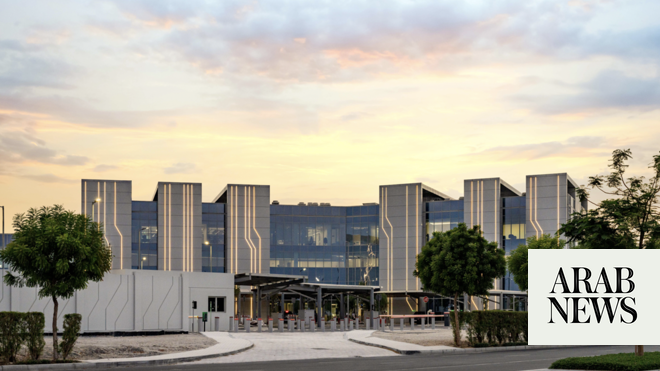
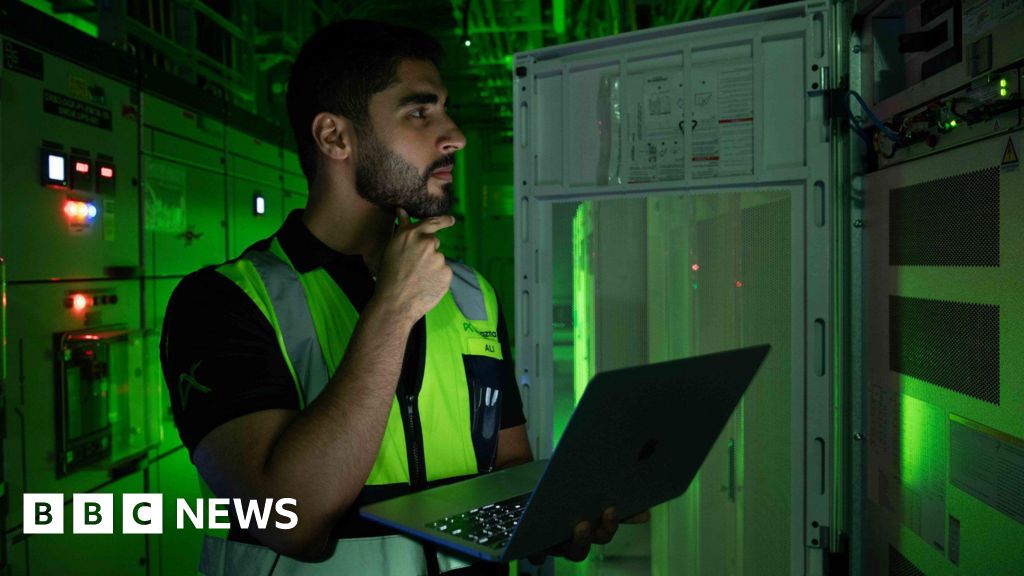
That breakthrough came in Abu Dhabi in May 2025, when the UAE and the U.S. announced an AI partnership built on an explicit exchange. My country committed to investing $1.4 trillion in the American economy over a decade — in return, it won the right to import up to 500,000 of Nvidia’s most advanced chips a year. The centerpiece is a five-gigawatt AI campus in Abu Dhabi, billed as the largest outside the U.S. Inside it sits Stargate UAE, a one-gigawatt cluster built by the Emirati champion G42, operated by OpenAI and Oracle, running Nvidia’s newest processors, with its first phase due online by late 2026. It is the foreign anchor of the same Stargate project that those American firms launched at home.Less noticed, but in my view more revealing, is the quieter bet. Months earlier, the Abu Dhabi fund ADQ had partnered with the American firm Energy Capital Partners on a $25 billion plan to build some 25 gigawatts of power generation, much of it dedicated to data centers. The hardest constraint on the entire global AI build-out is not chips but electricity. While everyone else fought over processors, Abu Dhabi made the clearest move available to it: It bet on the gigawatts. Whoever controls the power controls the bottleneck.Put these pieces together, and the strategy is not about financial returns. Roughly half the world’s population lives within about 3,200 kilometers of the UAE, across the Middle East, Africa, and South Asia. None of those markets has anything close to the infrastructure AI requires, and most will not build it for years. A hospital in Nairobi or a ministry in Cairo will get faster, cheaper AI from Abu Dhabi than from Virginia. The Emirati wager is to become the place where 3 billion people rent their intelligence from. Through sovereign-cloud arrangements that let governments use AI without handing their data to a foreign power, that dependence becomes a source of lasting influence. These days, being indispensable is safer than being powerful.If anyone doubts how decisively the UAE means to execute this plan, look at what it just did to the institution that defined its last era. In April 2026, after 59 years, the Emirates walked out of OPEC. The stated reason was a quota dispute: ADNOC can pump well over a million barrels a day more than the cartel permitted, and we were no longer willing to leave that capacity in the ground. The deeper signal was unmistakable. The founding logic of the oil age was that producers collude to manage scarcity — the UAE decided it would rather be a free agent, maximize its own output, and sink the proceeds into the industries of the future. It is hard to imagine a sharper statement than that a country does not intend to be governed by the commodity that made it rich.This is now as much an American story as an Emirati one. The chips arrive on American terms. The first export licenses were not granted until October 2025, and the initial batch went deliberately to American operators for use on Emirati soil, not to G42 directly. Emirati firms like G42, which had already realigned their partnerships decisively toward American technology, are set to receive their share as the arrangement matures. The message was unmistakable: If you want the silicon, you do it the American way and build inside the American system. Abu Dhabi did exactly that.This is a new template, and a consequential one. The U.S. has discovered that it can use access to AI hardware the way it once used security guarantees. This new bargaining chip can pull capable, non-aligned states firmly into its global technology superstructure. For a country that has spent a decade carefully hedging between Washington and Beijing, the compute bargain forced a door closed, and made the UAE a test case for how the West intends to keep the AI build-out on its side of the line.I would be doing my own argument a disservice if I pretended the bet is safe. The dependence runs the other way, too. The chips come at Washington’s discretion, and what is granted can be revoked — a future administration or a fresh panic could close the tap, leaving billions in data centers and power plants waiting for silicon. The physical demands are real: These facilities consume staggering amounts of electricity and water in a country that already gets its water from desalination plants. The concentration is also a risk. An AI build-out resting on a small number of state-backed institutions, a single foreign supplier, and a single foreign protector is exactly the kind of single-commodity wager history warns against.UAE AIMS TO REDUCE RELIANCE ON STRAIT OF HORMUZ TO ‘ZERO’ AFTER WAR SERVES AS WAKE-UP CALL TO GULF COUNTRIESHistory is the point. When the Japanese learned to culture pearls and the Depression killed demand, the Gulf’s pearling economy collapsed in a few seasons, and men like my grandfather had to start again. The lesson the Emirates drew was not to avoid bold bets, but never to fall in love with the commodity: to build the capability, take the value while it lasts, and stay ready to move when the world changes, as it always does. Walking away from OPEC was that lesson in action. One day, the compute bet may have to be too.Whether that discipline holds at this scale is the open question. But the bet is entirely in character. A nation of pearl divers and oil men has found the deepest water yet, and dived.Obaid Ahmed AlZaabi is an Emirati writer and former UAE climate-finance negotiator, and author of the book The Emirati Model: Capitalism Without Apology.