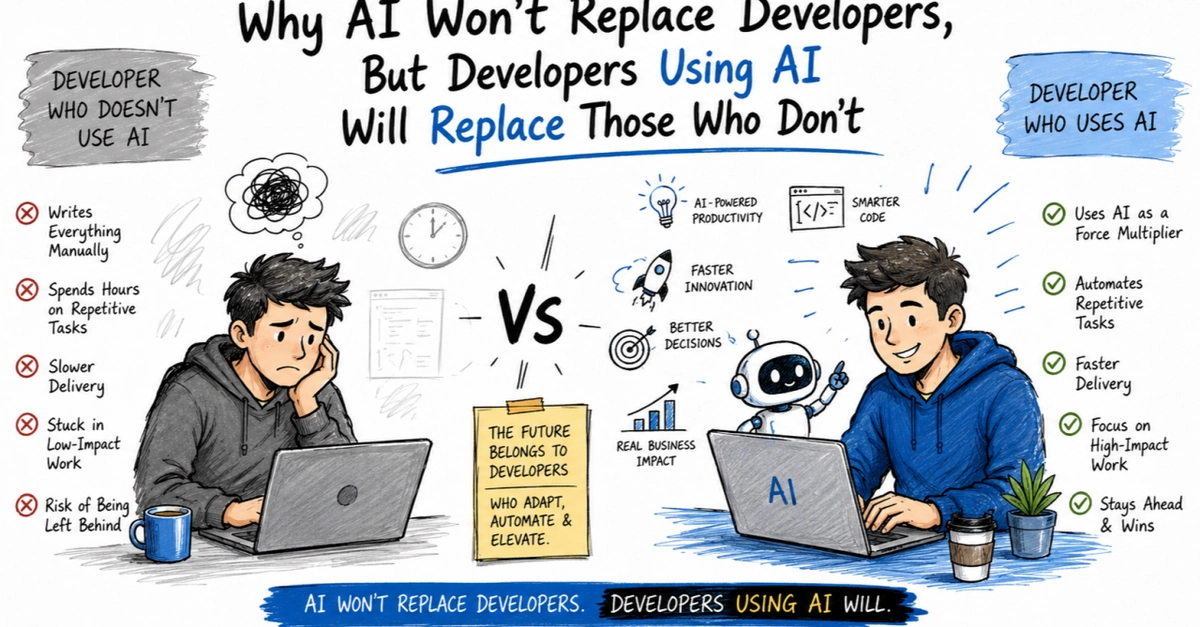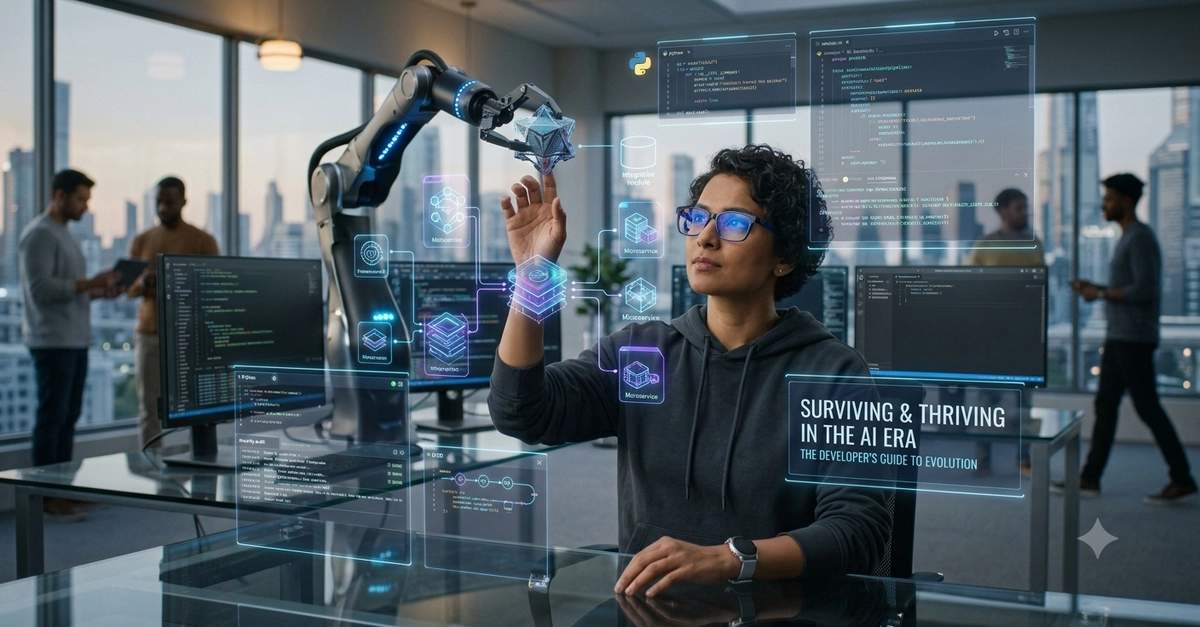
Oleg Lola, founder and CEO at MobiDev, a custom software engineering & consulting company.gettyIn boardrooms, a dangerous question is being asked: “If AI can generate code, do we still need software developers?”The short answer is yes, but not in the way one might think. In other words, this matter is not all black or white.AI is not eliminating software engineering at all. What it is eliminating is low-leverage engineering work. The companies that confuse these two things are about to accumulate massive technical debt at machine speed.The Great Misunderstanding About AI CodingThe market has conflated two very different things: AI-generated code and software engineering. Writing code is not the same as building scalable software. Generating features is not the same as owning an architecture. Shipping a demo is not the same as running a production system six months later.AI has made software creation dramatically faster. It did not make software complexity disappear. This means a thoughtful approach to architecting a system remains an issue that is unsolved, and this issue is reliant on senior human effort.Yes, AI Already Replaces Parts Of DevelopmentAI is genuinely good at boilerplate generation, CRUD functionality, documentation drafts, unit test scaffolding, repetitive refactoring and debugging assistance. For anyone who has spent hours writing glue code, this is a genuine relief.There's also a growing movement called “vibe coding.” Ultimately, it’s a glorified rinse-repeat routine, where you prompt, generate, ship and do it again. It's fast, and for prototypes and early experimentation, it works beautifully. But working and maintainable are not the same thing, which is where companies start making very expensive mistakes.The New Risk: Technical Debt At AI SpeedBefore AI, technical debt accumulated slowly. A team would cut corners on one sprint, feel the consequences three months later and (hopefully) course-correct. Now? Companies can generate technical debt 20 times faster.Vibe coding without engineering discipline produces what I call a “vibe debt.” It’s a hallucinated dependency, amplified by security vulnerabilities hiding in generated code. You get unstable integrations, architectures that nobody fully understands and regressions that appear weeks after a prompt nobody remembers running. The codebase grows fast. The most dangerous part is that it all looks fine until it isn’t.Human-generated code work-arounds are at least easy to track. Obviously, you know the parts where you may have “cheated.” But what part of the AI-generated code is breaking the core logic?I've seen teams ship a working minimum viable product (MVP) in two weeks using pure AI generation, then spend four months trying to build on top of it. My previous article covers how to move fast without creating this kind of trap. Speed requires structure.Why Engineers Become More Important, Not LessHere is the uncomfortable truth for the “replace all developers” crowd: AI output should be treated as untrustworthy by default. It requires validation, context and someone who understands what a system is supposed to do and when the generated code quietly does something else.The role of the software engineer has shifted. It might have been a “code producer,” but it’s definitely an “engineering orchestrator.” A senior engineer now focuses on architecture, system boundaries, security and governance. Most importantly, they focus on AI oversight.The future developer spends less time typing code, sure. But they need to spend more time making sure the system that AI helped build actually holds together. In this sense, I believe the role has become even more important, not diminished. Vibe Coding Versus AI-Driven Development: The Difference That MattersNot all AI-assisted development is the same. The distinction we've built our practice around is the difference between vibe coding and what we call AI-driven development (AIDD).Vibe coding is prompt-driven, fast and lightly structured. It optimizes for speed to a visible result. Documentation is minimal, and architecture is often improvised. For a demo or a quick experiment, it's fine, but this makes quality unpredictable.AIDD is a structured workflow where AI acceleration and engineering discipline coexist. The core loop is to analyze inputs, document, plan, iterate in small batches with dev testing, update documentation and control for technical debt. The human-in-the-loop mechanism makes everything else work. Without it, quality degrades fast.The future of software development is not AI without engineers. It is engineers who work with AI systematically.What Engineering Teams Will Look Like The shape of teams is changing. Here is what I'm actually seeing:• Fewer Junior Developers: Routine coding tasks (the ones that used to train junior engineers) are vanishing fast.• More Senior Engineers: Architectural judgment, risk assessment and integration oversight can't be prompted. Decision-making is the new bottleneck.• Smaller Overall Teams: AI is a genuine productivity multiplier. A team of five doing AIDD can output what 15 people produced three years ago.• More Product-Oriented Engineers: Business context matters more than ever. Engineers who understand why they're building something make better AI-oversight decisions than those who only understand how.• New Roles Emerging: AI workflow architects and AI governance leads barely existed two years ago.What CEOs Should Actually Optimize ForThe wrong question being asked is, “How many developers can AI replace?” I believe leadership today should be asking, “How do we build an AI-native engineering organization that doesn't collapse under its own speed?”Doing this effectively means optimizing for maintainability, scalability, governance and delivery velocity without chaos. Do not optimize for headcount reduction. Companies that chase headcount reduction build systems that look impressive in a demo and fall apart in production.For organizations that have already encountered friction in early AI development efforts, the priority should not be evaluating whether AI worked—it should be identifying where speed outpaced engineering discipline. The lesson is rarely to slow down; it is to build stronger systems around acceleration.Why The Companies That Win Won't Be AI-OnlyThe future does not belong to companies without developers. It belongs to companies with developers that can multiply their impact with AI, without sacrificing engineering discipline, scalability or trust.In 2026, AI will not replace software developers, but developers using AI may replace those failing to adapt.Forbes Technology Council is an invitation-only community for world-class CIOs, CTOs and technology executives. Do I qualify?
AI Won't Replace Developers: Developers Using AI Might Replace Others
In boardrooms, a dangerous question is being asked: “If AI can generate code, do we still need software developers?”
1,003 words~5 min read