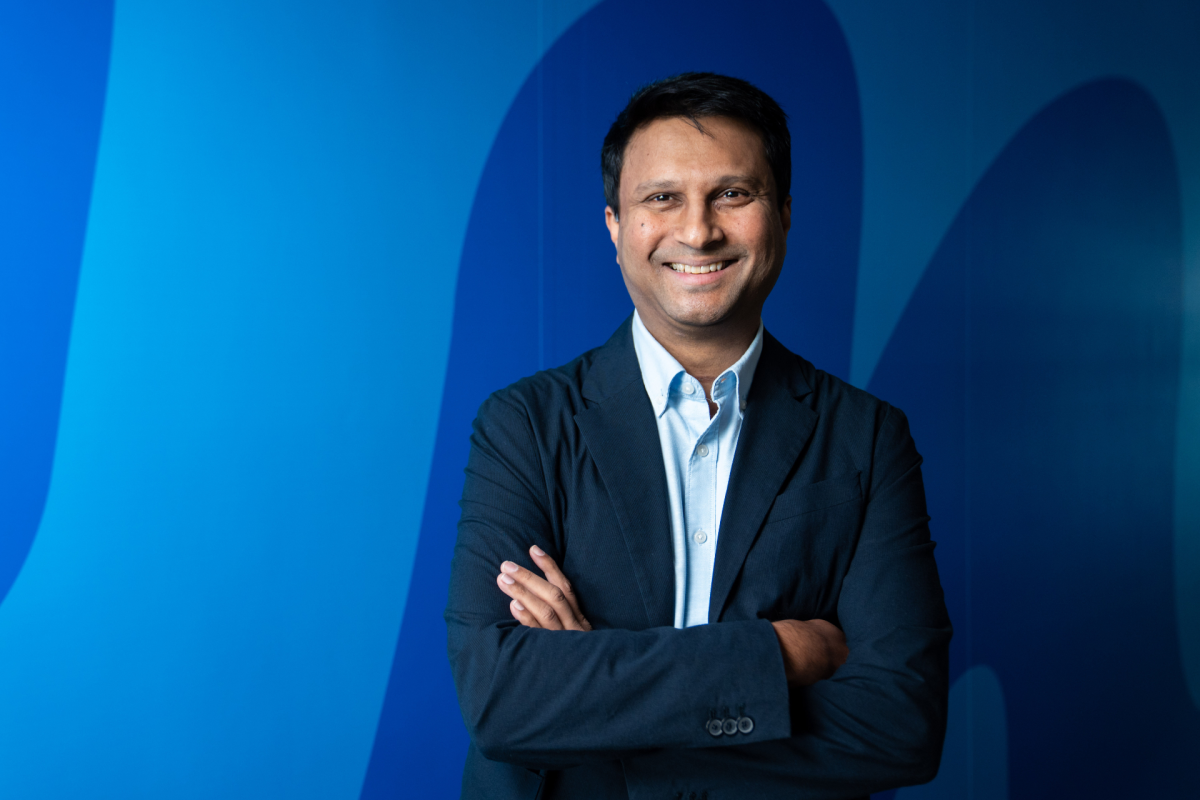
Truecaller CEO Rishit Jhunjhunwala. File image: Special Arrangement
Even as the government mandates real name caller ID, Truecaller AB, which built its whole business on caller identification and spam detection, has expressed confidence that it would be able to survive and grow in India, its biggest market, CEO Rishit Jhunjhunwala told The Hindu in an interview from Bengaluru. The firm has almost 328 million monthly active users in India, with a global quarterly profit of revenues of ₹94 crore in the December quarter.Truecaller says TRAI attempt to regulate it makes ‘no sense’Truecaller likely has the largest database of Indians’ phone numbers, and an array of metadata around each phone number to detect spam. It has also built integrations with firms like Swiggy and Uber, allowing those firms to contact users with a “call reason” and showing a distinct badge for their numbers. Since the vast majority of Indian users do not pay for Truecaller, the company’s revenue is largely attributable to these deals and ads.With Calling Name Presentation (CNAP) being introduced by the government, the SIM registration name of subscribers is presented to strangers that they place outgoing calls to. “CNAP has existed in other regions like the UAE, and was announced back in 2023,” Mr. Jhunjhunwala said. “So we have been well aware that we have to be ahead of it. We definitely see CNAP as a competitor, but we’ve also had Google and Samsung’s in-built spam detection. Competition is not new to us.” Premium subscribersTruecaller made the equivalent of ₹750 crore in 2025, a number which took a hit following the prohibition of real money gaming, which reduced ad revenue; the RMG prohibition affected ad revenues across media. The average monthly ad revenue per user (outside of iOS) dropped nearly by half, from just under ₹11 to under ₹6 (or 1.08 Swedish krona to 0.58, the currency in which the company reports its financials.)The firm is now adding features to draw more people to become paying subscribers. “We started with a small offering on premium,” Mr. Jhunjhunwala said, referring to the firm’s ad-free offering, “and now we have a full set of capabilities. We have a [fraud] insurance product where you get up to ₹10,000 coverage, and you get the ability to completely block spam calls from even ringing.”Truecaller also launched a family feature that would allow trusted contacts to screen and remotely reject suspicious calls. DoT, DPDP ActMr. Jhunjhunwala said that Truecaller was ready to comply with the Digital Personal Data Protection Act, 2023. “In Europe, we were compliant with the GDPR” — Europe’s data privacy law — “from day one,” he said. Many of the controls are available globally, he said. “All our Indian citizen data resides in India,” he said. “It’s a common misconception that we upload your phone book, and that’s the source of data,” Mr. Jhunjhunwala said. “We actually don’t do that. Where our data comes from is two big sources: The first source is user profiles; we have more than a billion downloads worldwide. Those are the people that when they sign up to Truecaller, they create their own profile they create their presence” on the platform. The rest, he said, were from user suggestions in response to callers not yet on the database whenever a Truecaller user receives a call from such a user.Truecaller has been engaging with the government on spam calls too, Mr. Jhunjhunwala said. “We were asked to whitelist 140 and 160 series numbers for telemarketing and banking and financial sector calls,” he said. “We welcomed the move and we whitelisted them. There is also certain fraud number data that resides with Truecaller. We share that with the DoT.” Published - April 13, 2026 10:12 am IST