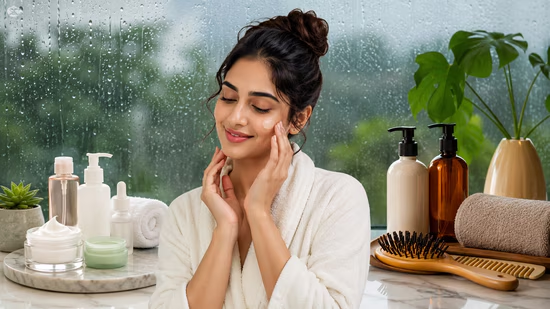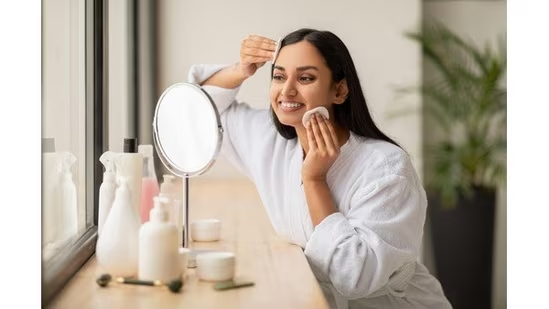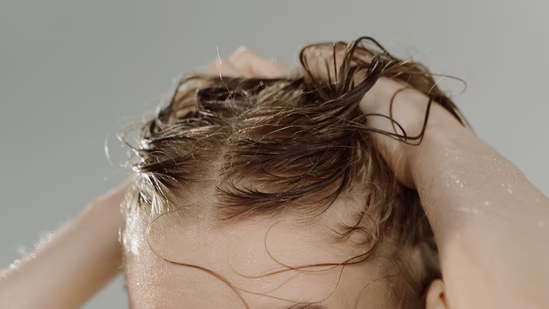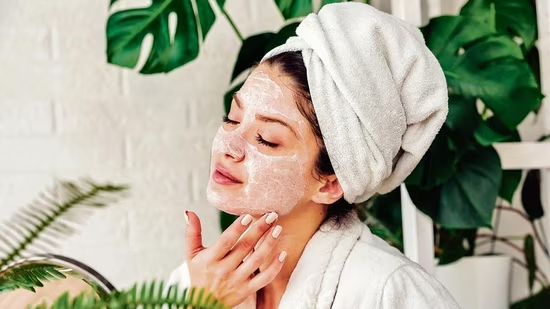
Have you noticed your skin feeling surprisingly soft lately, only to wake up to an unexpected breakout the next morning? Welcome to the ultimate monsoon beauty paradox. With rain lashing parts of Delhi and humidity touching the roof, you might feel like your skin is finally behaving. But beneath the surface, a perfect storm is brewing for your pores.Sweat, sebum and pollution trapped by high humidity create the ideal conditions for clogged pores and acne (Credits: Adobe Stock)Why does your skin feel better, then suddenly breakout“Many people think less visible oil means fewer breakouts, but monsoon weather often proves otherwise,” explains Dr Nivedita Dadu, founder and chief dermatologist at Dadu Medical Centre, Delhi.The secret lies in the humidity. Dr Deepali Bhardwaj, senior celebrity dermatologist and founder of Elska Clinics, Noida, reveals that rain coaxes the top layer of your skin into soaking up extra water. This is why your skin feels deceptively soft. However, that constant dampness is a double-edged sword. It softens the skin’s surface, disturbs its natural oils, and throws off the delicate balance of good bacteria.The pore-clogging cocktailHigh humidity stops sweat from evaporating as fast as it does in the summer. According to both dermatologists, when this stagnant sweat mixes with sebum, dead skin cells, pollution, and product residue, pores clog with ease. This damp, trapped environment quickly becomes a prime breeding ground for acne-causing bacteria.Two major mistakes doctors see on repeatAccording to both experts, most monsoon skincare disasters boil down to two common errors:Skipping the SPF on gloomy days: Just because the sun is hiding doesn’t mean your skin is safe. “UV rays penetrate clouds, so daily sun protection is still essential,” warns Dr Dadu.Going overboard with scrubbing: When a breakout hits, the temptation is to scrub it away. Don’t. Experts strongly stress against over-exfoliation. Stripping the skin damages its natural barrier, triggering panic-mode oil production, worse irritation, and you guessed it, even more breakouts.Your foolproof monsoon routineThe consensus is clear: when the weather gets complicated, keep your skincare simple.A gentle foaming cleanser. Wash your face every morning and evening - no exceptions.A lightweight, gel-based moisturiserSunscreen every single day (cloudy or not)Optional: A mild 1–2% salicylic acid treatment just 2 to 3 times a week, only if your skin tolerates it wellSwap out harsh exfoliators for a gentle toner to balance the skin, whether you have oily or dry skinIf you wear makeup, melt it off properly. A quick swipe or a splash of oil isn’t enough and will only clog your pores furtherWhy monsoon means more frizz and hair fall?Do you often find your hair suddenly defying physics and gravity every monsoon? The seasonal spike in humidity actively disrupts your hair, leading to frizz, breakage, and shedding.“High humidity weakens the hair shaft, making strands more likely to break. Add rainwater mixed with pollution irritating the scalp, and seasonal shifts in diet affecting how well hair grows in the first place, and the combination adds up to more visible shedding,” explains Dr Nandini Dadu, Aesthetic Physician and Trichologist at Dadu Medical Centre, Delhi.Pre-existing scalp conditions also worsen in the monsoon, points out Dr Bhardwaj. She details three specific triggers: telogen effluvium (a stress-related shedding pattern), yeast infestations on the scalp, and the hair shaft physically swelling when it absorbs excess moisture from humidity.Don't ignore these warning signsWhile some scalp irritation is normal, Dr Dadu draws a clear line on what isn’t: persistent itching, redness, excessive scaling, or actual patches of hair loss. These point to fungal infections or seborrhoeic dermatitis. “Delaying that visit [to a trichologist] tends to make the underlying condition harder to treat by the time someone does come in,” she warns.Match your routine to your hair typeBoth dermatologists agree that the fix varies based on your hair and scalp type:Oily scalp: Use a gentle anti-dandruff or clarifying shampoo two to three times a week, and skip heavy oils.Fine hair: Opt for lightweight, volumising shampoos and conditioners. Avoid rich masks directly on the scalp, as they weigh hair down and can clog follicles in humid weather.Wavy, curly, or dry hair: Use a sulphate-free, hydrating shampoo paired with a lightweight conditioner. A leave-in serum helps manage the extra frizz brought on by humidity.Chemically treated hair: Use a sulphate-free shampoo with a bond-repair or protein-based mask once a week. Minimize heat styling, as treated hair is already more porous. The golden rules: Across every hair type, the non-negotiables remain the same: never let your scalp stay damp for long, dry your hair gently rather than rubbing it, use a broad-toothed comb to avoid breaking water-swollen strands, and never tie it up wet.(Written by Diya Agrawal)
The ultimate monsoon skincare and haircare guide for healthy skin and hair
Prevent monsoon breakouts, frizzy hair and seasonal hair fall with these expert-approved skincare and haircare tips from dermatologists.
769 words~3 min read