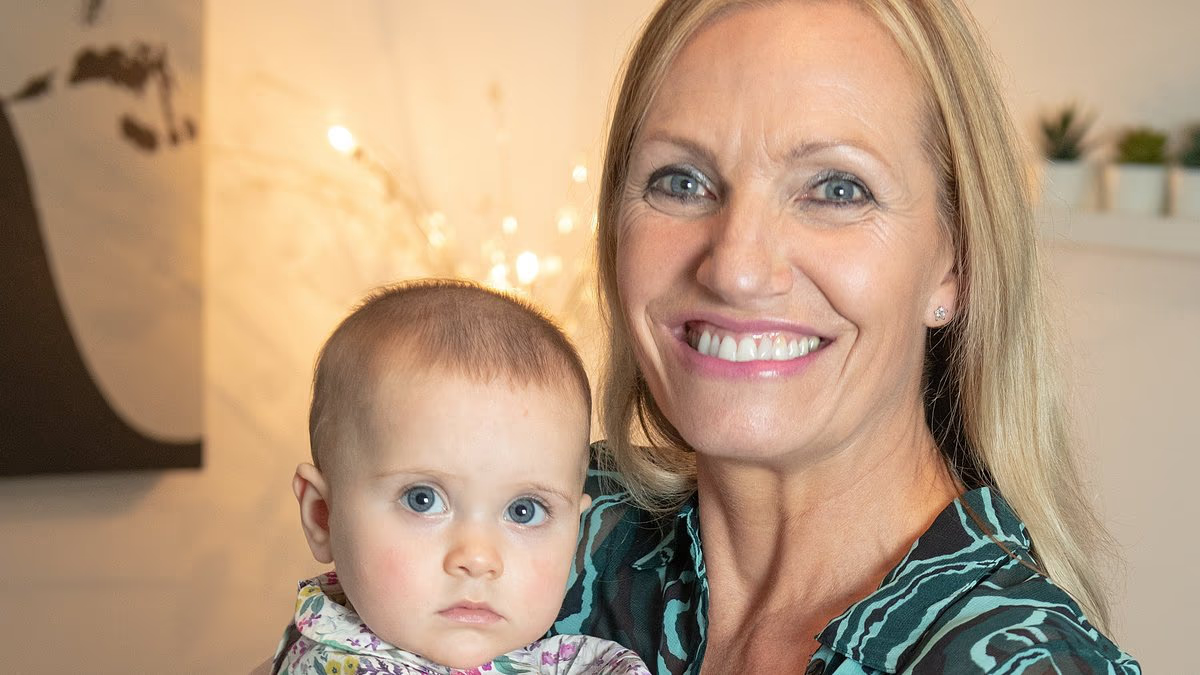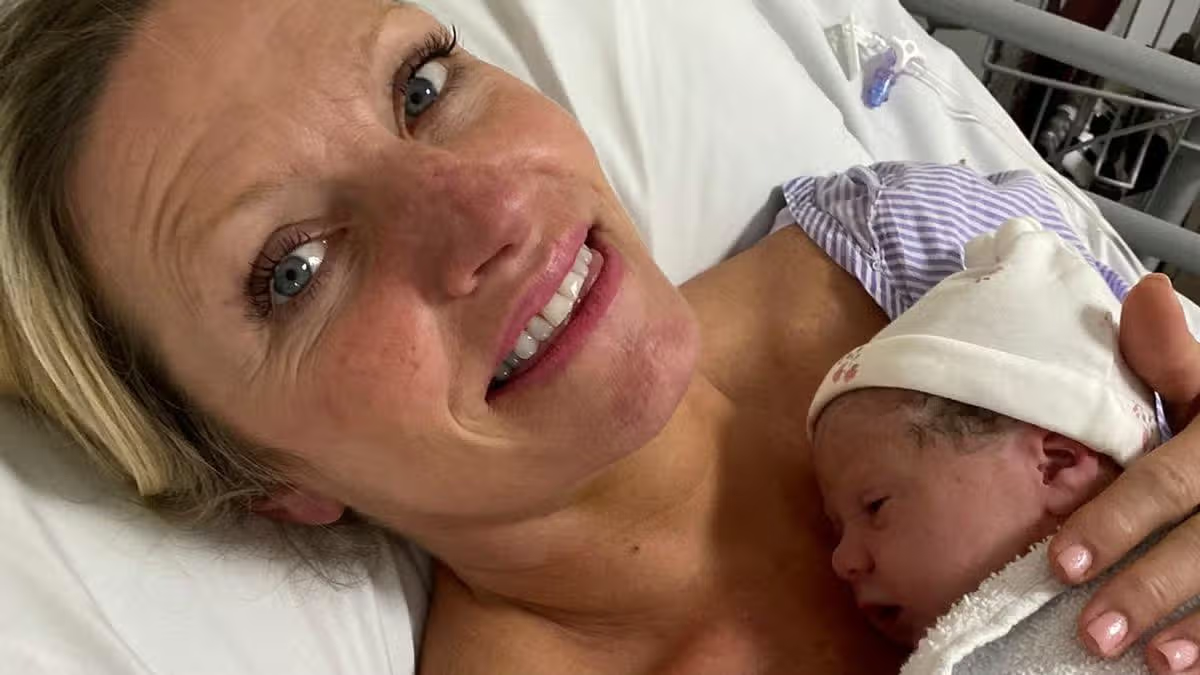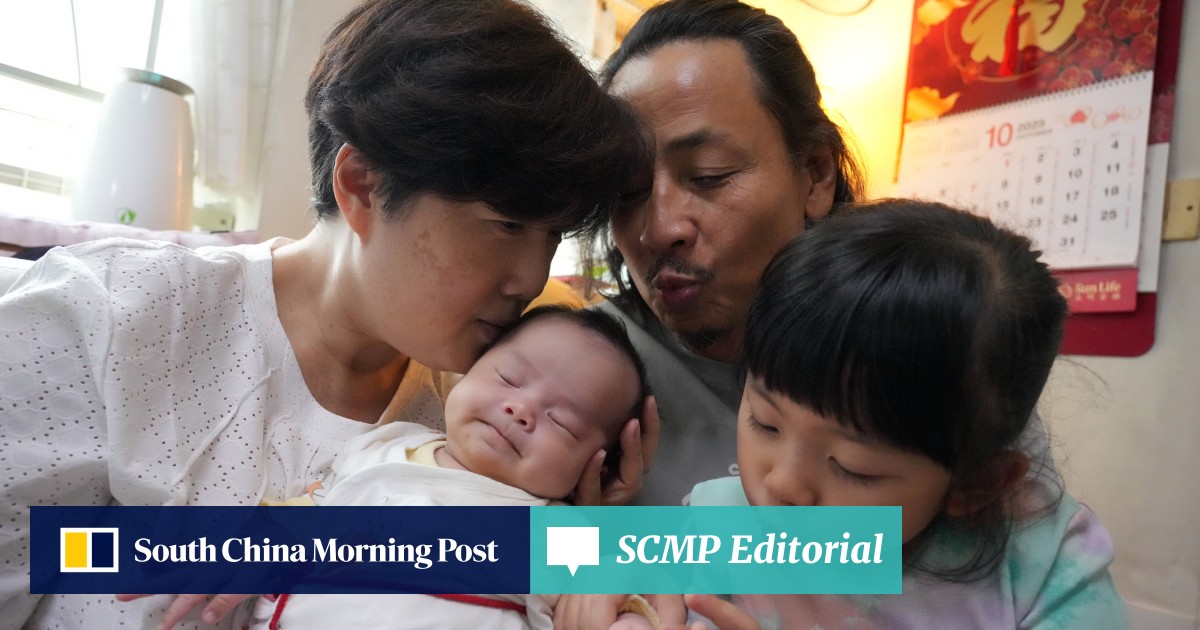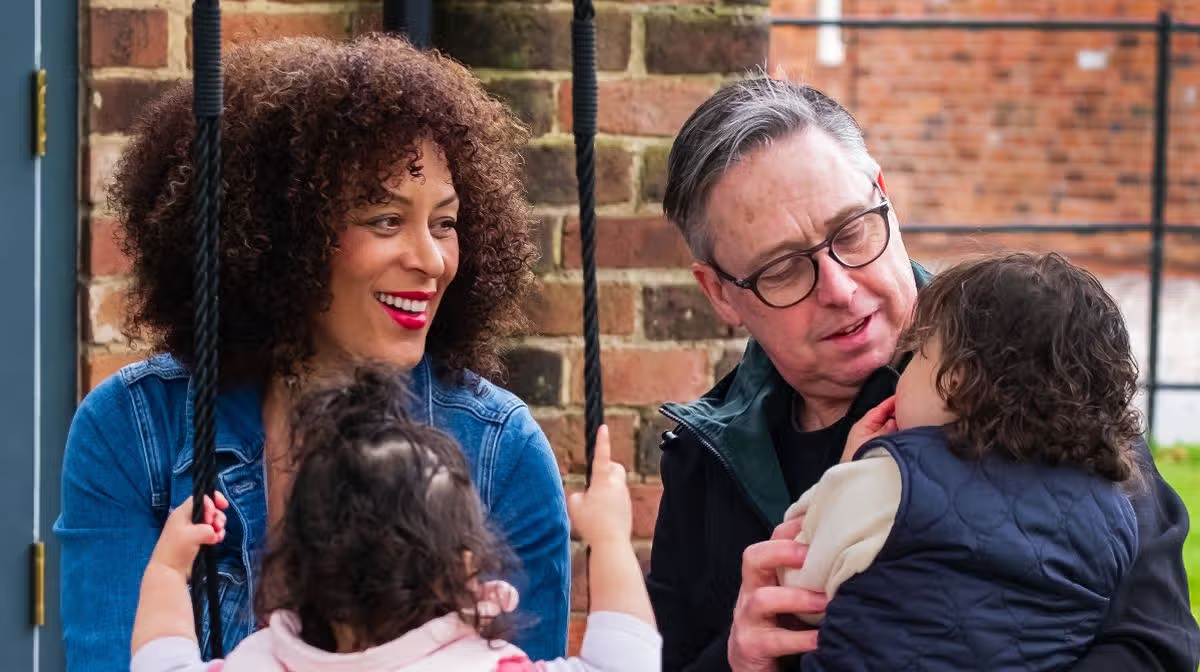
As new research reveals that women over 49 are less likely to become pregnant, even with donor eggs, Caroline Morgan, who welcomed twins at 51, asks, 'Why aren't we talking about fertility health earlier to give women more options?'12:29, 08 Jul 2026As new research shows older women have lower chances of fertility treatment working, even with donor eggs, a mum who welcomed her twins at 51 says the system needs to change.Caroline Morgan, now 53, previously spoke with the Mirror about achieving her dreams of motherhood following six rounds of IVF, at a time when many of her friends were becoming empty nesters.Now, in an opinion piece penned for the Mirror, Caroline, from South Derbyshire, has shared her thoughts on findings that women over the age of 49 have double the risk of miscarriage compared to women aged 35 to 40, and are also less likely to become pregnant - even with donor eggs, which were previously believed to offer a 'reset'.Research presented at the European Society of Human Reproduction and Embryology (ESHRE) suggests the reason could lie in age-related changes within a woman's womb lining. It's hoped this could well be treatable in the future, marking a new dawn in maternal healthcare, with doctors potentially able to predict, prevent or improve upon uterine ageing.Drawing upon her own personal experiences, Caroline said: "Women deserve information - not to create fear, but to give them knowledge, choices and the confidence to make informed decisions."When I read the latest research highlighting the impact of age on fertility treatment success, it took me back to my own journey. At 51, after going through IVF, I became a mother to twins. My journey to motherhood was one I will always be grateful for, but it was also a journey that taught me how much we still need to understand about fertility, reproductive health and the choices women face."It wasn't until I began fertility treatment that I discovered I had several small fibroids and issues with my womb lining. Looking back, I couldn’t help but wonder whether these factors had been present for years — perhaps even from my early thirties — without me ever knowing."That experience left me asking a bigger question: why aren't we talking more openly about fertility health before someone is trying to have a baby?"We talk about checking our blood pressure, cholesterol and cervical health, yet fertility is often something women only learn about when they are already facing difficulties conceiving."The latest research is important because it helps us understand more about reproductive ageing and the complexities of fertility treatment. But alongside the science, we also need compassion and honest conversations. Women deserve information — not to create fear, but to give them knowledge, choices and the confidence to make informed decisions."Through my podcast, Motherhood in Stereo, I've spoken to many incredible women whose fertility journeys have been shaped by circumstances they never saw coming. Some discovered early menopause. Others learned they had PCOS, faced cancer treatments that affected their fertility, or uncovered reproductive health issues only when they began trying for a family."One phrase I hear again and again is: "I wish I had known sooner." None of us can predict the future. Not every woman will want children, and not every fertility challenge can be prevented. But understanding our bodies earlier gives women the opportunity to ask questions, seek support and feel more informed about their choices."I don't want women to read stories about fertility and feel overwhelmed or lose hope. I want them to feel empowered. I want conversations about reproductive health to become as normal as conversations about every other aspect of our wellbeing."Fertility shouldn't only become a conversation when someone is struggling to conceive — it should be part of women’s healthcare throughout adulthood."If sharing my story encourages even one woman to ask questions, speak to a healthcare professional or feel less alone on her journey, then it has been worth telling.Article continues below"We cannot always change the path life takes us on, but we can make sure women have more knowledge, more support and more compassion along the way."Do you have a story to share? Email me at julia.banim@reachplc.com
'Women shouldn't be blamed for having babies late, the system is broken'
As new research reveals that women over 49 are less likely to become pregnant, even with donor eggs, Caroline Morgan, who welcomed twins at 51, asks, 'Why aren't we talking about fertility health earlier to give women more options?'
695 words~3 min read