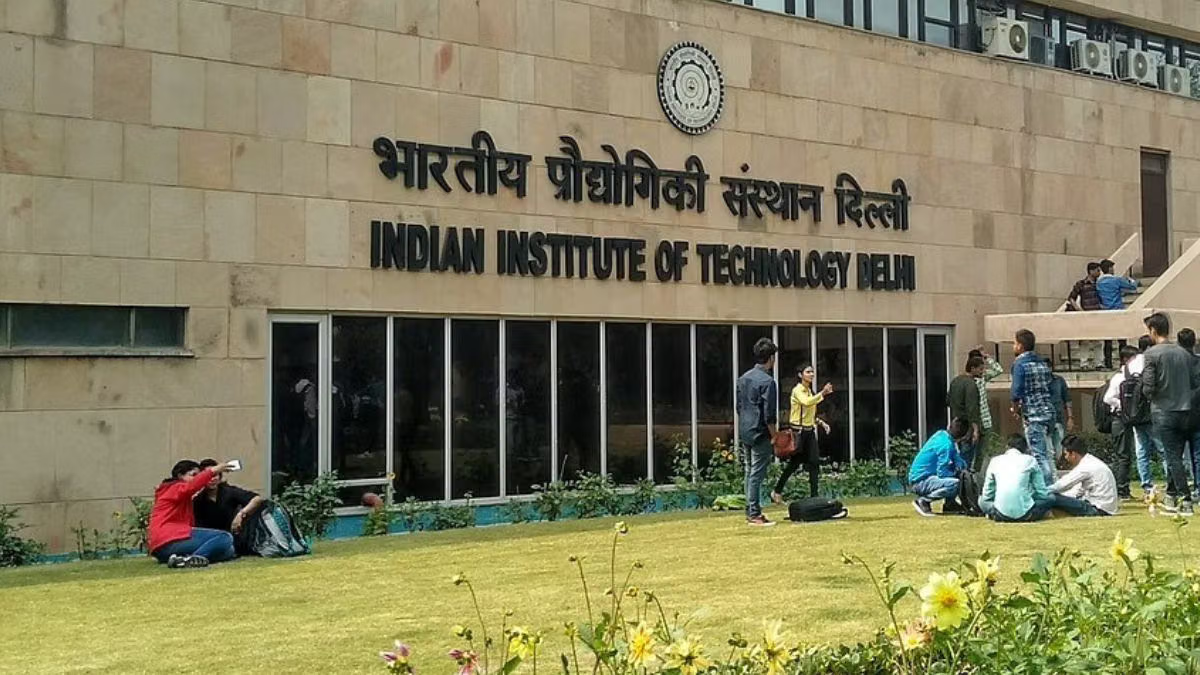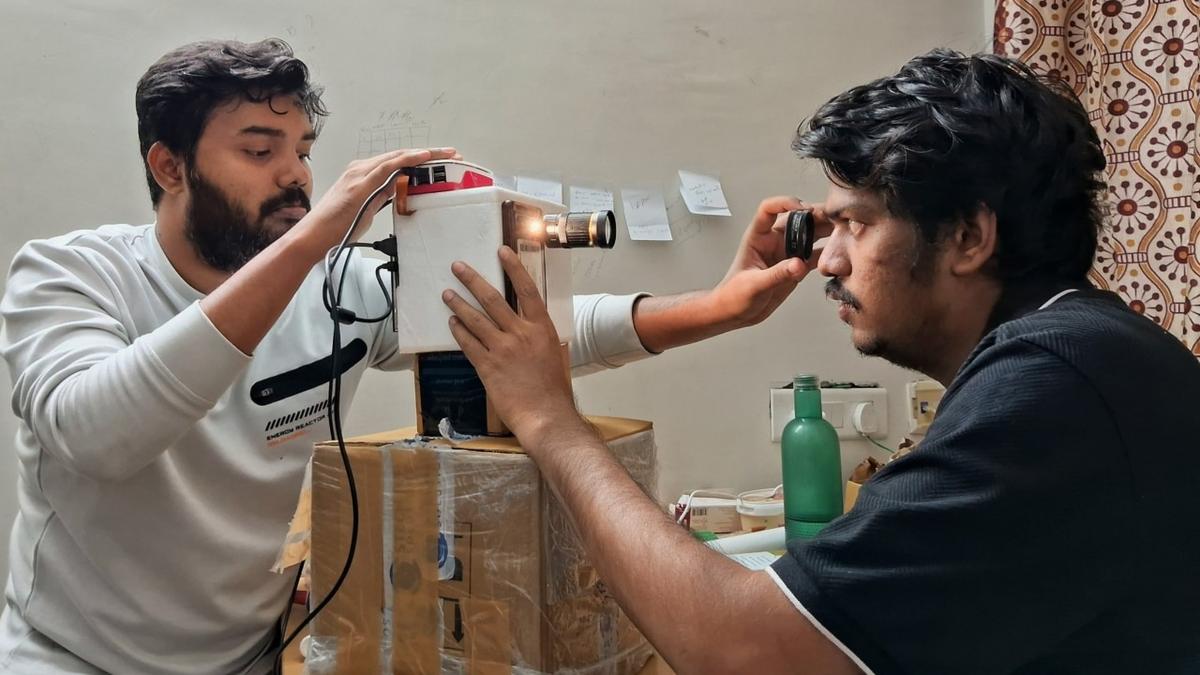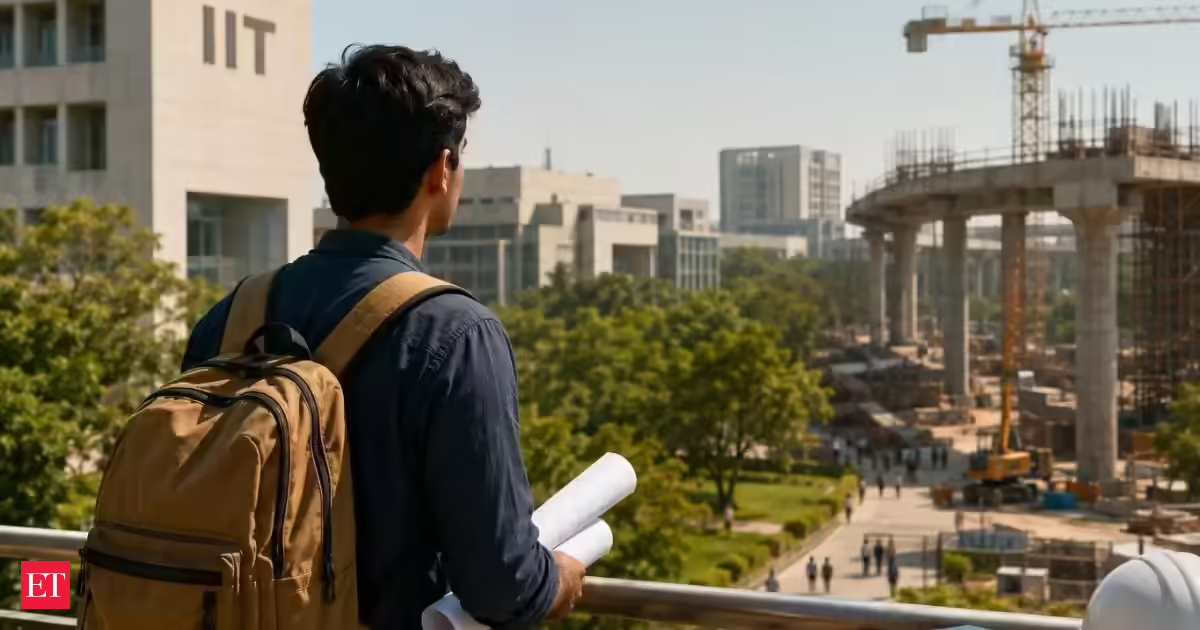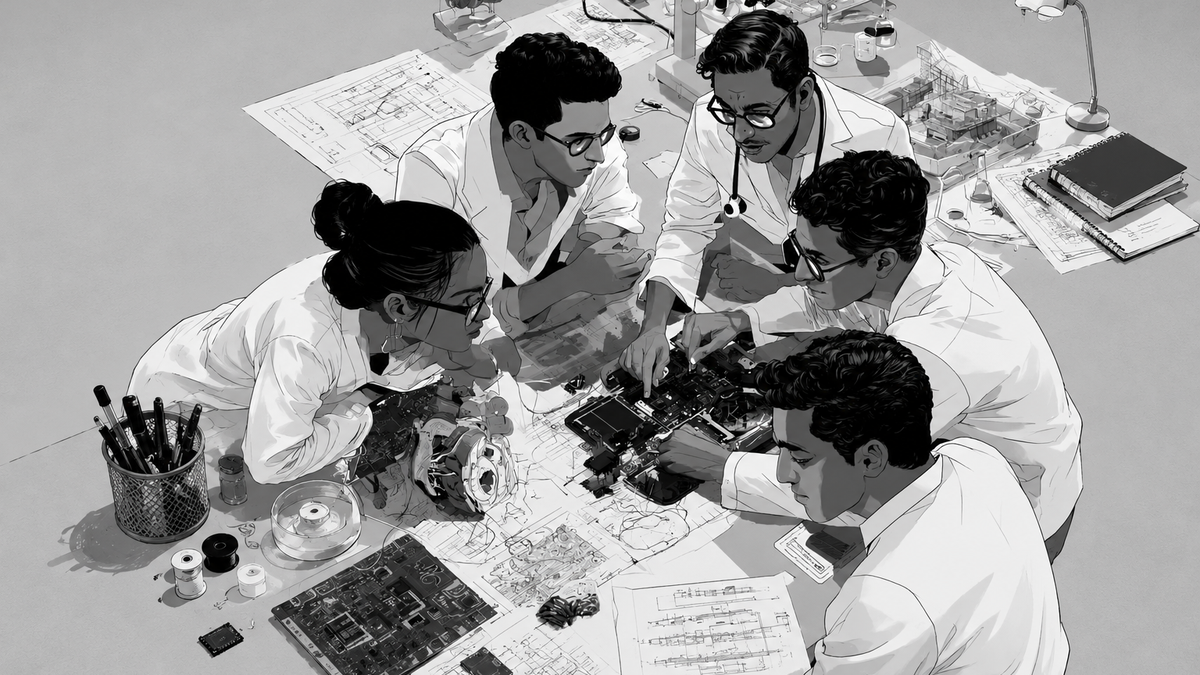
A unique shift is happening inside the classrooms of the Indian Institutes of Technology (IITs). In a departure from tradition, classrooms that were once filled only by engineering students are now hosting a diverse mix of learners. Today, medical graduates (MBBS), life science students, architects, and social scientists are sitting alongside B.Tech. graduates in postgraduate courses.This cross-disciplinary approach aims to tackle complex, real-world challenges that a single field of study cannot solve on its own. Programs in areas like biomedical engineering, healthcare technology, artificial intelligence, and public policy are leading this change. By bringing doctors and engineers together, these institutes hope to bridge the gap between medical science and technological innovation. This shift closely matches the goals of the National Education Policy (NEP) 2020, which promotes flexible and multi-disciplinary higher education to better prepare students for modern industries.Feasibility at the undergraduate levelThis discussion also prompts a closer look at traditional branches like Civil and Mechanical Engineering offered at the undergraduate studies. For decades, these streams have followed a highly structured, compartmentalised path. However, as industries evolve, the lines between traditional engineering and new technologies are blurring. For example, modern civil engineering increasingly relies on data analytics and climate science for sustainable smart-city planning. Mechanical engineering now frequently intersects with robotics, AI, and electronics.With cross-disciplinary education gaining ground at the postgraduate level, a new question arises: Is it possible to introduce this model into regular undergraduate engineering degrees?“We have been asking the same question for the last few years,” says Prof. Falguni Pati, Head and Professor of Biomedical Engineering at IIT Hyderabad, who was instrumental in conceiving a cross-disciplinary M.Tech. degree at the institution. “It is due to two varied reasons. First, the demand for students studying the computer science stream was relatively higher in the last two decades, while the demand for students of core engineering disciplines remained consistently low in the job market,” he says.He explains that the second reason is the industry’s concern about the persistent, outdated syllabus in science and engineering education.Explaining the increasing interdisciplinary approach to undergraduate studies, he says, “Each IIT has undertaken major reforms in undergraduate studies over the years. IITs are increasing the number of electives introduced to the students. Even at IIT Hyderabad, we have revived the syllabus and designed it in such a way that 25% of the modules will be related to hands-on learning or laboratory courses. The next major reform is that all engineering disciplines will include AI modules as part of the curriculum from this academic year.”He says that jobs related to IT and management will be replaced by AI in the future. “Simultaneously, there will be an increase in hands-on jobs, meaning the job demand for core engineering graduates will be higher in the near future. We have to start emphasizing laboratory-related modules starting from school for a better future for students.”Top leadership across other premier IITs echoes this urgent need for structural overhaul, emphasizing that core fields must adapt rather than disappear.“In my view, all departments need to completely rethink the design of their UG streams,” says Prof. Manindra Agrawal, Director, IIT Kanpur. “It must include learning about the use of AI tools for solving problems in their domain. The domains themselves are not going to vanish, however, learning about them and working on the problems in the domains is already changing.”Prof. Suman Chakraborty, Director of IIT Kharagpur, points out that the evolution of these fields actually makes them more vital, provided they break out of traditional silos. “Traditional disciplines like Civil and Mechanical Engineering are not becoming obsolete, but they are becoming more consequential than ever,” says Prof. Suman Chakraborty. “The real transformation is not replacing these disciplines, but reimagining them through deep integration with AI, data science, sustainability, advanced materials, biotechnology and systems thinking, while preserving their rigorous engineering foundations. The engineer of the future will no longer belong to a single discipline; they will combine disciplinary depth with multidisciplinary agility to solve society’s most complex challenges.” Published - July 08, 2026 04:26 pm IST
The typical IIT B.Tech is set for major overhaul
IITs are transforming engineering education by promoting cross-disciplinary learning to address complex real-world challenges.
671 words~3 min read