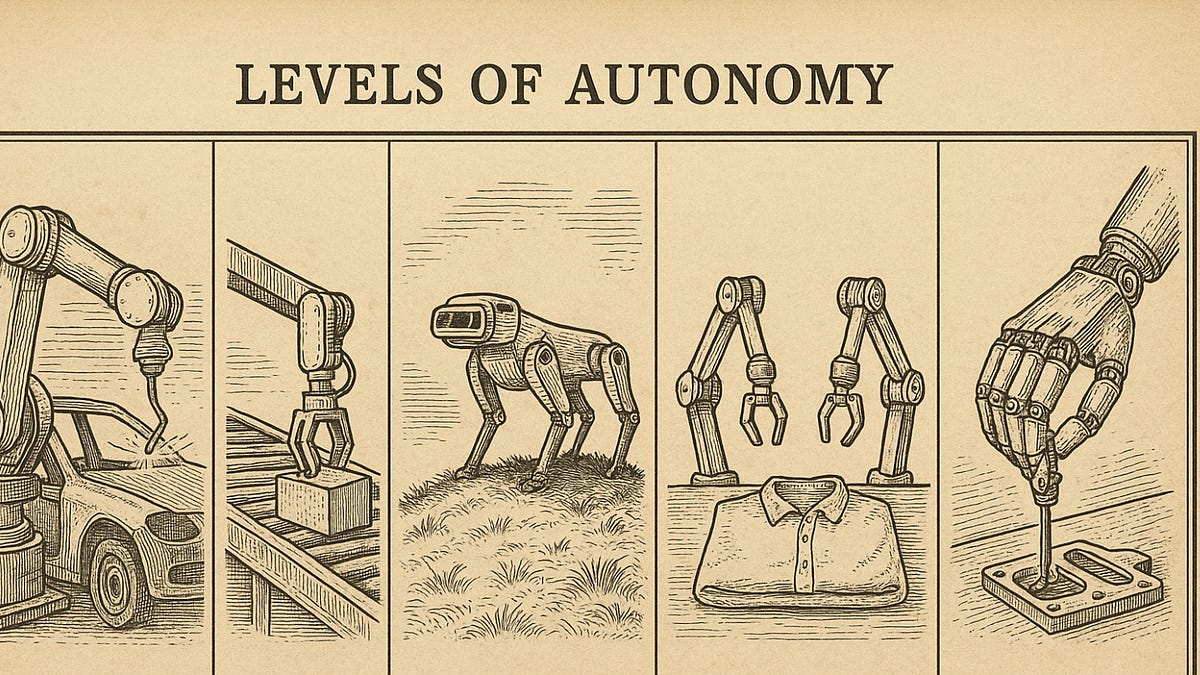
SALT LAKE CITY, July 8, 2026 /PRNewswire/ -- PassiveLogic, a pioneer in Physical AI software for built environments, today announced the launch of Level 3 Autonomy, the world's first system for generalized autonomous control of buildings and infrastructural robotics. Utilizing the company's physics-based world model, PassiveLogic's L3 continuously orchestrates building systems, anticipating demand, and adjusting in advance to deliver optimal comfort and efficiency.
PassiveLogic is targeting Level 4 Autonomy later this year, enabling learning at the edge and extending prediction horizons.What full autonomy has long promised for cars and robots, PassiveLogic is now delivering to live, mission-critical portfolios. PassiveLogic's autonomy platform co-manages building systems, balancing comfort, energy, operations, and emerging risks as conditions change—without constant tuning or manual intervention."Today, buildings around the world are undergoing a fundamental shift, from operational liabilities to active contributors, functioning as part of the workforce," said Thomas Kiessling, CEO of PassiveLogic. "We've moved autonomy from theory into deployment in live environments, something the industry has anticipated for years."What Level 3 Autonomy Means: Buildings Become Infrastructure RobotsBuildings, industrial systems, and data centers represent some of the most complex autonomous systems ever deployed, requiring coordination across thousands of interconnected assets, multiple physical domains, and time horizons ranging from seconds to decades.Yet today's building automation systems are mostly Level 0. Control is hard-coded by programmers and functions as a black box: actions occur, but intent and causality remain opaque.Level 3 marks a fundamental shift in which control is no longer scripted. Instead, control becomes an AI "white box" that is dynamic and trainable, but determinative and traceable – a breakthrough for the AI industry.Powered by NVIDIA, PassiveLogic's Level 3 autonomously generates changes to the physical environment from a physics-based World Model. The World Model describes the building environment and its systems: what equipment is, why it exists, how it behaves, how actions causally produce outcomes, and how people and assets interact with it. By combining these physical constraints with a visual representation of the environment, buildings become robots capable of reasoning about objects, predicting outcomes, and executing actions safely and accurately."The next decade will see Physical AI embedded into every major infrastructure system on Earth," said Kiessling. "The winners will be the companies that combine intelligence, autonomy, and real-world outcomes at scale. PassiveLogic has built the foundational platform for the built world to make that future possible, unlocking infrastructural robotics that will improve productivity, enhance safety, and reduce emissions."About PassiveLogicPassiveLogic is the creator of the world's first autonomous infrastructure platform. By combining Physical AI, the PassiveLogic world model, autonomous control, and a vertically integrated technology stack, PassiveLogic enables infrastructure to operate as intelligent, self-managing systems that continuously optimize performance, energy consumption, resilience, and human experience. The company's mission is to democratize engineering and accelerate the transition to a more intelligent, sustainable, and autonomous built world. The company is backed by leading investors including NVentures, Prologis Ventures, Addition, Johnson Controls, noa, Brookfield Growth, G2 Venture Partners, and Keyframe Capital.