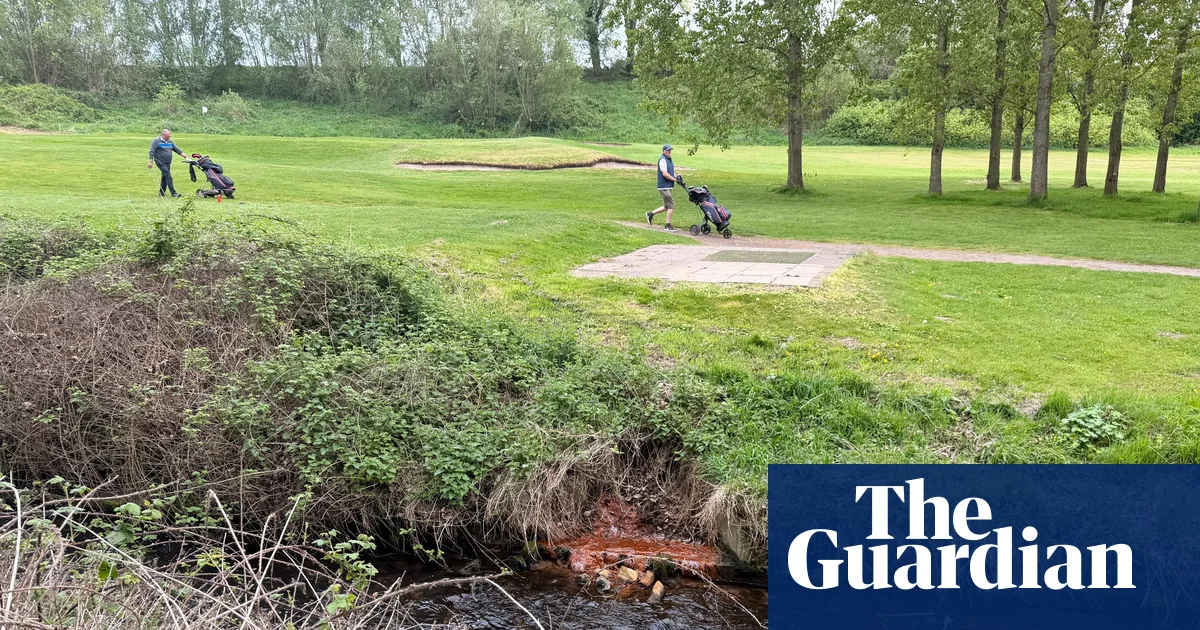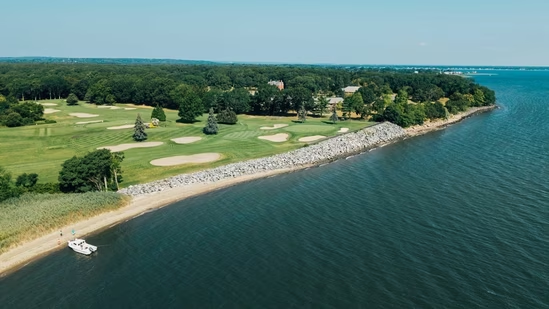
Paddling up Narragansett Bay, a kayaker spotted a strange new development between the Quidnessett Country Club and the sea: a heaping pile of rocks.The club says the wall is needed to keep its signature hole from slipping into the sea.Then all hell broke loose.First came the phone calls: the kayaker alerted activists, who informed the state, which dispatched a team of investigators to inspect the stone structure. The wall, two football fields long and 20 feet tall, stood between the 14th hole of the club’s golf course and the water. State officials, convinced it had been built illegally, issued fines and demanded its destruction.In Rhode Island, rising sea levels, erosion and a centuries-long debate over shoreline access have made coastal development a lightning rod. Yet no issue has animated locals quite like the Quidnessett seawall, which has spawned tense hearings, lawsuits, countersuits, investigations and a boycott. The Attorney General is involved. So is the Army.“It looks like it was dropped onto the site from Mars,” said Topher Hamblett, executive director of Save the Bay, an advocacy group.The Rhode Island family business that runs the club insists the wall was necessary to prevent the 14th hole from slipping into the sea. Erosion has eaten away at the course for years, Jan Companies says, thrusting its financial future into uncertainty.Lawyers for the club argue that the 526-yard, par 5 is its signature hole, the hardest and most aesthetically pleasing on the course.Their defense rests partly on the threat of a doom spiral: Without the hole, the club couldn’t host professional tournaments. Without tournaments, the property value would sink along with the dirt and turf.So an array of contractors built the wall out of stone and cobble in the dead of winter without a permit. And nobody’s been able to stop talking about it since.What the pile of rocks is depends on who you ask. The club’s lawyer calls it a “shoreline-protection facility.” Former Justice Department attorney Bradford Whitman, who now advocates for shoreline access in Rhode Island, dubs it a “monstrous wall.” Attorney General Peter Neronha calls it “willful, reckless, or wicked, as amounted to criminality.”The Jan Companies didn’t respond to requests for comment.Environmentalists say the wall will accelerate erosion elsewhere while starving the neighboring salt marsh of sediment, hurting wildlife. Fishermen say they now need to wade into the water to walk along the coast.Some of the backlash is a class dynamic, says Tim Cranston, an area historian. The country club opened in 1960 in North Kingstown on land that was traditionally a “playground for the wealthy,” he said. It held a celebrity exhibition match between Sam Snead and Arnold Palmer and hosted George H. W. Bush for a fundraiser.But Rhode Island is also fussy about its beaches. Neighboring states like Massachusetts allow property owners greater control of the coasts. When King Charles II gave Rhode Island a royal charter in 1663, he stipulated that the king’s “loving subjects” would not be stopped from “using and exercising the trade of fishing upon the coast.”As Rhode Island clinched statehood and grew, the principle of shoreline access remained core to its identity. Officials are required by the state constitution to let the public swim, fish and collect seaweed along the state’s 400 miles of coastline.So when people build walls, others often raise red flags.But property owners have pushed back as the strip of land between buildings and the ocean has shrunk. “People are taking matters into their own hands,” said Hamblett. “They’re armoring the shoreline with rocks and cement walls, sometimes without permits. And Quidnessett is the poster child.”When legislators proposed a bill arguing that the public shoreline extended 10 feet beyond the high-tide line, for example, landowners protested. Local property owner Jon Janikies testified that the bill would allow the public to “destroy” his entire outdoor patio, “which I have enhanced with an outdoor bed, sink, television, fireplace, tables and chairs.”Janikies’ father, Nicholas Janikies, took control of the Quidnessett Country Club In 1982. He was an entrepreneur who opened dozens of Burger King franchises across the region. His children worked for him and the family built out a diverse portfolio of restaurants, ice cream shops, Krispy Kremes and country clubs.Quidnessett was the crown jewel – until the 14th hole started to sink.The company’s lawyer says roughly 50 feet of golf course has slipped off the club’s seaside edge over the past three decades. The club at one point installed a separate fence, lawyers wrote, “to protect players from falling over into the rocky area below.”In 2012, the club applied for a permit to build a giant steel wall to stop the erosion. State regulators denied it. The club then lined the edge of the course with sand-filled “burritos.” Storms wiped them out in 2022. “Half a million dollars, washed away in six months,” a company official told North Kingstown leaders last year.The company describes the wall they built in 2023 as a last resort.Rhode Island regulators went back and forth with the company for years. At one point, the U.S. Army Corps of Engineers joined the investigation. Multiple parties concluded that the wall was illegal. And yet it never came down.In May, 999 days after officials first inspected the wall, the attorney general filed suit, escalating the battle to the state’s highest levels. The incident has baffled some Rhode Islanders, who wonder why the state has proven incapable of getting a country club to remove a simple stone wall.Some blame the coastal agency, which is run by a politically-appointed slate of citizens who normally lack subject-matter expertise.The agency didn’t comment.Others say the shoreline activists need to take a deep breath.“The wall is made of rocks; rocks that the cosmos started creating about 4.5 billion years ago,” wrote one commenter on the local environmental site EcoRi. “Lordy mama, leave these folks alone.”Write to Owen Tucker-Smith at Owen.Tucker-Smith@wsj.com
A Country Club Built a Wall to Protect Its Golf Course—and All Hell Broke Loose
As the 14th hole sunk into the sea, contractors erected a stone structure to protect it. Easy fix, right? Wrong.
974 words~4 min read