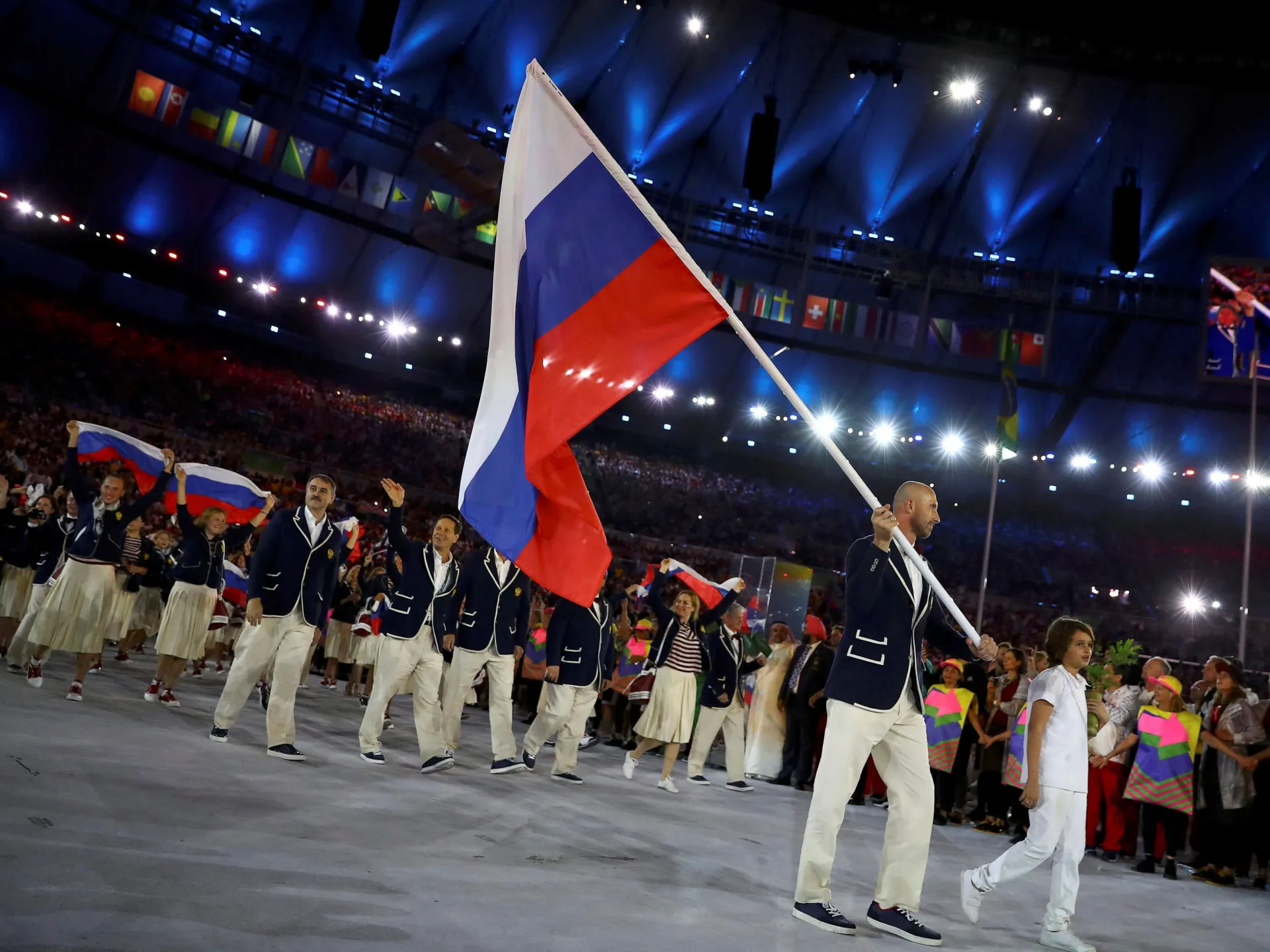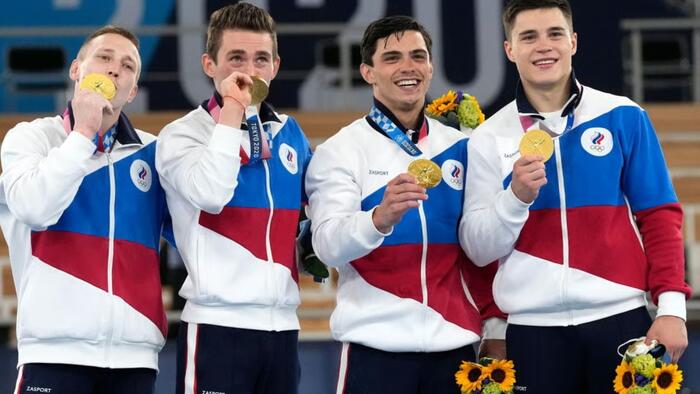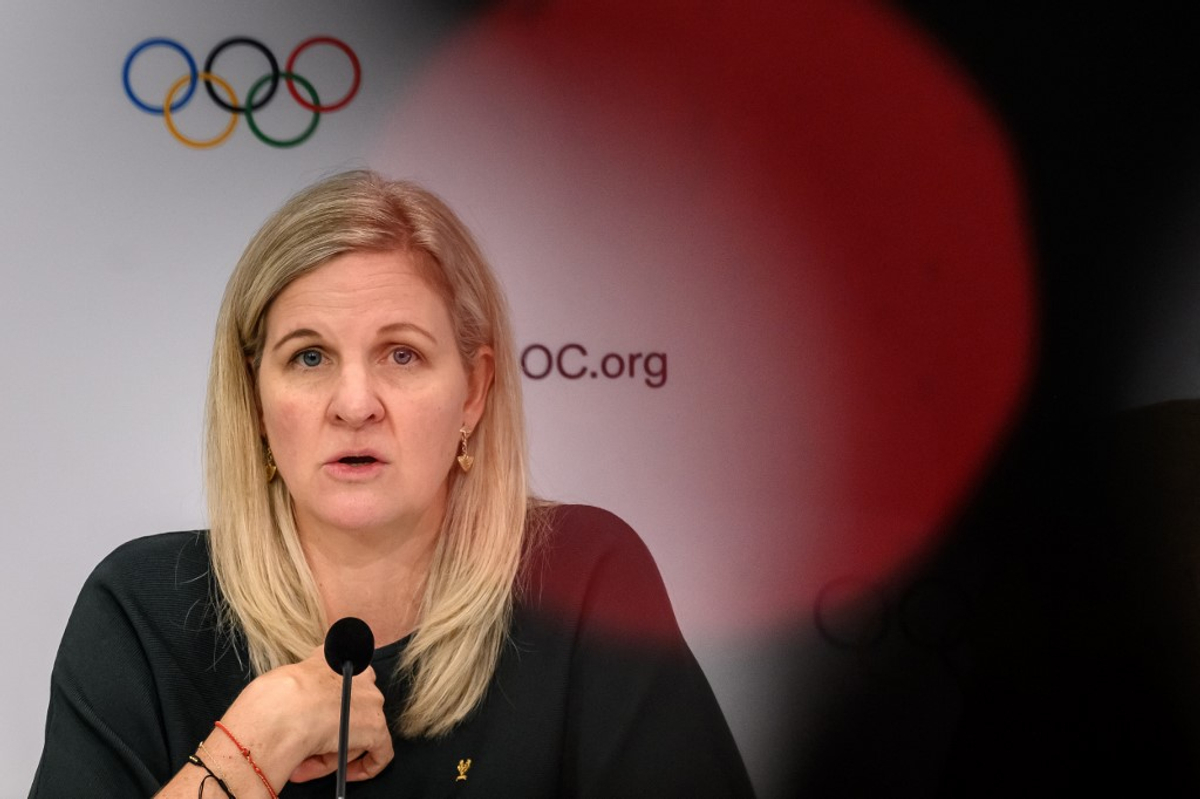
Since the torch went out to close the Putin Olympics — sorry, the Sochi Winter Games — more than a dozen years ago, the people who run the International Olympic Committee and those who oversee sport in Russia have shared nary a common thought.Those Olympic officials discovered — not by their own investigation, but by journalists — that the Sochi Games were close to farcical because the Russian state systemically organized a doping program to pump up their athletes and therefore their medal haul. Their disagreements are deep and understandable.Here we are, more than a decade later, and the IOC is preparing to again recognize the Russian Olympic Committee, which will in turn have a pathway to send athletes and teams to the 2028 Los Angeles Games, a decision confirmed Tuesday, though whether the L.A. Games will fly the Russian flag or belt out the Russian anthem will be determined at a later date. Baby steps.Remember, though, the Russian ban that’s on the verge of ending isn’t because of all those performance-enhancing drugs. It’s because four years ago — with the torch from the 2022 Beijing Olympics barely doused — Russia invaded Ukraine. Indeed, Russia is still there. Just Monday, Russian ballistic missiles and drones battered the Ukrainian capital of Kyiv.Nikita Filippov, a ski mountaineering athlete competing as an Individual Neutral Athlete, was the lone Russian medalist at the 2026 Olympics. (Hu Huhu / Xinhua via Getty Images)What changed? Well, nominally, Russia is no longer trying to claim regional sports organizations on Ukrainian soil would be part of the ROC. Other than that?“We made it clear that we wanted to ensure all athletes have the possibility to compete at the Olympic Games and not be held responsible for their government’s actions,” IOC president Kirsty Coventry said at a news conference after the announcement.Wouldn’t that have made sense in 2024 in Paris and 2026 in Milan Cortina — where Russian athletes competed as neutral participants but Russian teams were banned?This is a bit like trying to thread a needle with a bulldozer. It’s true: Coventry wasn’t yet IOC president when Russia was initially banned. She took over for Thomas Bach a little more than a year ago, and maybe this is showing new leadership, an enforcement of consistent standards. It still raises a question that constantly dogs the IOC and the Olympics: What should the Olympics be about? What values should they uphold?At base and at best, the Olympics can bring athletes together and foster clean, fair competition at the highest level, a stage on which we all might learn about our similarities and from our differences. It’s an idyllic view, but we can dream. It’s why the Games themselves so frequently rise above the controversies around them. The best athletes putting on the most stirring performances have a way of drowning out the din all around.IOC president Kirsty Coventry said the decision was about ensuring that athletes “not be held responsible for their government’s actions.” (Fabrice Coffrini / AFP via Getty Images)That’s why the ban of Russian athletes after Sochi was necessary, because the Russian orchestration eroded the belief in fair play. Enforcement just wasn’t consistent. Three hundred thirty-five Russian athletes competed under the banner “ROC” at the Tokyo Games five years ago. More than that, 23 Chinese swimmers tested positive for a banned substance in the months leading to those 2021 Tokyo Olympics — results that neither doping nor swimming nor Olympic officials shared with the public.Those swimmers competed that summer. Three years later — conveniently, after the China-hosted 2022 Winter Olympics — the positive tests were revealed, and the Olympic community faced another crisis of trust in its leaders.Which brings us back to Russia and Los Angeles. Tiptoeing backward from taking action against a country’s athletes because of that country’s aggressions is not just a reversal from three years ago. It’s a convenient one. The next Olympics are in the United States. What if, say, the American government started a war in the years leading up to …Wait. That’s already happened.Tuesday’s measure gives the IOC a way to avoid questions such as, “You’re still punishing Russia for invading Ukraine, but you’re doing nothing about the U.S. (or Israel) attacking Iran. Why?”But there are questions still. Coventry said, for instance, that Russian sites would not be considered for Olympic events. Yet those L.A. Olympics, even with the Americans instigating a conflict in the Middle East? It’s a slippery slope, isn’t it?So “What should the Olympics be about?” can lead directly to another question that becomes even more pertinent with Tuesday’s announcement: What should the IOC adjudicate? Sport? Yes. Fair play? Yes. Doping regulations and uniformity? Yes. Those issues are plenty to deal with and hard enough to get right.Geopolitics? Probably not.So what was gained by the Russian ban for Paris and Milan Cortina, the actions taken because of Russian aggressions in Ukraine? Given the inconsistent application, not much. Between those Summer and Winter Games, only 45 athletes — labeled independent — competed from Russia. We banned athletes because bombs were falling. Now, bombs are still falling but, for some reason, it’s apparently time to move on.Onward, then. At least the Russian Olympic Committee is being recognized again because all that doping nonsense is so clearly behind it.Wait. The IOC acknowledged in its statement about the decision “the lack of confidence in the global sporting community relating to the return of Russian athletes to international competition” because of, well, all the needles and syringes littered across Russia’s sporting past. Points for honesty. Any confidence in Russian fair play has to be earned. Given a world in which the robbers are almost always ahead of the cops, that’s hard.Which could describe the entire endeavor of governing international sport: It’s hard. Ask FIFA president Gianni Infantino, who just last weekend fielded a phone call from a world leader inquiring about one of his country’s suspended soccer players. That starched collar must feel a little tight around the neck in those moments.Sports cannot be separated from politics, and human rights should be protected at every turn. But in stepping back on its ban on Russian athletes because of the Russian government’s aggression, the IOC didn’t right a past wrong. It did, however, clear the way to avoid such decisions in the future, with Los Angeles — and an unpredictable American government — next on the calendar.
IOC’s controversial Russia decision draws a new line for all future Olympics
In lifting Russia's ban over its invasion of Ukraine, the IOC cleared a way to avoid such hard decisions in the future — like maybe in L.A.
1,063 words~5 min read