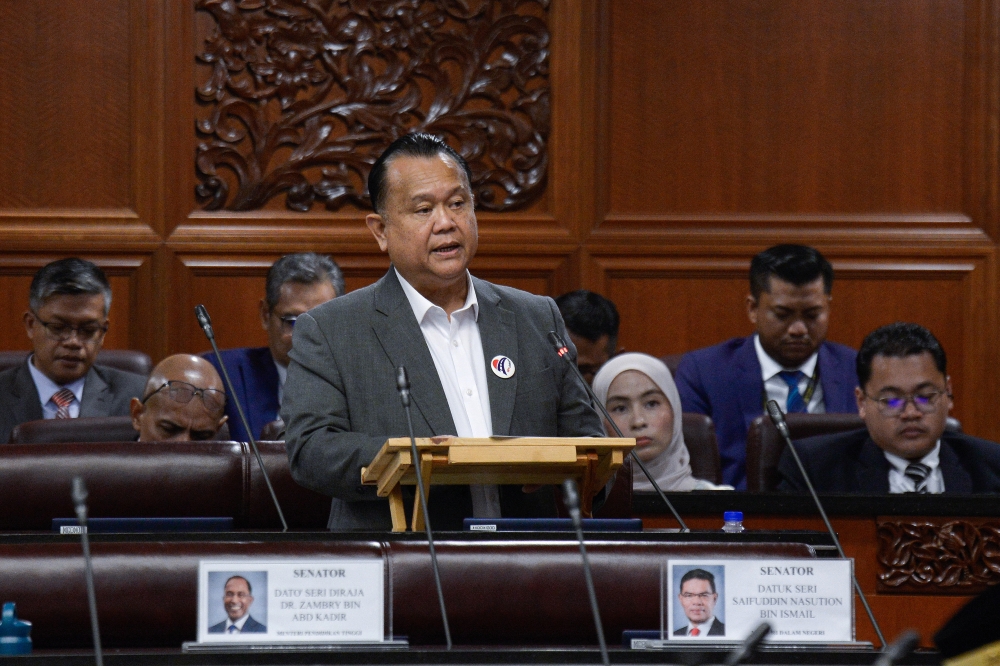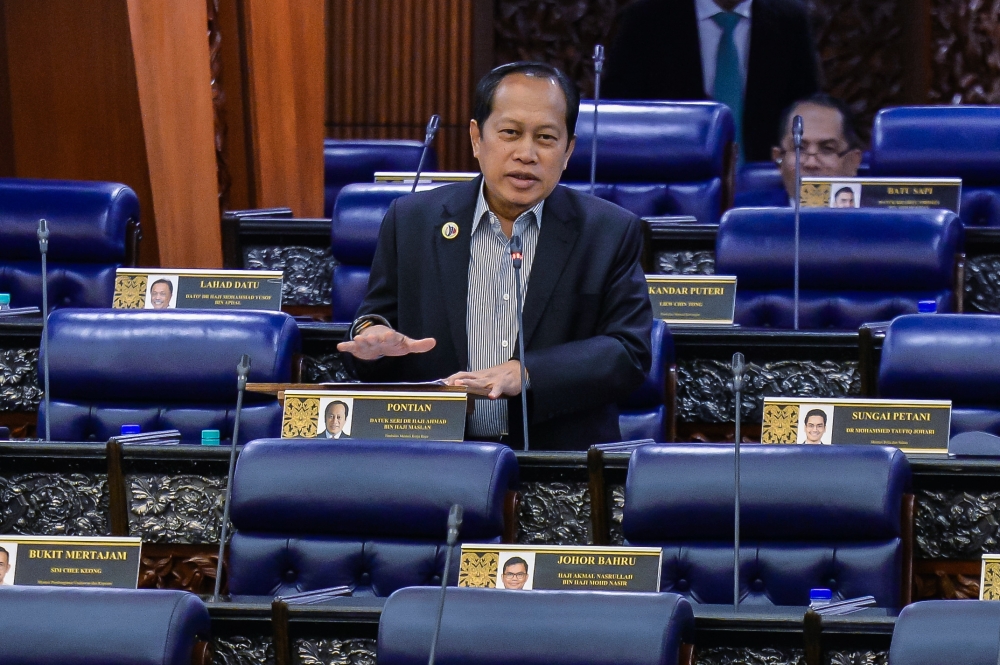
Deputy Works Minister Datuk Seri Ahmad Maslan said the highway’s toll rates have yet to be finalised. — Bernama pic By Anis Zalani First Published: Wednesday, 08 Jul 2026 1:07 PM MYT KUALA LUMPUR, July 8 — The proposed East Coast Expressway 3 (LPT3) project will be implemented through a public-private partnership (PPP) model, with the successful bidder expected to bear the full cost of development, Deputy Works Minister Datuk Seri Ahmad Maslan said today.However, he said the highway’s toll rates have yet to be finalised.“A 2022 study estimated the toll rate could be around RM80, but that estimate was made four years ago and will need to be reviewed based on current conditions.“The final toll structure will take into account several factors, including construction costs, financing costs, operation and maintenance expenses, traffic projections and the concession period,” he said in the Dewan Rakyat.Ahmad was responding to Dungun MP Wan Hassan Mohd Ramli, who asked about the government’s key considerations in implementing LPT3 under the PPP model, including its impact on toll rates and the project’s implementation timeline.He said the project’s statement of needs had been submitted to the Public-Private Partnership Unit (UKAS) under the Prime Minister’s Department to facilitate the preparation of the Request For Proposal (RFP) documents for consideration and approval by the Cabinet.Ahmad added that UKAS was targeting to finalise the process according to the set timeline.He said the proposed 122km highway would be developed under a Build-Operate-Transfer (BOT) concession model, although no concessionaire has been appointed.The highway will feature two lanes in each direction and follow the JKR R6 at-grade design standard.Based on 2022 estimates, Ahmad said the project’s development cost is RM9.8 billion, while the concession period and toll system have yet to be finalised.He added that the project would include five elevated interchanges, with the alignment stretching from Kampung Gemuruh in Terengganu to Tunjong in Kota Bharu.Responding to a supplementary question from Wan Hassan, who questioned the government’s decision to proceed with LPT3 through the PPP model while Terengganu’s claim for RM1.243 billion in reimbursement for LPT2 construction costs remains unresolved, Ahmad said the decision to privatise LPT3 was due to current financial constraints.He said the federal government would have preferred to fund the project directly if sufficient funds were available, but allocations had to be prioritised for other critical projects.“If funding is insufficient because there are other projects that are more important, we need to redirect available allocations towards those projects,” he said.Ahmad said several major projects, including the Kota Bharu-Kuala Krai (KBKK) Expressway and Central Spine Road (LTU), currently do not impose tolls, while toll rates for LPT1 and LPT2 remain low.He noted that the Pan Borneo Highway projects in Sabah and Sarawak were also not implemented through privatisation, but said LPT3 would be developed through the model due to financial limitations.Ahmad said existing East Coast routes currently only experience congestion during peak hours, festive seasons and holidays.He added that the completion of the East Coast Rail Link (ECRL), expected within the next one to two years, would provide an alternative route for East Coast residents travelling to the Klang Valley.The completion of the KBKK Expressway and LTU would also provide additional alternatives for road users, he said.“LPT3, as its name suggests, will become the third alternative route for the people,” Ahmad said, adding that existing roads would continue to be used while the government hoped the ECRL and KBKK-LTU projects could be completed as soon as possible.
Ahmad Maslan: LPT3 to be developed under public-private partnership model, bidder to bear full cost
KUALA LUMPUR, July 8 — The proposed East Coast Expressway 3 (LPT3) project will be implemented through a public-private partnership (PPP) model, with the successful bidder...
576 words~3 min read