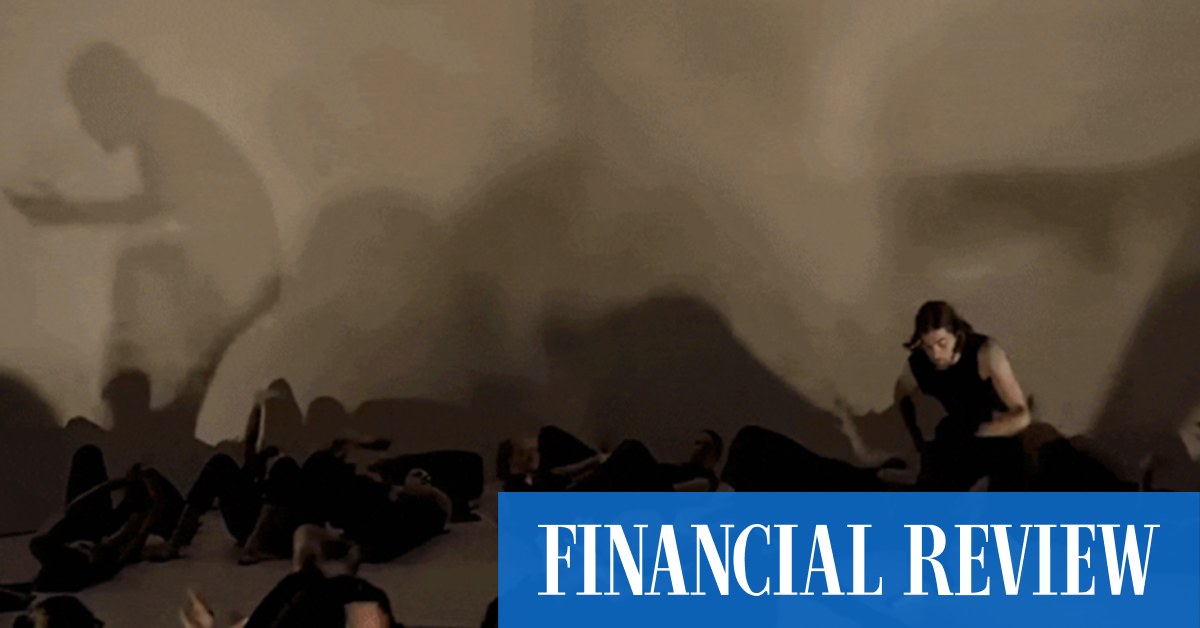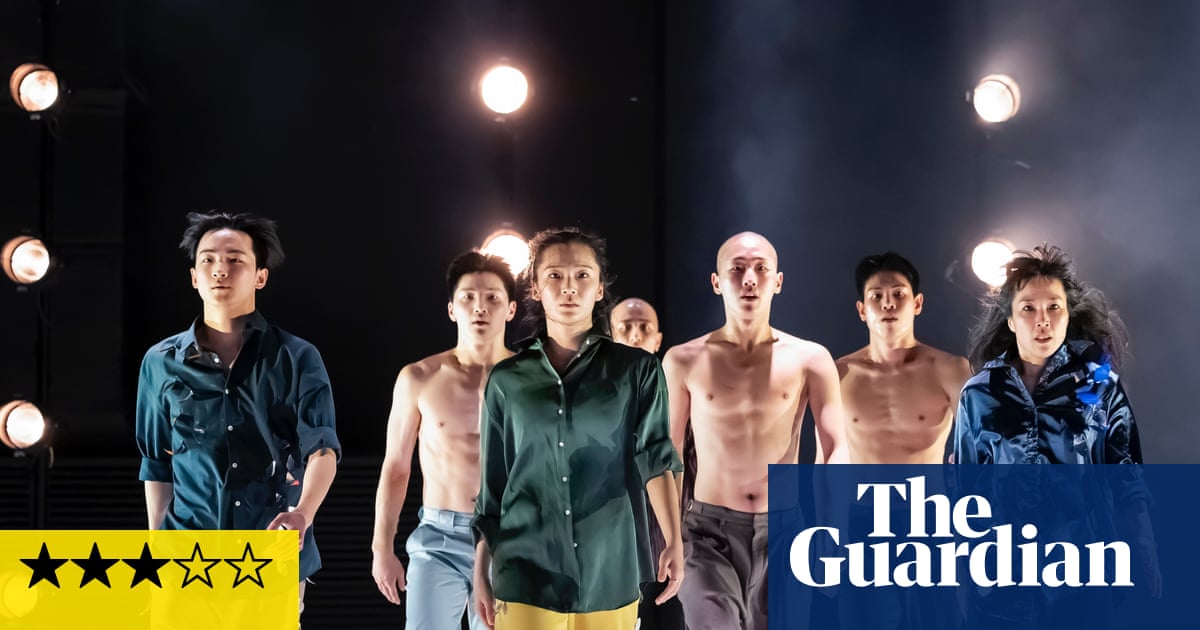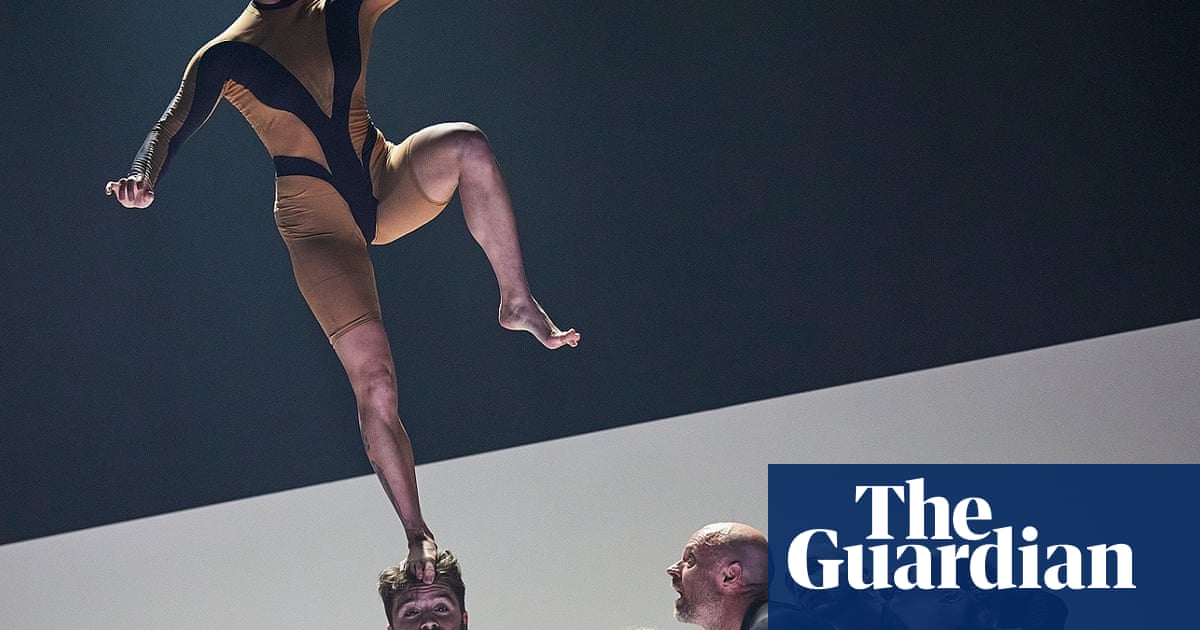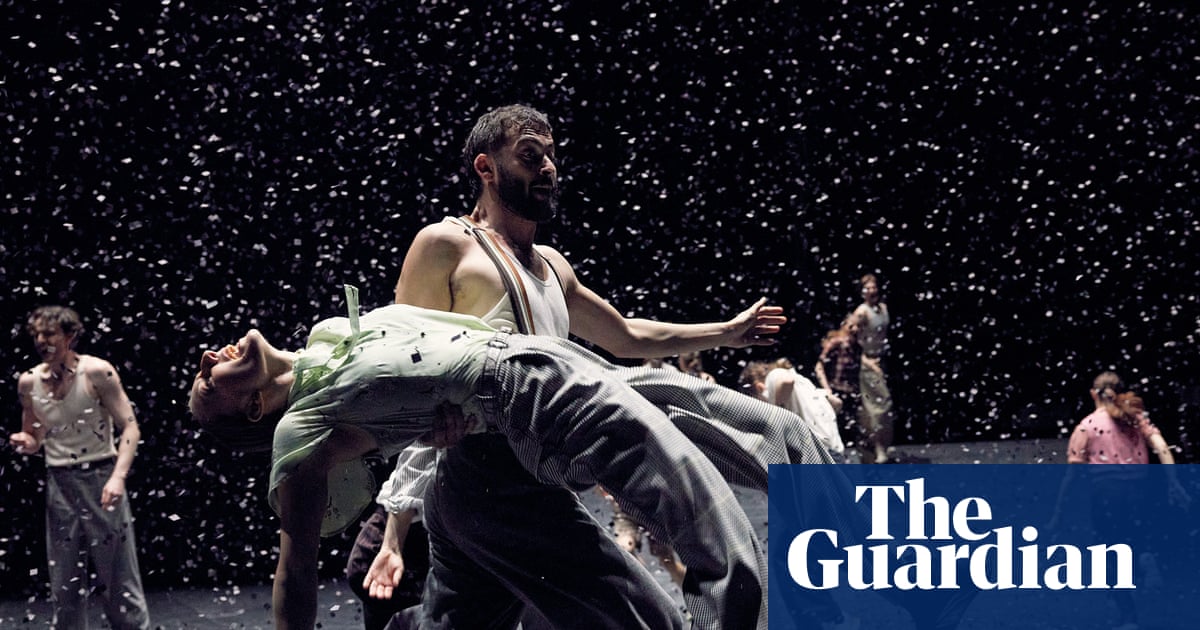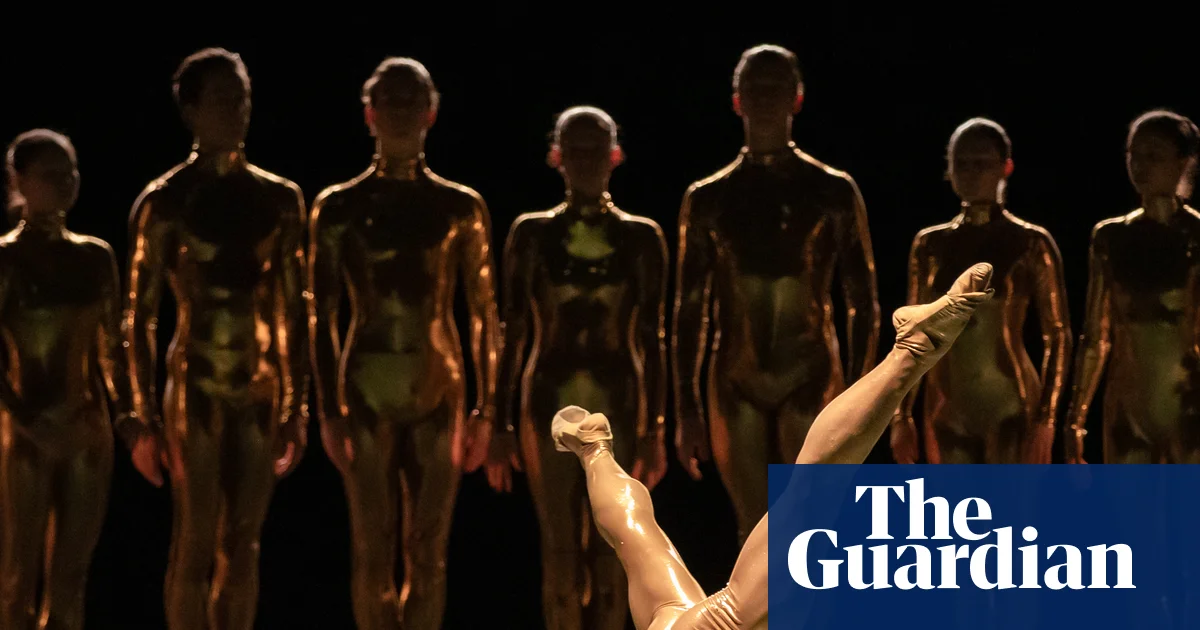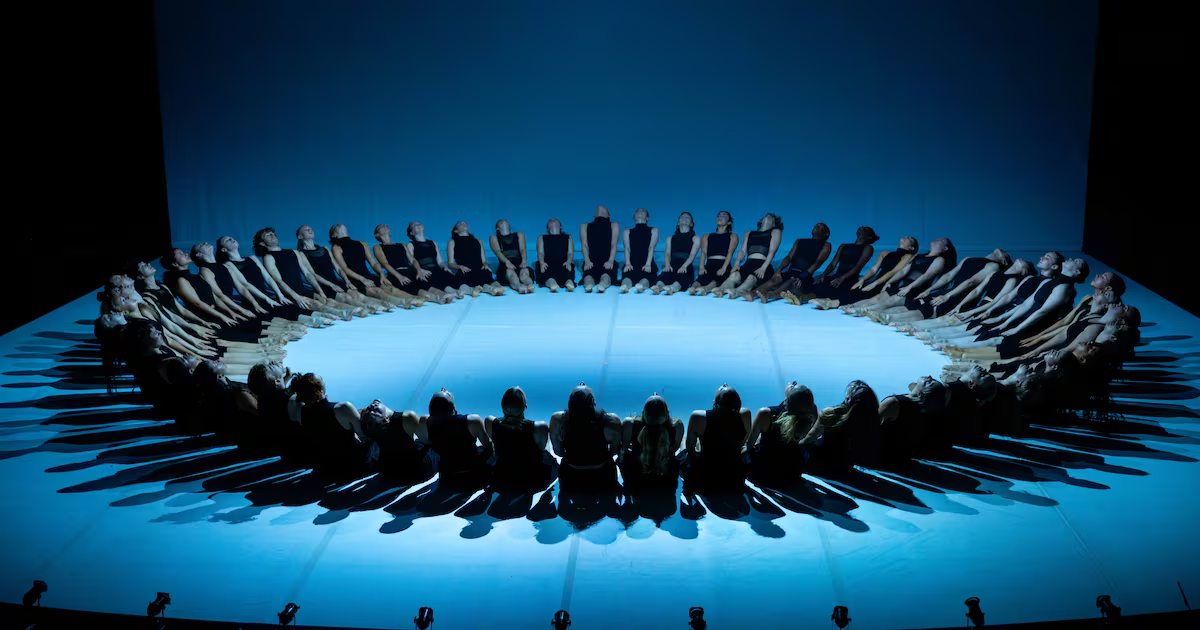
It’s 9am in London and already 30 degrees. It’s the morning after the UK premiere of Colossus, by the Australian choreographer Stephanie Lake, at the (thankfully air-conditioned) Queen Elizabeth Hall, part of the Southbank arts centre, next to the Thames.For the 50 final-year BA students from London Contemporary Dance School, rehearsals were not so cool. Their studios at the Place, off Euston Road, are not air-conditioned and they had to work during the heatwave.Fortuitously, the UK Met Office’s red warning for extreme heat, which forced the Place to close its doors, coincided with final preparations when dancers were in the theatre. Starting on July 21st, those same dancers can breathe the cooler air of the Atlantic coast when Colossus visits Galway International Arts Festival.“The dancers were troopers,” Lake says, praising the way the young dancers battled London’s soaring temperatures to get Colossus on to the stage. They were also troopers in their openness to the challenge and buy-in to Lake’s process: Colossus is an hour-long dance whose journey from first rehearsal to opening night is just two weeks.This is atypical in dance, where works restaged by professional companies can often take a couple of months of preparation. But Colossus is almost perfectly suited to dancers at a preprofessional level, who feel free to dive headlong into the fortnight with an enthusiasm and freshness that might not be as forthcoming from more experienced dancers. This can-do spirit is traceable to the work’s origin, in 2018.“I was at a stage in my choreographic career where resources were tight and I was having to make small works, like quartets or sextets,” Lake says. “I really had this desire to work with a large group, so I put the call out in Melbourne and whoever wanted to be part of it could be part of it. There were dancers from a couple of different institutions and then a whole lot of freelancers who wanted to join in. Just 10 rehearsals. It was crazy.”Colossus has gone on to be performed worldwide. Are there dark secrets to getting it onstage in just two weeks?“No, and I’m very happy to talk about it, because I’m quite proud of the model,” Lake says. “We’ve got a team of rehearsal directors, so two of them travel to meet the group. They teach all the choreography and develop the sections that are made by the dancers themselves. “So that process takes about two to three weeks, depending on where it is and if we need translators. And then we’re into the theatre. So it’s really fast. Honestly, last night was the first clean run we’ve had of the show.” Lake trusts the process because she also trusts dancers.“Dancers are quite uniquely connected, because it’s such an intimate art form. You’re so reliant on each other, physically and psychologically, to get through a rehearsal day and perform together. And you work so closely, like literally physically close to other people. It’s never been a struggle to find that sense of community between people.” But working with 50 dancers?“Yeah, wrangling the rehearsal room is absolutely chaotic.”Amid this chaos, Lake and her team must gather individual talents into a coherent whole. Movement sequences are taught to the entire group, so that everybody moves in unison. But Colossus relies on a less visible sense of togetherness, an internal sense of common purpose that is deeper than what is immediately visible to the audience.“We talk about that a lot,” Lake says. “We talk about breathing like one organism or trying to be one brain or one body, especially in the opening image of the circle. “You have to almost subsume your own individuality, in that you are just one person in this image. Some people really struggle with that. There are lots of soloists in the cast, and so to let go of ego and just be part of the image, that’s a big part of the piece.”Letting go of the self to become part of a group can have darker outcomes. At one moment in Colossus a mob begins ganging up on an individual, shouting and chasing them around the stage. Elsewhere, groups coalesce into marching columns, individuality stripped within the military-like precision. This is the tension throughout Colossus: sit back and you can bask in the seductive unison; sit forward and you find underlying struggle between individual and group.“That slowly crept in,” Lake says. “I wasn’t intending to make any comment on society. I thought I was making an abstract work, like a choreographic puzzle. But all of those things emerged just through improvisation and play. So then I leaned into it, and the work started to take on these other layers.”Some sections are not prescribed but created and developed with each performing group. Nevertheless, overall fidelity to the original is always maintained.Galway International Arts Festival 2026: Colossus, choreographed by Stephanie Lake, being performed at the Southbank centre. Photograph: Camilla Greenwell “The first season, in 2018, was pretty rough and ready. So we’ve had a chance to tighten it, and I’ve been able to make tiny little tweaks and adaptations as the years have gone on, like stretching some things, contracting other things and finding connections between sections in different ways. “But it has essentially stayed the same. The temptation is always to change things, but actually there’s something in its essence that I just have to keep.”If the rehearsal period takes just two weeks, then setting up the performance takes considerably longer. “We’ve been talking to Southbank Centre for probably two or three years. It’s always a really long process, because it really is a partnership between the three entities: us and the presenter and then whoever is providing the dancers.” Ireland was always a potential destination, but when Paul Fahy, artistic director of Galway International Arts Festival, heard about the Southbank premiere, he suggested bringing that performance and cast across the Irish Sea.“I don’t know if they realise how lucky they are,” Lake says about the graduating dancers from the Place. “They get a UK premiere at Southbank Centre and then they get an international tour two weeks later. It’s a pretty great kickoff to their careers.”The first and only other time that Lake’s choreography was performed in Ireland was in 2013, when her duet Dual featured at Dublin Dance Festival. She formed her company a year later, and she has since prioritised international collaborations, leading to a working life in both hemispheres.“We’re at the bottom of the earth, and I want to connect with the rest of the globe,” she says. As well as being resident choreographer of the Australian Ballet, she is artist-in-residence at Semperoper Ballett, in the German city of Dresden. The Stephanie Lake Company has just toured North America and will be back in France at the end of the year; Lake will also have performances in Austria and Zurich.Colossus was born of a desire to work with a big group of dancers, but now that is commonplace when working with companies such as Semperoper Ballett and the Australian Ballet. Along with artistic freedom, she is granted a huge cast and crew to support her vision.“I feel as the opportunities get bigger, the expectation also gets bigger. And also the expectation from myself. I just want to deliver on these opportunities. I wish I could say it’s got more relaxing as the resources get bigger, but it’s the opposite. The pressure gets so much more intense. The eyes on you are so much more honed. But it is amazing to be supported and trusted.”She is disappointed to be missing the Galway performances, but the Stephanie Lake Company is premiering a new work, Vista, in Melbourne the day after Colossus opens in Galway. However enticing the international opportunities are, her own company remains a priority.“It’s something I’ve been building for the last 12 years, and it’s my baby. I started with nothing – actually minus nothing, because I started in debt. And so to have got to a stage now where it’s really built to a place where we’re able to support so many dancers and artists, that’s something I’m really proud of. “We’re a really small team, but we’re making big works and they’re touring and having success internationally. I’m really proud of that, because it really did start as a tiny little idea.” Colossus at the Black Box Theatre, as part of Galway International Arts Festival, from Tuesday, July 21st, until Sunday, July 26th
Colossus choreographer Stephanie Lake: ‘We’re a really small team, but we’re making big works’
The Australian is bringing her 50-dancer show to Galway International Arts Festival 2026
1,408 words~6 min read