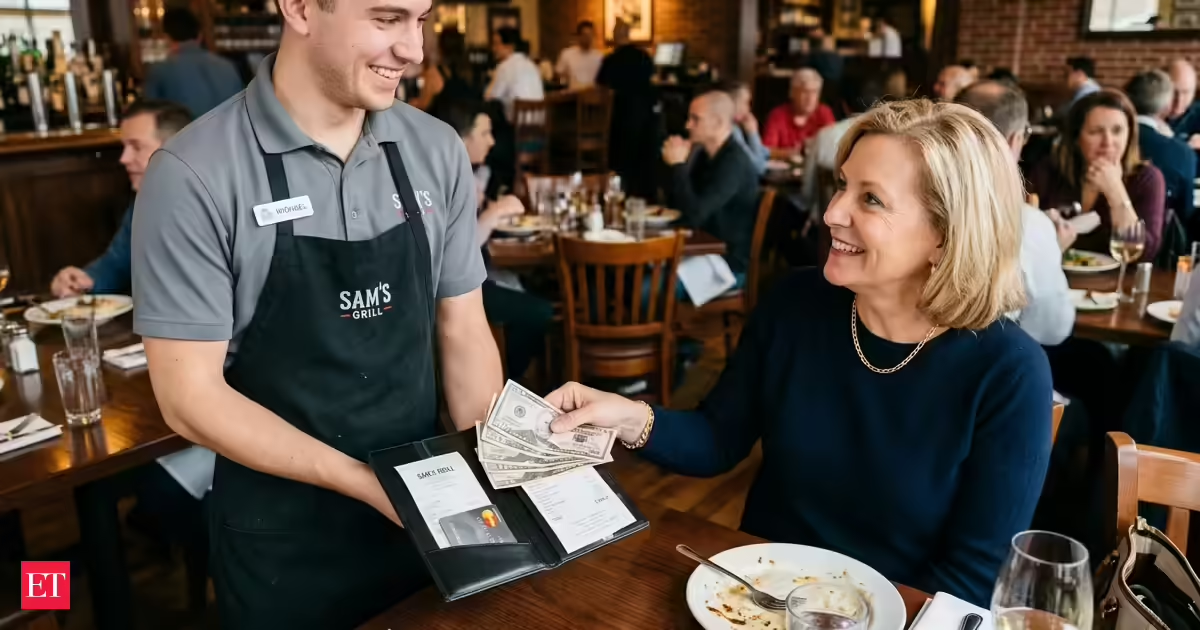
Imagine you're dining at a restaurant and the bill comes to $48. Without much thought, you leave a 20% tip. It isn't because the server performed an extraordinary act or because anyone is watching. It's simply what you always do.Most people assume tipping is a straightforward way of rewarding good service. But decades of psychological research suggest there's often more going on beneath the surface. While service quality certainly matters, studies consistently show that the size of a tip is influenced by the tipper's own values, habits, emotions, and even the kind of person they believe themselves to be.In other words, leaving a generous tip may not only say something about the service, it may also reflect how someone sees themselves.Why tipping isn't just about the serviceOne of the most influential researchers on tipping behavior is Michael Lynn, a professor at Cornell University's School of Hotel Administration. After studying tipping for more than three decades, Lynn found that service quality explains only a relatively small portion of the variation in tip size.In several reviews of tipping research, he concluded that while better service generally leads to higher tips, the relationship is surprisingly modest. Instead, many other factors influence tipping decisions, including social norms, mood, generosity, cultural expectations, payment methods, and customers' personal values.This means two people receiving the exact same service can leave very different tips, not because they experienced the meal differently, but because they approach tipping differently.The role of self-identity in generosityOne explanation comes from Self-Perception Theory, proposed by psychologist Daryl Bem.The theory suggests that people often learn about themselves by observing their own actions. Instead of acting only because of who they think they are, they sometimes infer their identity from what they repeatedly do.Applied to tipping, this means that someone who consistently leaves generous tips may gradually reinforce an internal belief such as:"I'm a generous person", or "I'm someone who treats workers fairly."Each generous tip becomes more than a financial decision, it becomes another small piece of evidence supporting that self-image.Psychologists refer to this as identity reinforcement. Over time, behaviors that align with our personal values become habits because they help maintain a consistent sense of who we are.Why people like behaving consistentlyAnother well-established concept that supports this idea is Self-Consistency Theory, developed by psychologist Prescott Lecky.The theory argues that people are naturally motivated to behave in ways that match their existing self-concept. Once someone views themselves as kind, fair, generous, or considerate, acting in ways that contradict those traits can feel psychologically uncomfortable.This helps explain why some people continue tipping generously even after average service or when traveling somewhere tipping isn't expected. Their decision may have less to do with the specific situation and more to do with remaining consistent with the person they believe themselves to be.The "warm glow" effect of givingBehavioral economics offers another fascinating explanation.Economist James Andreoni introduced the concept of "warm-glow giving," which suggests that people often experience an internal emotional reward from acts of generosity.Rather than helping only because it benefits others, people may also enjoy the good feeling that comes from giving. That emotional satisfaction doesn't make generosity selfish; instead, it reflects that kindness can be intrinsically rewarding.A generous tip, therefore, can provide more than appreciation for a server, it can also produce a subtle sense of satisfaction because the act aligns with one's personal values.Research suggests generous tippers are often motivated by internal valuesMichael Lynn's research has also examined why people tip.One study found that customers who reported intrinsic motivations, such as rewarding effort, helping servers, expressing gratitude, or simply believing tipping is the right thing to do, generally reported leaving higher percentage tips than those motivated primarily by concerns about appearances or social approval.That finding supports an important distinction.While some people may tip because they feel social pressure, others do so because generosity has become part of their personal value system.In those cases, the tip serves as an expression of identity rather than simply a response to the quality of service.What this really says about tippingNone of this means that every person who leaves a 20% tip is naturally generous, nor does it mean that smaller tips reveal a lack of kindness. Financial circumstances, local customs, cultural expectations, and individual experiences all influence tipping behavior.What the research does suggest is that tipping is often more psychologically complex than it appears.
Psychology says people who consistently tip 15% or more may not just be rewarding good service, they may also be reinforcing their identity
Psychological research reveals tipping reflects personal values and self-perception. Generous tips reinforce an individual's belief in their own kindness and fairness. People are motivated to act consistently with their established self-concept. The "warm-glow" effect provides an internal emotional reward from giving. Internal motivations, like gratitude, lead to higher tip percentages.
723 words~3 min read