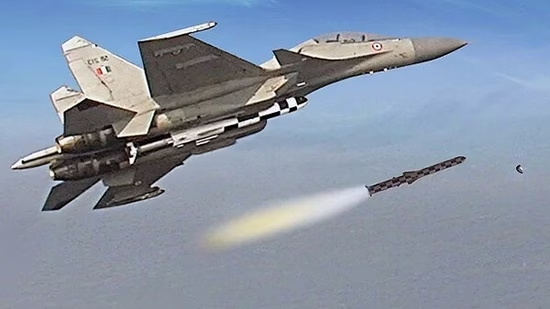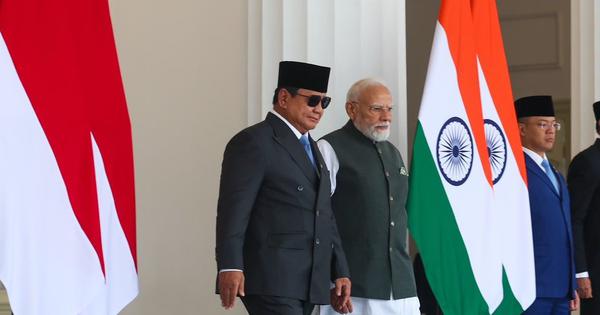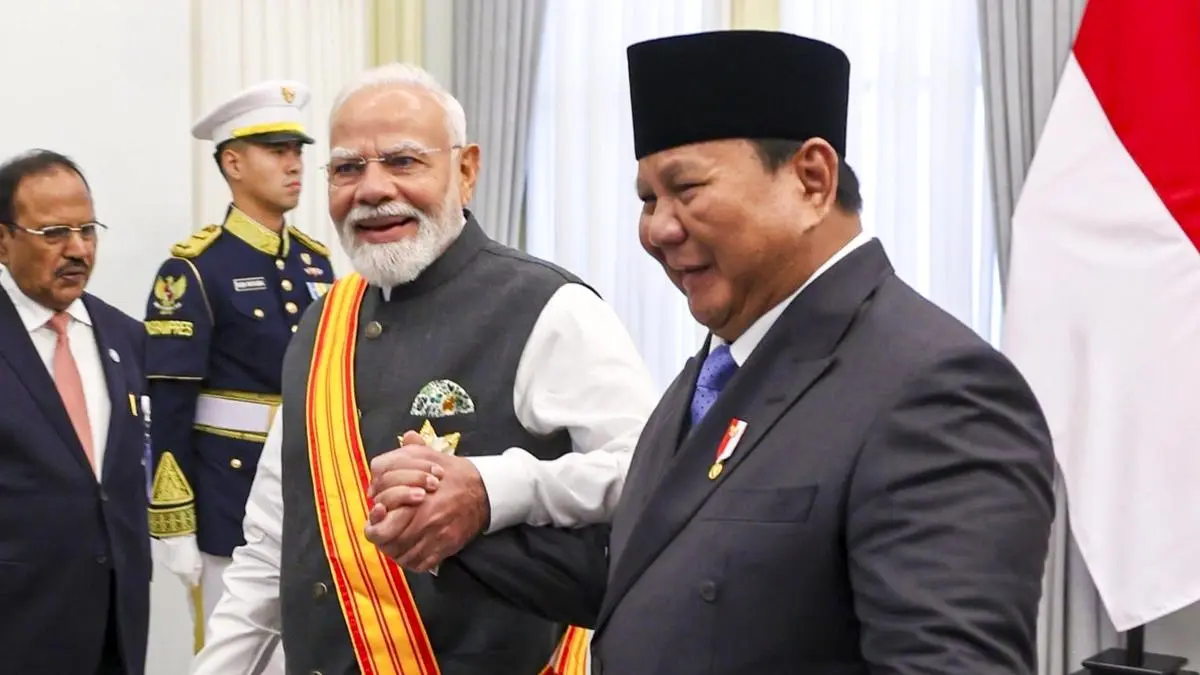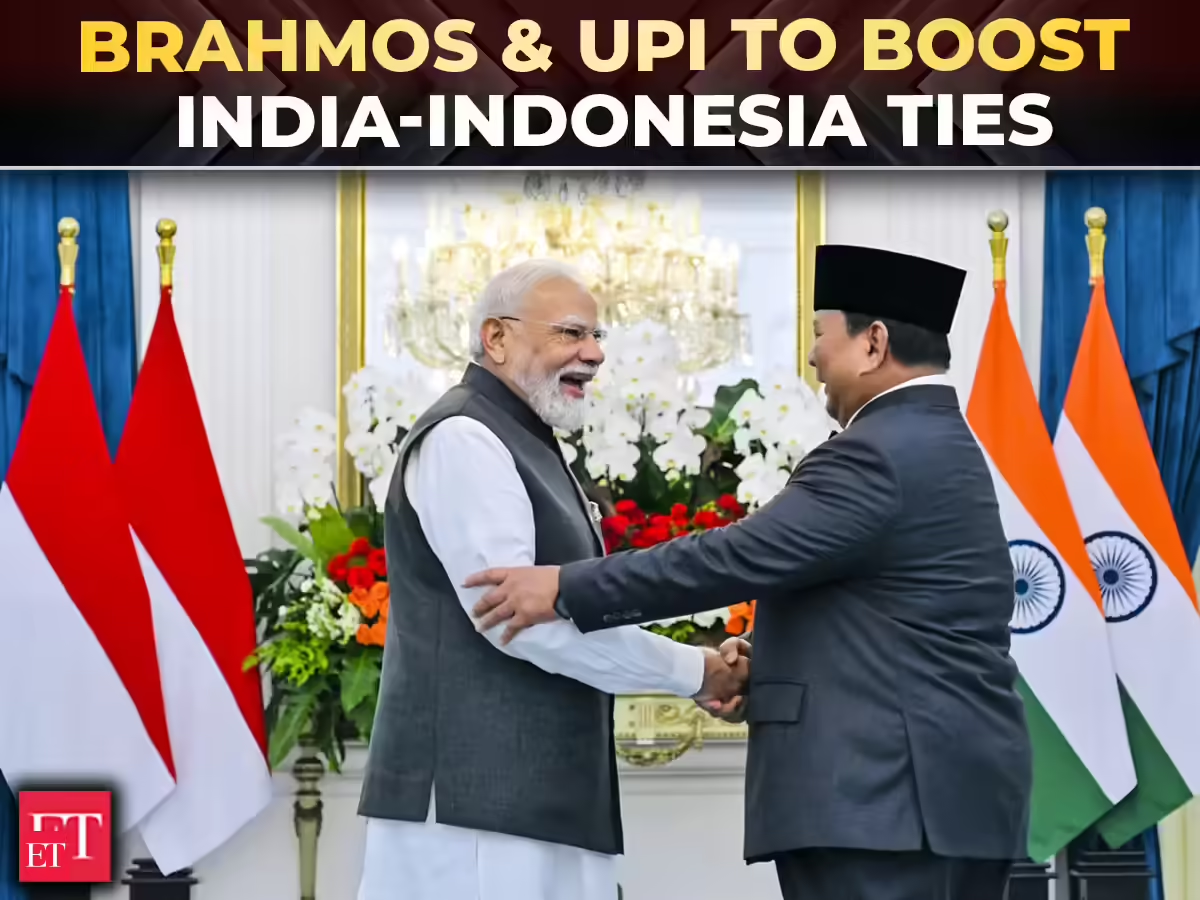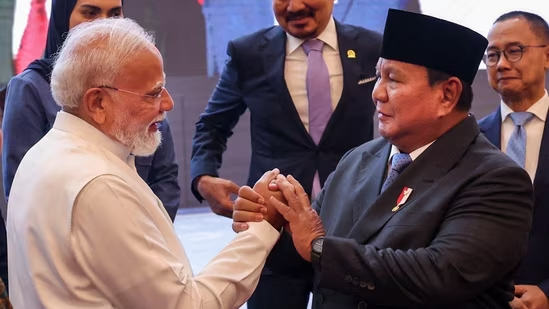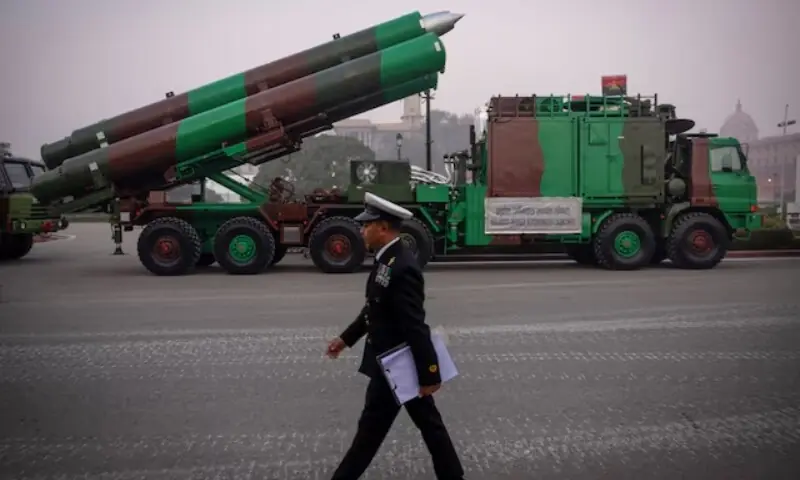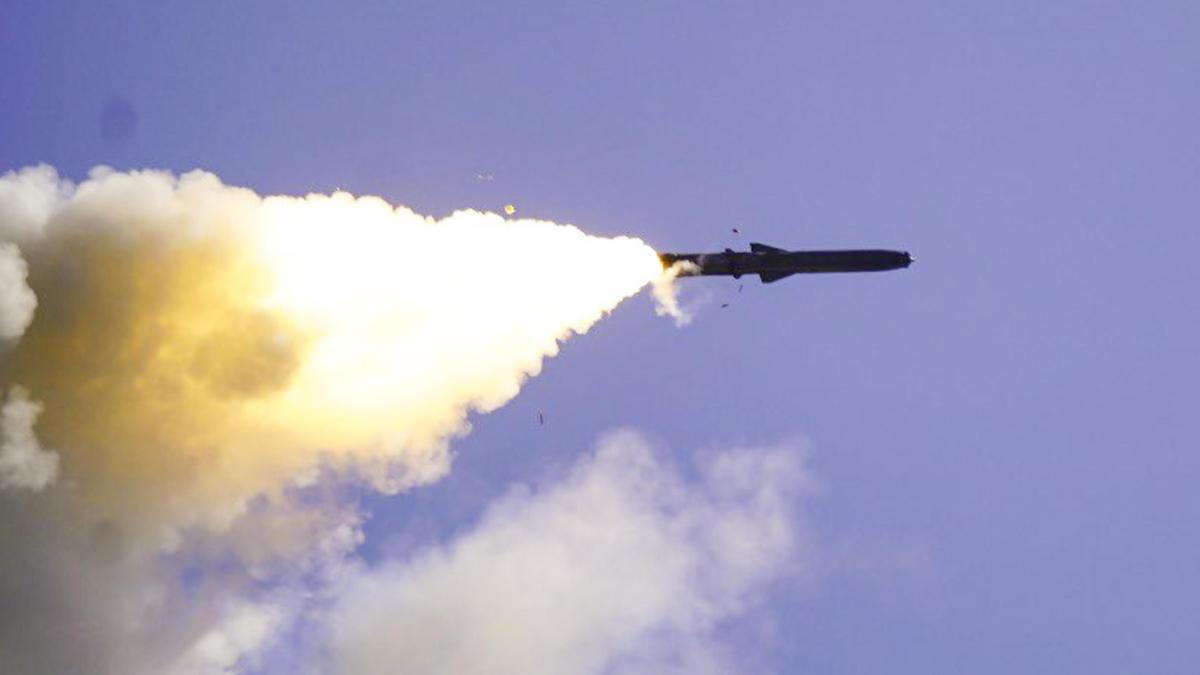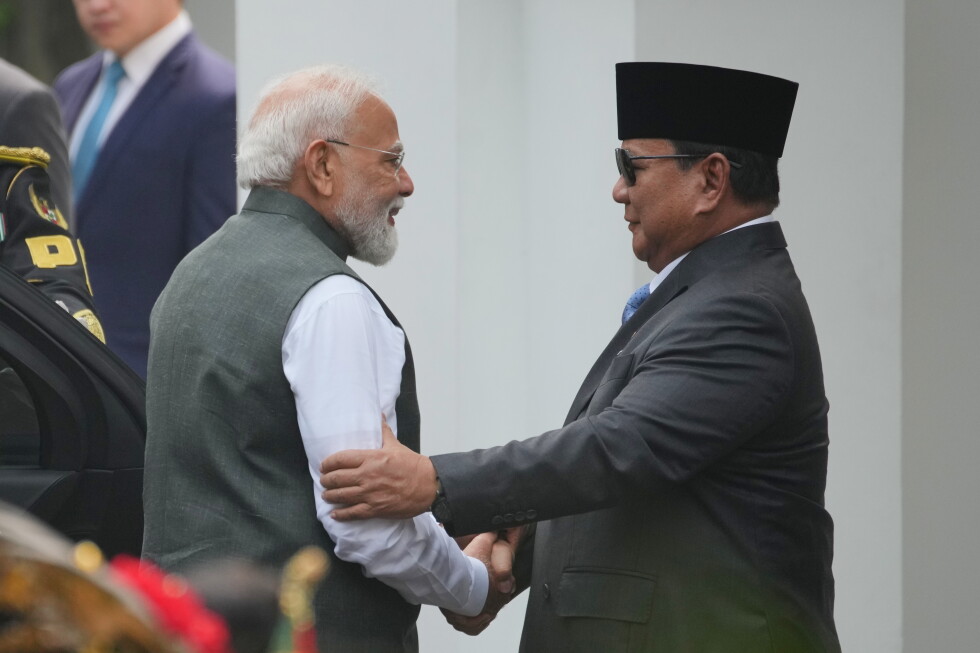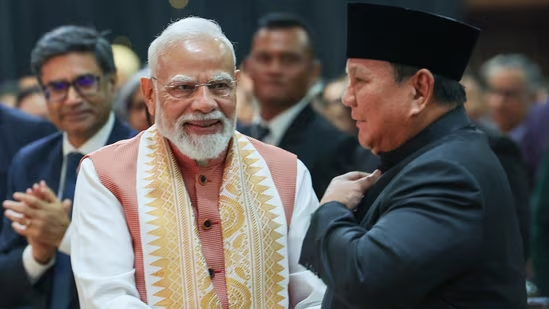
During Prime Minister Narendra Modi's visit to Jakarta, India and Indonesia strengthened their defence partnership by signing two agreements that indicate an intent in principle to purchase the 300-km range surface-to-surface and air-launched BrahMos supersonic missile, and the 1-0 km plus range Astra beyond visual range air-to-air missile from India.Prime Minister Narendra Modi shakes hands with Indonesian President Prabowo Subianto during an Indian community event, in Jakarta on Tuesday. (DPR PMO )Both countries also agreed to jointly develop the Sabang-Aceh port, located at the mouth of the strategically important Malacca Straits and just 160 kilometers from India's Great Nicobar Project, which includes a transshipment hub at Campbell Bay. With more than 23 million barrels of oil passing through and an estimated USD 3-7 trillion worth of trade transiting through this narrow channel, Sabang Port is expected to make the choke point more secure from any non-state or state players in the region.Inside the dealsWhile the government has remained tight-lipped about the defence deals, Indonesia had initially planned to buy one battery of BrahMos along with 12 missiles at a cost of USD 100 million. An agreement signed today, however, is for two batteries of missiles costing a total of USD 200 million. Indonesia has also decided to procure the Astra missile, which has already been integrated into Indian Su-30 MKI fighters. The quantity of Astra missiles is still to be worked out, but the air-to-air weapon will be integrated into Indonesia's SU-30 Mark 1 and 2 fighter fleet. It is understood that cost negotiations as well as contract details will soon be worked out by the Defence Ministry.Since 2014, the Narendra Modi government has focused on deepening ties with Indonesia, which has the largest Muslim population in the world. Given that Jakarta does not want to get caught in the US-China rivalry in the South China Sea, it has reciprocated India's outreach as Washington increasingly seeks to deal with Beijing on a one-to-one basis. Indonesia is a critical player in Southeast Asia, with all the major choke points or ingress routes to the South China Sea-Malacca, Sunda, Lombok, Ombi-Wetar-located within its territory. While a coast guard agreement has already been signed between the two countries, India and Indonesia are expected to work together in the near future to contribute to maritime security in the Indo-Pacific.
Inside India-Indonesia defence deals: Jakarta eyes $200 million BrahMos purchase
Indonesia wants $200 million worth BrahMos from India, Astra missile numbers to be worked out | India News
385 words~2 min read