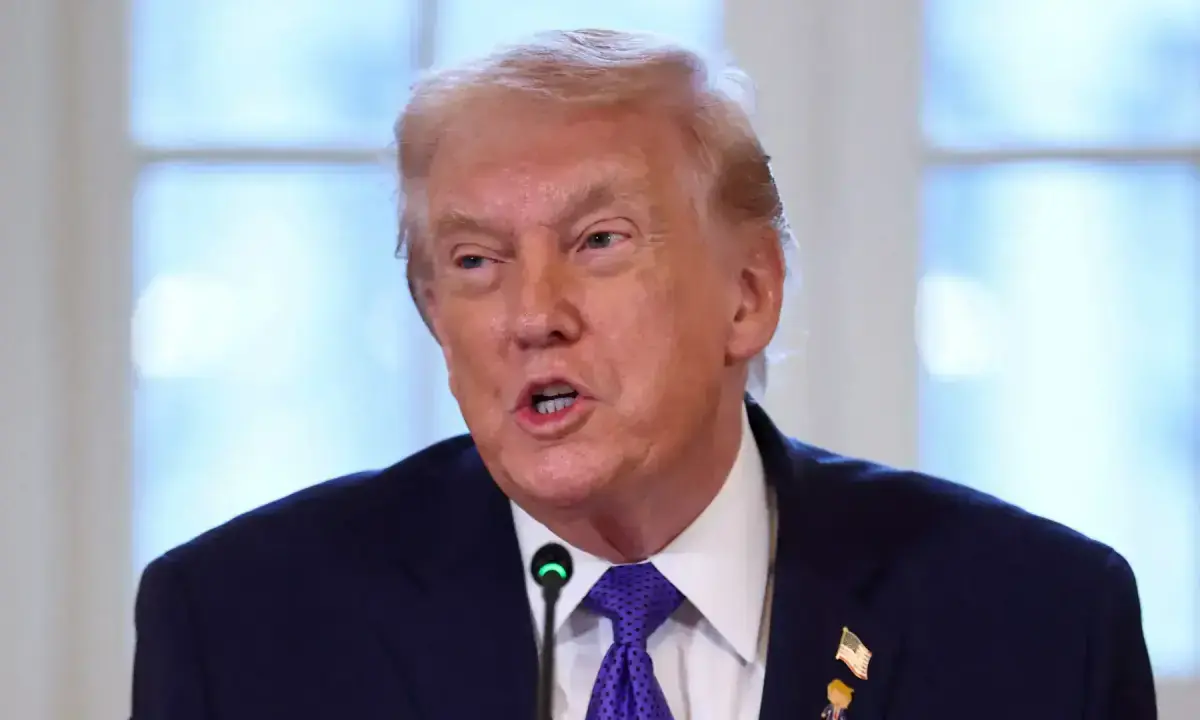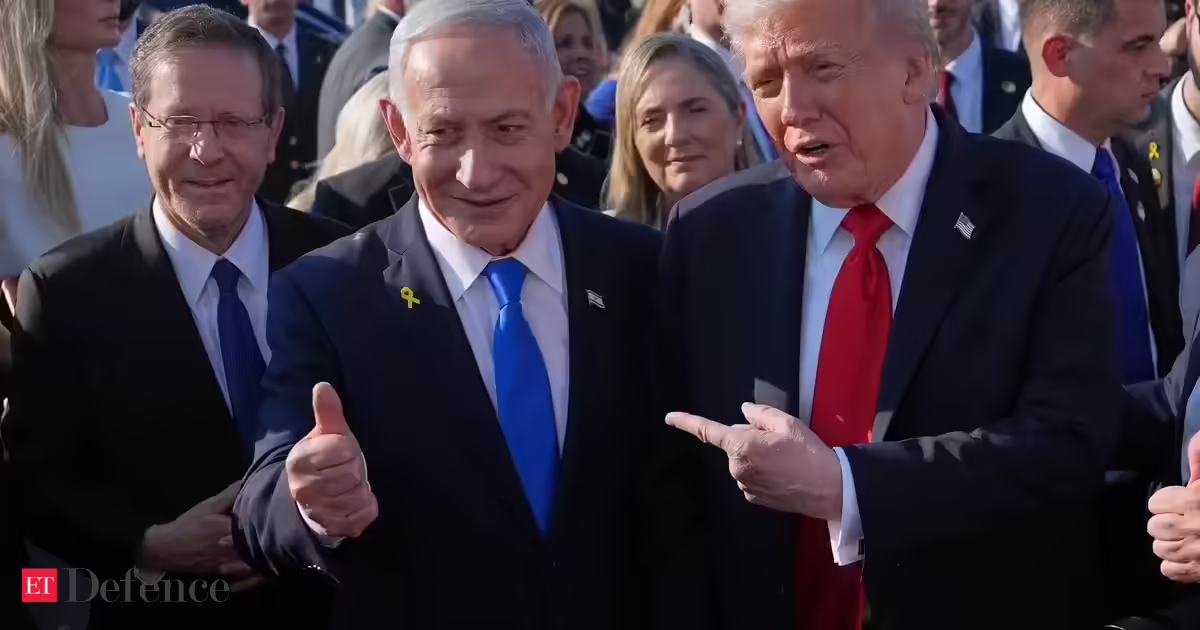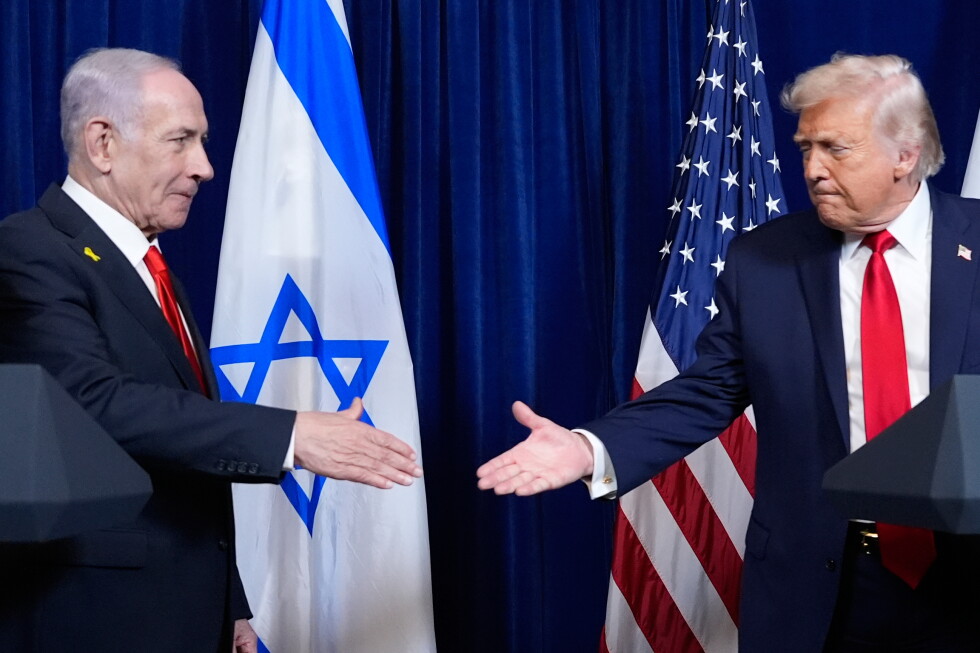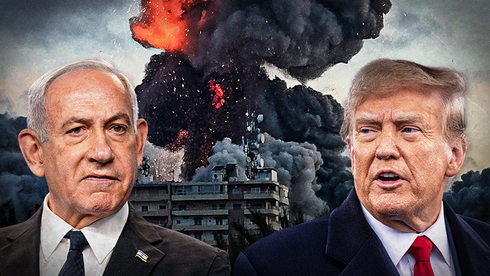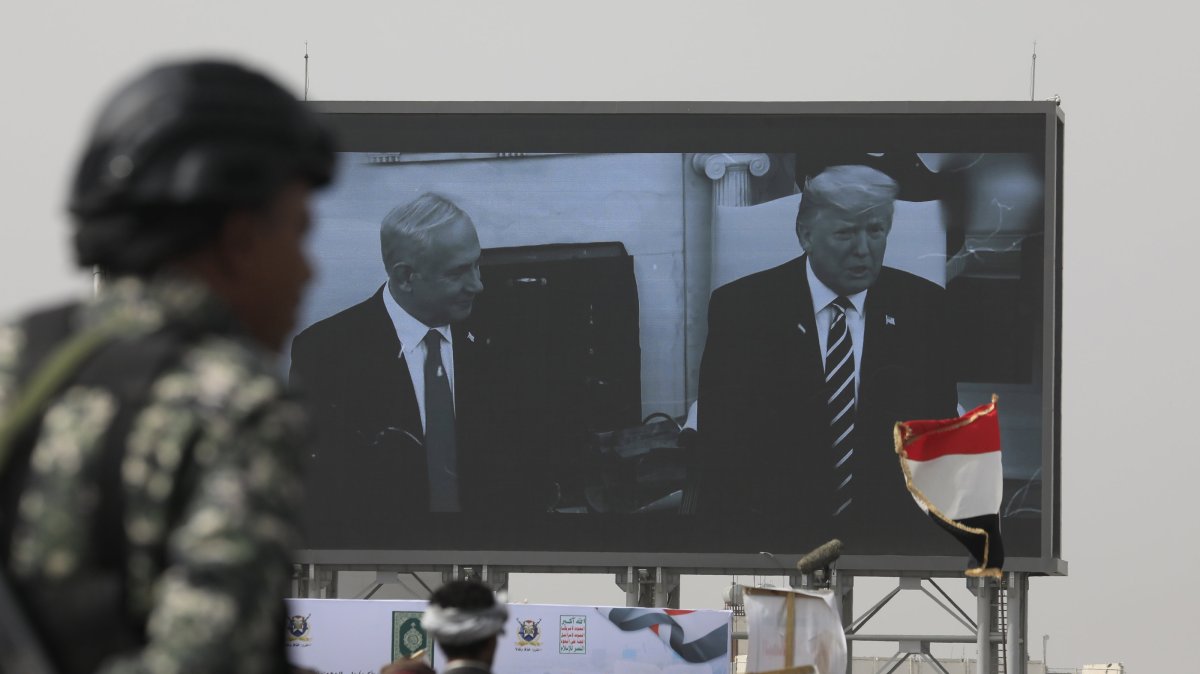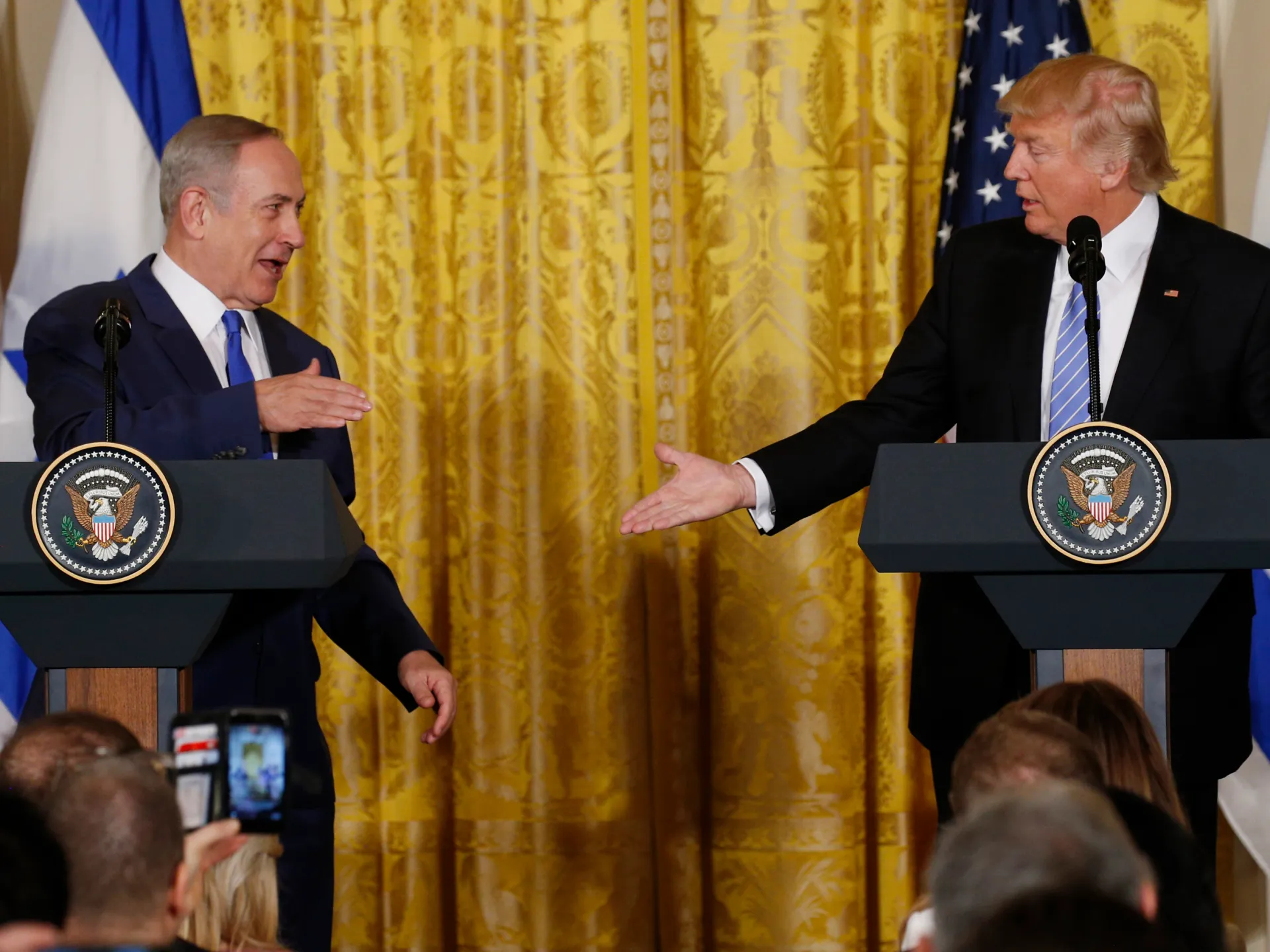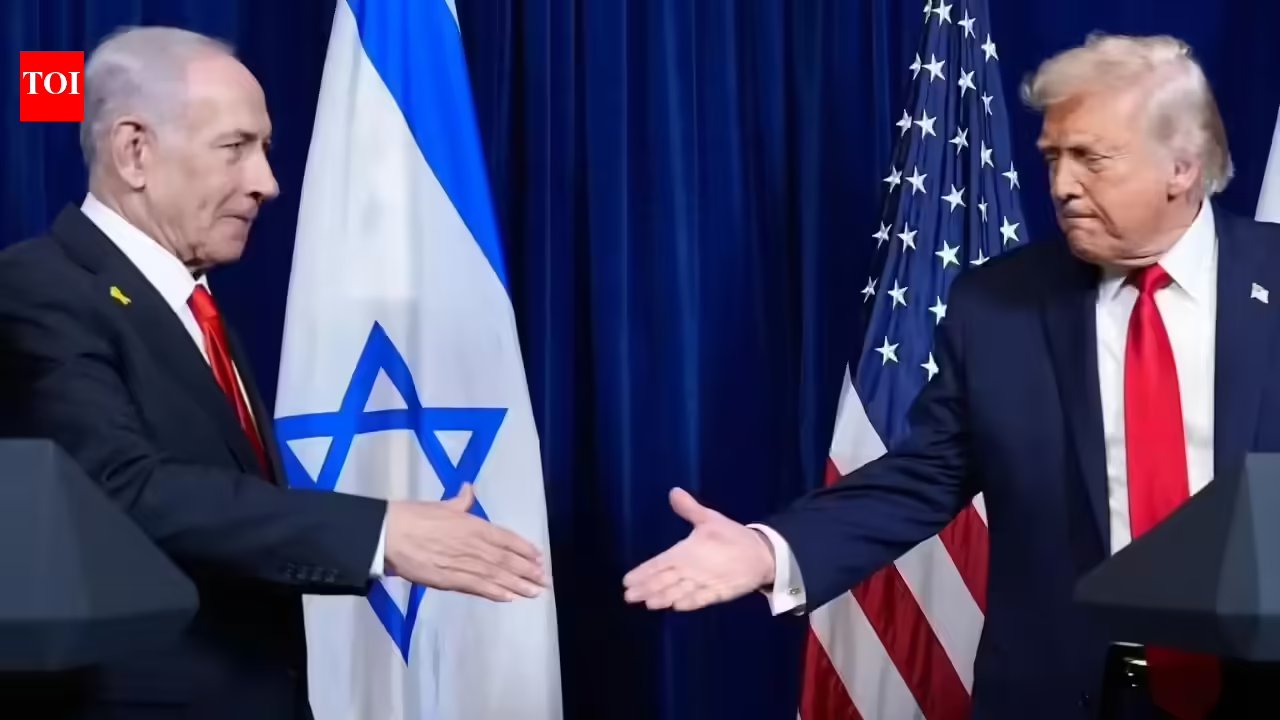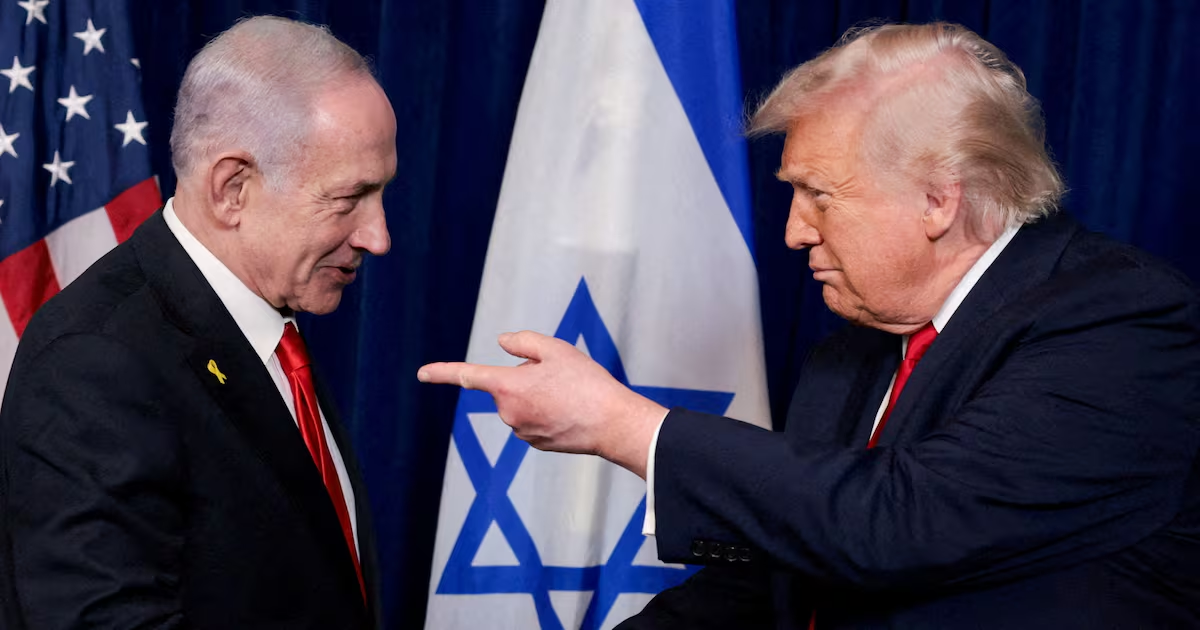
Four months ago, US President Donald Trump and Israeli Prime Minister Benjamin Netanyahu started the war on Iran as partners. Now they are increasingly at odds over how – or when – it can be ended, and their once-close alliance is under strain.Mr Trump has publicly rebuked Mr Netanyahu and criticised Israeli military operations in Lebanon, while Vice President JD Vance has warned Israeli leaders against alienating what he described as their only remaining major ally.In Israeli media, Mr Trump is now widely portrayed as having abandoned or betrayed Israel.“It’s not just that this bromance is over, it’s that the views of most mainstream Israeli politicians today are pretty darn hawkish,” said Brian Katulis, a senior fellow at the Middle East Institute.“And the question is, where does this leave Israel and the United States, not just Trump and Bibi."On February 28, US and Israeli forces launched co-ordinated strikes on Iran aimed at dismantling its nuclear and ballistic abilities and weakening its regional influence. They also sought to unseat its regime. "We fought very well with Israel, and we've had a great relationship with Israel. We're very formidable. And Bibi Netanyahu, he's a warrior prime minister," Mr Trump said in January.Now, however, he is pushing for Israel to scale back operations in Lebanon to help secure a deal with Tehran, while Israeli leaders argue the war should continue.Israel, meanwhile, has continued to attack what it calls Hezbollah strongholds in the south, killing more than 4,300 people. Hundreds of thousands of Lebanese people remain displaced.The conflict has unnerved markets and created political pressure for Mr Trump at home.Polling showed sustained public opposition to the war and continued disapproval of his handling of it. A recent poll also found that almost half of Americans say the US is too supportive of Israel. The political consequences are expected to weigh heavily on Mr Trump's Republican Party heading into November’s midterm elections, where control of Congress is at stake.“Because they fell short from achieving their war aims, they’re now engaging in a settlement that gives up a lot to the Iranian regime and falls far short from what even Trump himself articulated as the goals here,” Mr Katulis said.Mr Netanyahu, who is running for re-election, faces an Israeli public that largely supports wars with Iran and Hezbollah, whose rockets have displaced tens of thousands in northern Israel.His perceived failures to deliver decisive military victories have eroded public support and emboldened his political opponents.Israel was not included in US-Iran talks, which have so far yielded a broad interim agreement and a 60-day period to reach a final deal. A follow-up meeting in Doha sought to discuss implementation and more provisions of the deal.Meanwhile, the rift between the two leaders has become increasingly visible.Mr Trump said at the G7 summit that he is “not happy with the way Israel has handled themselves with Lebanon and with Hezbollah", amid reports of tense and at times expletive-laden calls with Mr Netanyahu.“The frustration is real,” said Alex Plitsas, a senior fellow at the Atlantic Council. “Everybody’s kind of done with the way things are happening.”Israel’s global standing has been damaged by the war in Gaza, which has killed more than 73,000 Palestinians, according to local authorities.In the US, support for Israel has declined among Democrats and independents, who say Washington is too closely aligned with Israeli policy.Last month, three congressional candidates seen as critics of Israel's policy emerged victorious after they received endorsements from New York City's first Muslim mayor, Zohran Mamdani, who has been critical of the Israeli government and Mr Netanyahu over Gaza and other issues. And now, a small but growing number of critics have emerged even within Mr Trump’s Republican base and administration.Mr Vance, in unusually blunt remarks towards a key ally, said Mr Trump is Israel’s last remaining powerful supporter.“Donald J Trump is the only head of state in the entire world who is sympathetic to the nation of Israel at this moment in time, and he happens to be the head of state of the world’s superpower,” he told journalists. “If I was in the cabinet of the Israeli government, I might not be attacking the only powerful ally that I have anywhere left in the entire world." This week, Mr Netanyahu denied there was a rift with Mr Trump, insisting "we have many, many friends". "America has no greater ally in the world than Israel, and Israel has no greater ally than the United States," he told CNN, "and I say that with complete recognition of the fact that we sometimes see things a bit differently." Analysts say the emerging US-Iran agreement could further sideline Mr Netanyahu's administration, while renewed engagement between Gulf states and Tehran is complicating his long-standing strategy of isolating Iran regionally.Mr Plitsas said that although Mr Trump's irritation with Mr Netanyahu is more than a temporary disagreement, the US-Israel relationship will largely remain "sacrosanct", at least for now. "It's kind of reflective of the leaked conversation that Trump allegedly had with Netanyahu – it's boiling over frustration."
Trump-Netanyahu split deepens as US pushes Iran deal and Israel presses on in Lebanon | The National
Once aligned on war, US and Israel clash over endgame
838 words~4 min read