Lee Seung-ku
Covering Korean lawand education
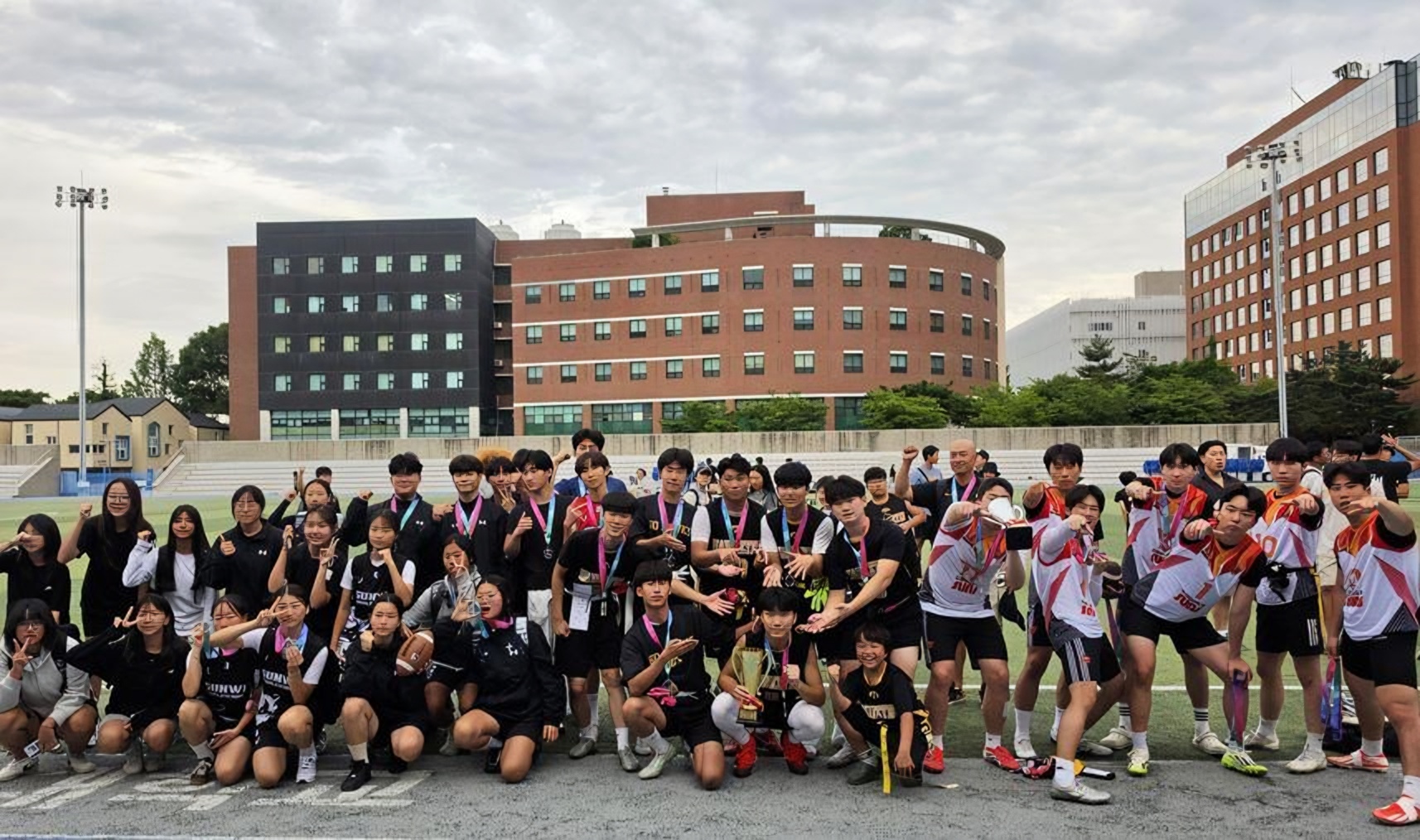
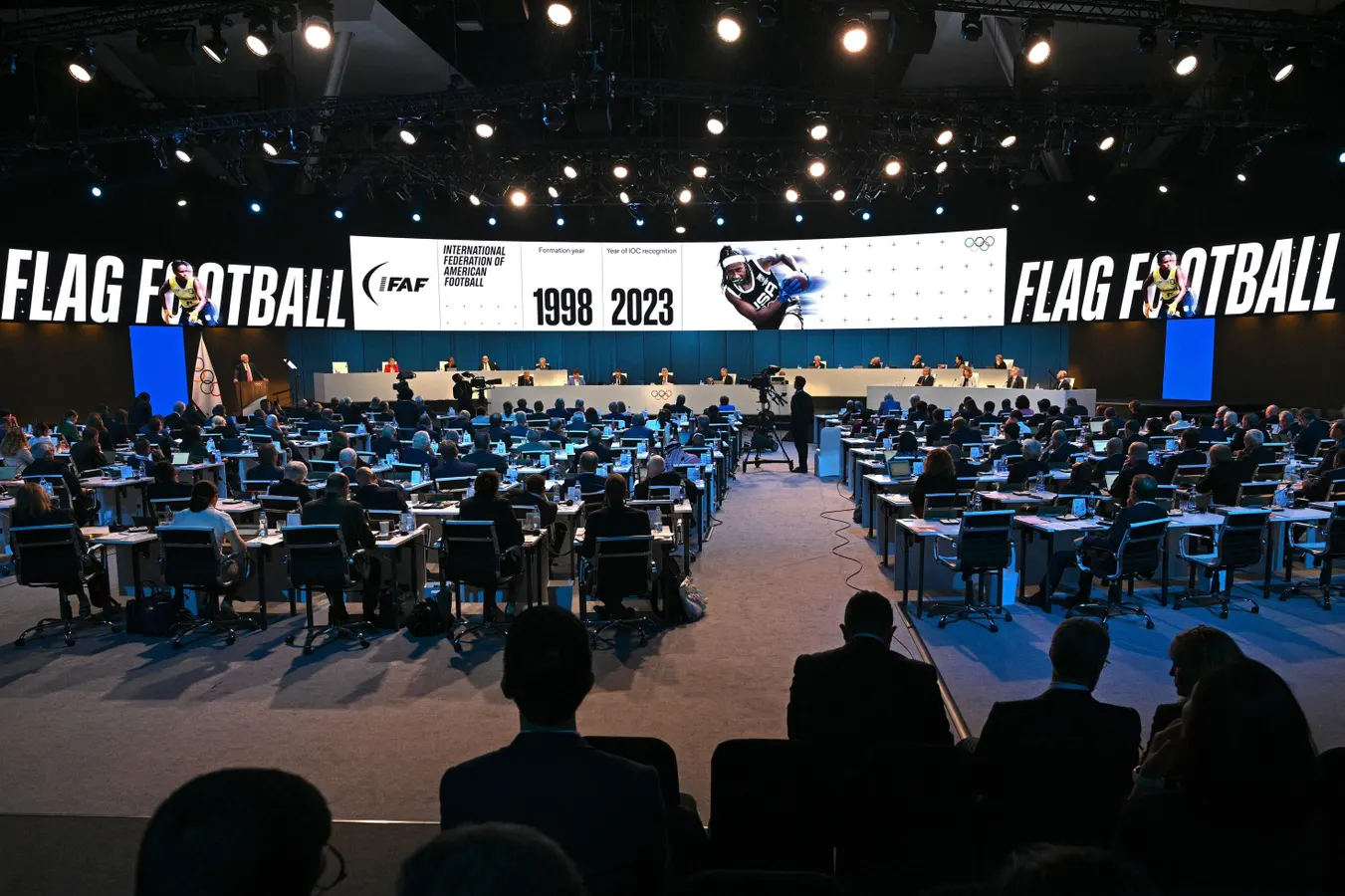
Low equipment needs, noncontact rules could make the sport attractive for schools, but awareness remains the biggest hurdle, advocates say Indianapolis Colts safety Camryn Bynum (right) high-fives young athletes on Friday during Camp Beezy Volume 6: Seoul Train held from Friday to Sunday at Yonsei University's International Campus in Incheon. (Bynum Faith Foundation) On a summer field at Yonsei University’s International Campus in Incheon on Friday, hundreds of students sprinted, dodged and grabbed flags from one another’s waists, trying out a sport still unfamiliar to many South Koreans.For Indianapolis Colts safety Camryn Bynum and Korea’s flag football advocates, the weekend camp was more than a one-off youth event. It was a test of whether flag football, which will debut as an official Olympic sport at the 2028 Los Angeles Games, can find a place in Korea’s schools and community sports scene.“The whole goal of the camp is to really spread football across the whole continent of Asia,” Bynum told The Korea Herald in an interview ahead of the camp.Camp Beezy Volume 6: Seoul Train, organized by the Bynum Faith Foundation, brought together about 300 students and youth athletes between Friday and Sunday. The camp introduced them to flag football, a noncontact version of American football in which defenders stop plays by pulling flags from an opponent’s waist.Bynum, an NFL player of Filipino descent, launched his Camp Beezy initiative in the Philippines. The program came to Korea this year after members of the country’s football community reached out to him.“There are some people who aren’t really experienced playing football, and it may be their first time playing, but I want it to be accessible for everybody," Bynum said.Olympic debut brings momentum An athlete participates in a game of flag football on Friday during Camp Beezy Volume 6: Seoul Train, held between Friday and Sunday at Yonsei University's International Campus in Incheon. (Bynum Faith Foundation) Flag football’s inclusion in the 2028 Olympics has given the sport new momentum globally. For countries like Korea, where American football remains far from mainstream, Bynum said the Olympic stage could make the sport feel more visible and attainable.“I think it’s really the first step of it becoming mainstream, especially in a lot of Asian countries,” he said. “Once it becomes an Olympic sport, people will see someone they played against at our camp competing for a medal on TV. It won’t seem like such a far-off dream.”Korea already has a small but committed football community.Lee Sang-mok, executive director of the Korea Flag Football Federation, said flag football was first introduced to Korea in 1999, but it long remained a niche sport. In recent years, however, the country’s football community has grown in the amateur space, especially since the sport was added to the Olympic program.“Recently, after flag football was selected as an Olympic sport, adult clubs that had been active in an amateur form have become more energized,” Lee said.Lee said about 42 universities in Korea have American football teams, adding that the Korea University Sport Federation has held a flag football challenge for university teams for the past three years.In the adult division, there are about 20 teams, with roughly 16 taking part in tournaments held twice a year by the federation, according to Lee. He also said South Korean teams are considered competitive in Asia.Bynum said he saw signs of that commitment shortly after arriving in Korea. Before the camp, he trained with local players at a field in Seocho-gu, Seoul.“We had about 30 to 40 people there every single day,” he said. “We didn’t post it. There was no warning. I just told one guy to tell a few guys to get out there.”The turnout, he said, showed that Korea’s football community, while still not highly visible in mainstream sports, has a foundation to build on.Bynum said Korea appears to have strong facilities, including public sports parks and fields, but needs more organized opportunities for players to train and compete.Unfamiliarity remains biggest hurdle Young athletes train on Friday during Camp Beezy Volume 6: Seoul Train, held at Yonsei University's International Campus in Incheon. (Bynum Faith Foundation) For flag football advocates, the next challenge is expanding the sport beyond adult clubs to reach younger students.Lee said the sport is well-suited for schools because it requires little equipment and carries a relatively low risk of injury.“This sport has a very low entry barrier,” Lee said. “If you have a ball and flags, you can start. If people can get past the fact that it is unfamiliar, there is almost no barrier to getting started.”Those involved in education say unfamiliarity, rather than regulation, remains the biggest obstacle.An Education Ministry official said the current physical education curriculum does not list specific sports that are either permitted or banned.“It could just be that it is not yet well known,” the official told The Korea Herald.A physical education teacher surnamed Jung made a similar point.“We can teach it if we have the equipment and the environment,” Jung said. “It’s just that many don’t know or think about flag football when deciding what to teach.”Bynum said flag football could fit into physical education classes, after-school clubs and school leagues.“I think they should put it kind of in everything,” he said. “It could be recreational, but I think they should implement it into schools, whether it’s in PE or leagues where students sign up and play against different schools.”