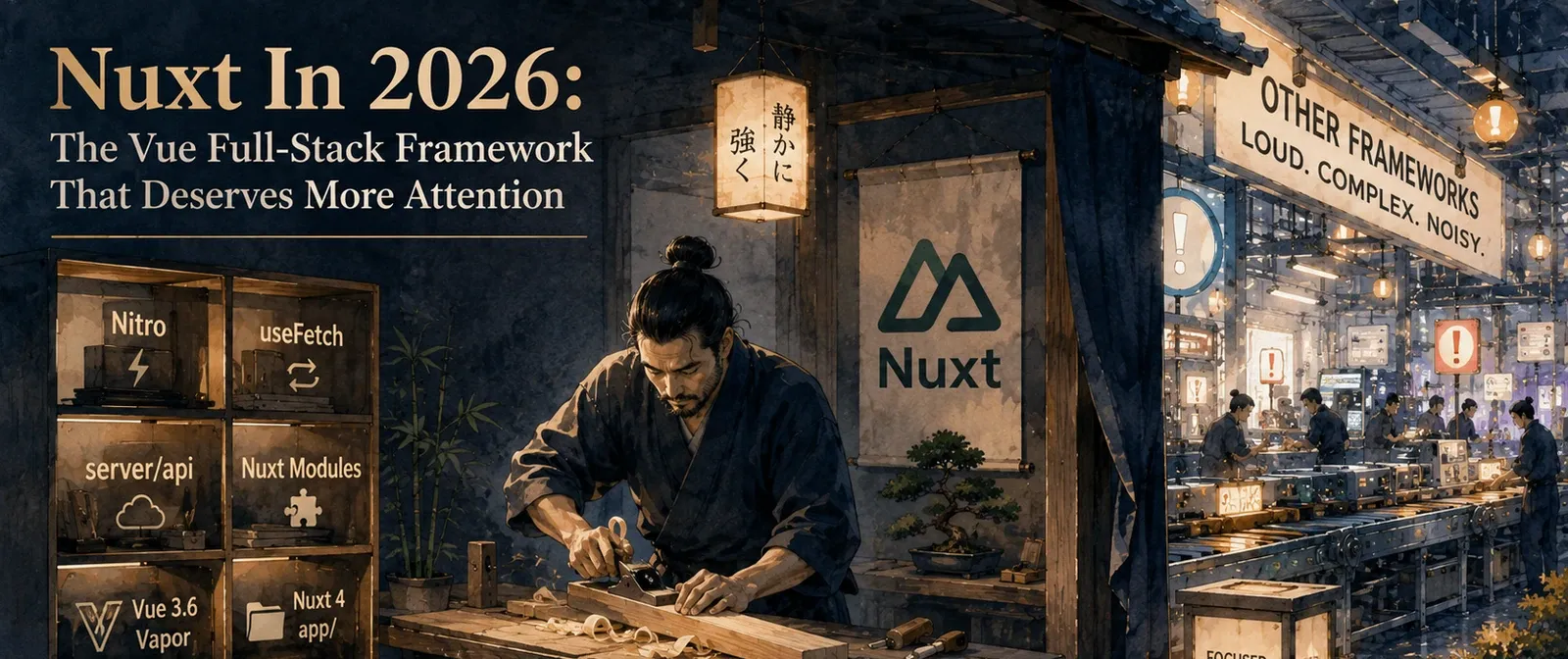
Everyone knows Next.js is the default full-stack JavaScript framework in 2026. The job ads say so, the AI tooling assumes so, the conference talks revolve around React Server Components, and even people who've never touched a Vue file have an opinion about which version of getServerSideProps they like best. Everyone is mostly right - and missing a piece of the story.
The piece they're missing is that on the other side of the framework wall, Nuxt has spent the last two years quietly turning into one of the most thoughtfully designed full-stack frameworks in the ecosystem. Nuxt 4 landed in July 2025, the project is now on v4.4.x, and Nuxt 5 with the new Nitro v3 engine is on the runway. If you last looked at Nuxt around the v2-to-v3 jump, when everything was breaking and the migration guide was longer than some books, you are looking at a different framework today.
This isn't an "X killed Y" piece - Next.js isn't going anywhere, and for plenty of teams it's the right call. But if you're picking a stack for a new project, or you write Vue and feel mildly defensive every time the LinkedIn algorithm shows you another React thread, it's worth understanding what Nuxt actually is in 2026 and why people who use it tend to stick with it.