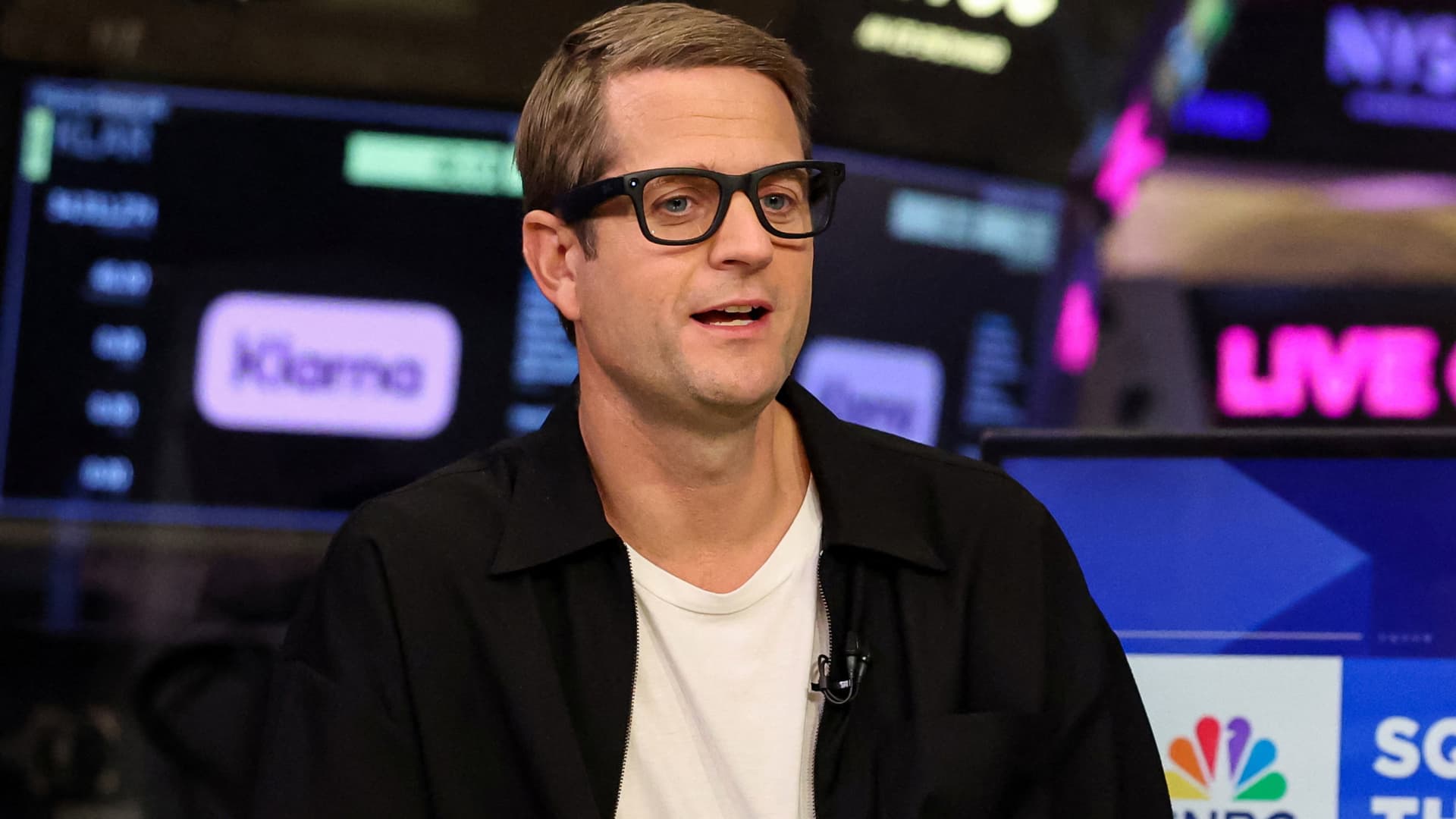
Klarna wants to become Klarna Bank USA. The Swedish fintech company, best known for its buy now, pay later services, has applied for a bank license in Utah. It already operates as one in Europe. Getting a bank charter in the U.S. would allow it to expand beyond its buy now, pay later offerings.Klarna is part of a fintech trend. PayPal also wants to be a bank now; so does Affirm, which — like Klarna — is best known for buy now, pay later. And Mercury, another fintech company, just recently got conditional approval to establish a bank. Michele Alt, co-founder of the Klaros Group, said fintechs are making this move now for two main reasons.“Number one, duh, the Trump administration. Regulators are open to new bank formation in a way we haven't seen ever,” she said.And just as important, Alt added, is reason number two. “Which is, in the U.S., a bank charter, a banking license, provides the keys to the financial kingdom.”And who wouldn’t want those? Those keys open up all sorts of options that fintech companies wouldn’t otherwise have.That includes the ability to hold deposits, according to Tomasz Piskorski, a professor of finance at Columbia Business School.“The huge advantage of being a bank is that you have access to insured deposit funding that often allows the bank to finance themselves at a rate well below interest rate,” he said. That’s an appealing prospect. Banks are subject to much more government regulation and oversight than fintech companies — regulation that got much tighter after the financial crisis of the late 2000s.“As a result of that, the lending activity, especially in consumer finance, has been migrated to non-bank institutions like Klarna or non-bank mortgage lenders in the mortgage space,” Piskorski said.But at this point, more than 15 years post-Great Recession, the benefits some of these companies could get from having a banking license outweigh that extra regulatory burden, said James Wester, a research director at Javelin Strategy and Research.“A lot of it has to do with the fact that fintechs have grown up,” he said. Many fintech companies have been around for a while now, and they’re looking for new ways to scale and grow. “There are limitations in the model that they had been built on, and the only way they're going to grow is to grow up, is to become more like a bank,” Wester said.And that means getting a license.
Fintechs harbor banking dreams
Klarna has applied for a bank license in Utah, and other fintechs see traditional banking as a natural evolution.
404 words~2 min read