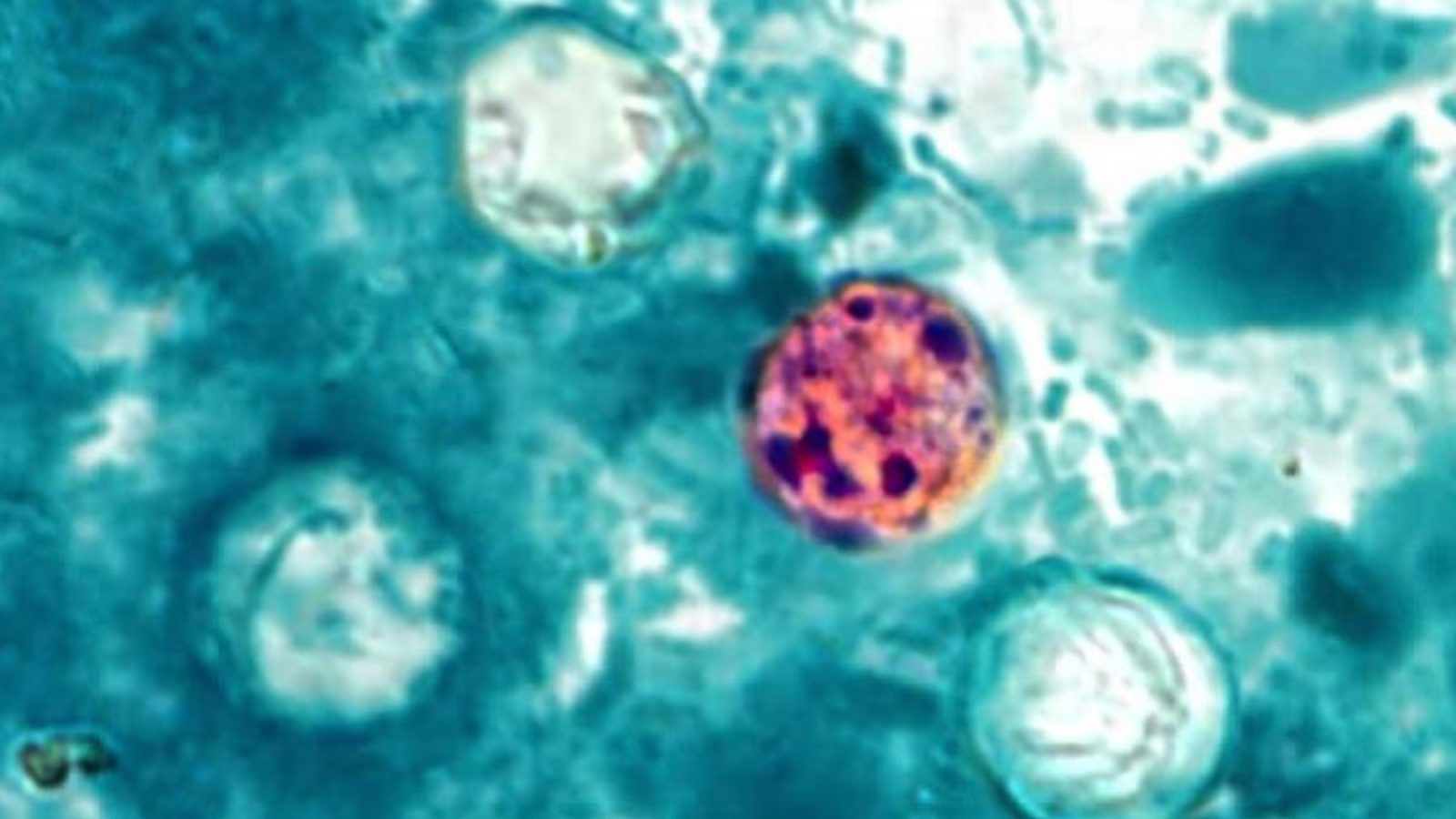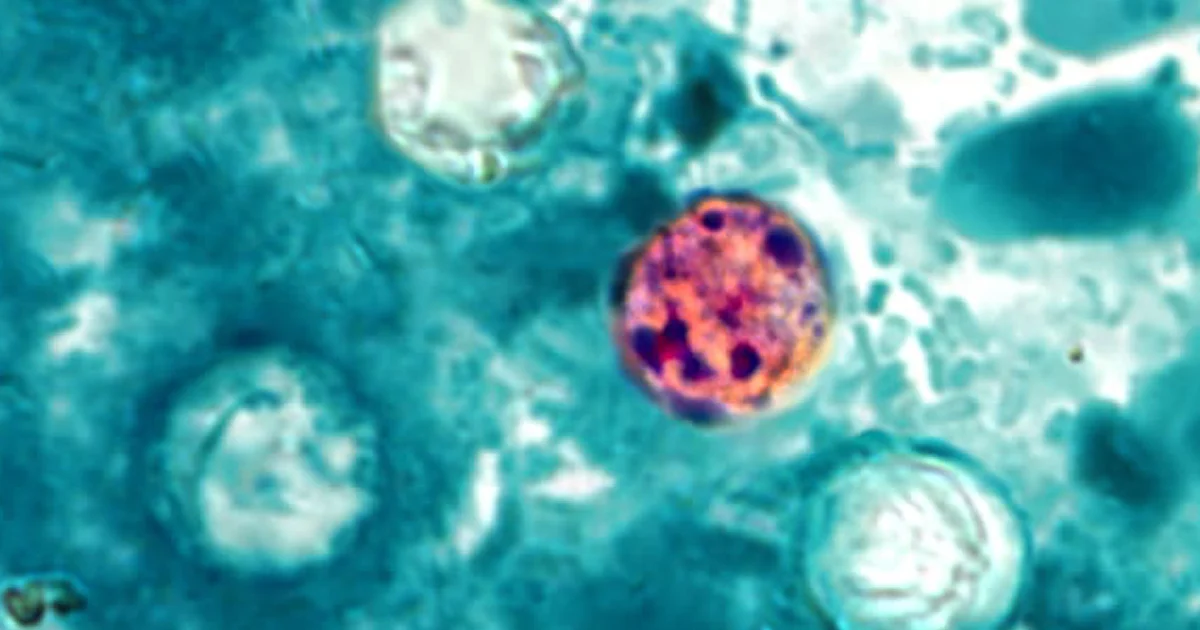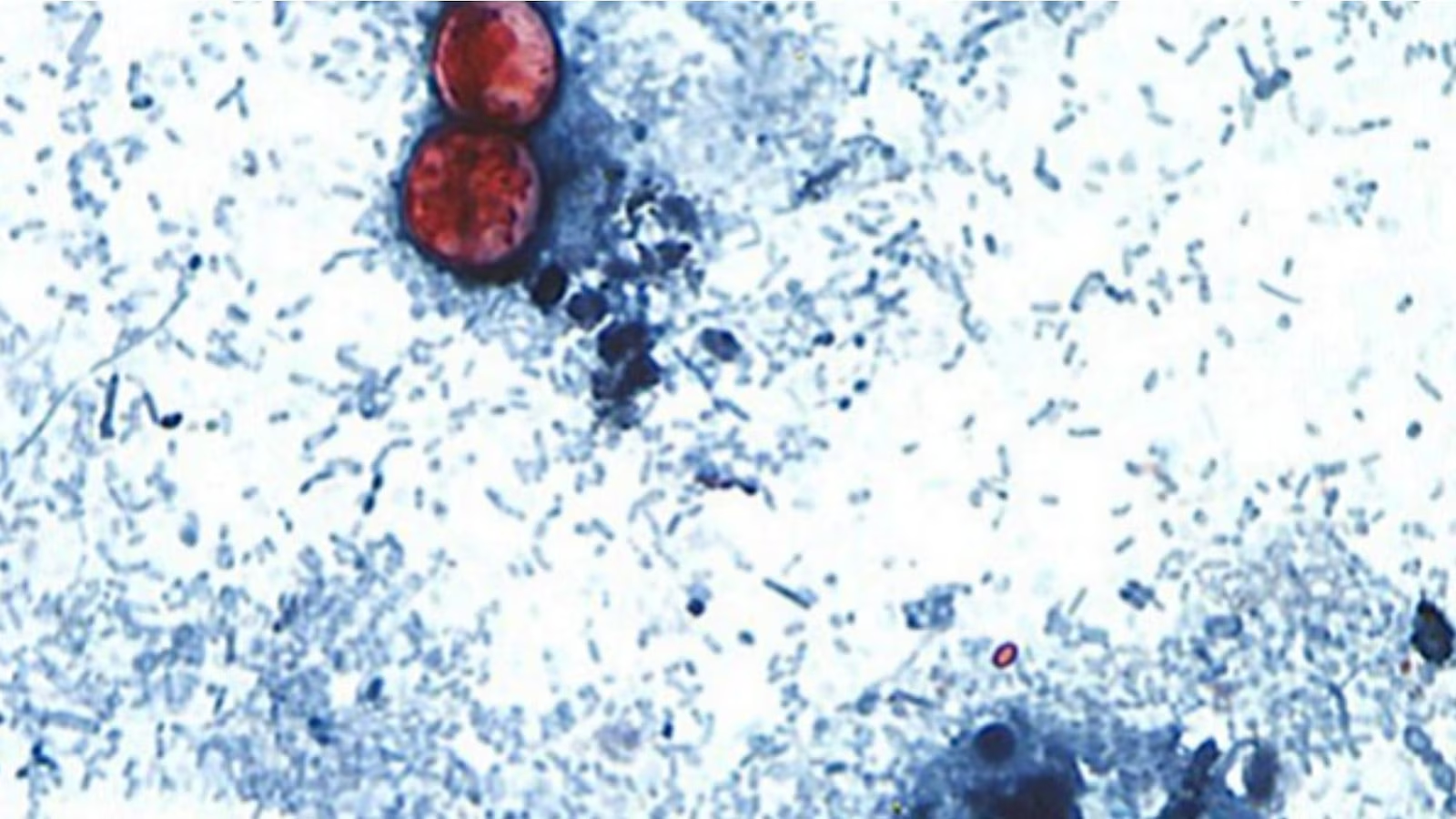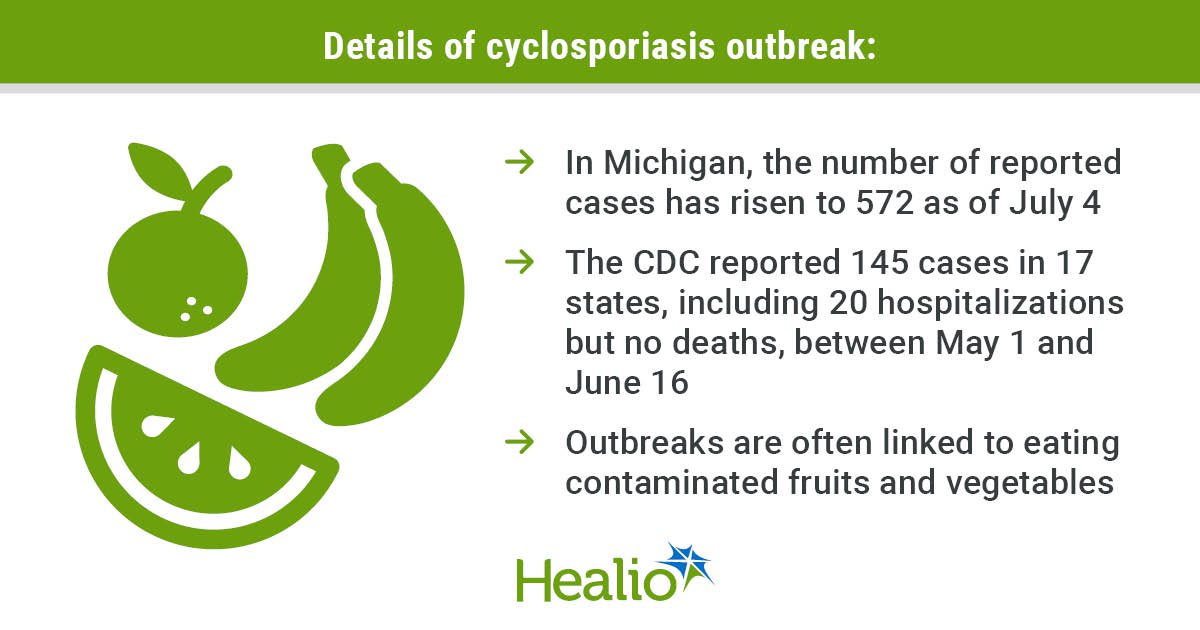
A parasitic illness called cyclosporiasis is on the rise in the United States, with over 140 people becoming ill, according to the Centers for Disease Control and Prevention.Cyclosporiasis is a foodborne illness, but unlike typical food poisoning caused by bacteria such as Salmonella or E. coli, it is caused by a microscopic parasite called Cyclospora cayetanensis.While most bacterial foodborne illnesses resolve within a few days, cyclosporiasis can lead to gastrointestinal symptoms that persist for weeks or even longer, according to the Food and Drug Administration.For now, people should stay informed, but there is no reason to panic. Cyclosporiasis is generally not transmitted directly from one person to another. Instead, the primary risk comes from eating contaminated fresh produce. Additional concerns include delayed diagnosis and prolonged, severe diarrhea, which can persist for weeks and last significantly longer than a typical stomach bug.Here’s what to know about the diarrhea-causing parasite and the steps lower your risk.What states have reported cases of cyclosporiasis?So far, the CDC has reported 145 people have become ill in the United States, 20 were hospitalized and no deaths have been reported. Cases occurred in people ages 5 to 86, with a median age of 42. The cyclosporiasis season, the months when U.S. cases typically spike, runs from May 1 through the end of August. According to Michigan Public NPR, nearly 700 cases have been also been reported in Michigan.There was no indication that one nationwide outbreak was responsible for all the cases. Federal, state and local health agencies were instead investigating multiple groups of infections and possible sources of contamination.What is cyclosporiasis and its symptoms?Cyclosporiasis is an intestinal infection caused by a microscopic parasite. Over the last several weeks, more reports of what the CDC describes as “explosive diarrhea” have emerged. Several foods are linked to the outbreak, including bagged salad kits, raspberries, green onions, cilantro and basil.“You have to treat this infection with an antibiotic and there is a special antibiotic called Bactrim DS,” said Anil Sharma, M.D., an associate professor in the Division of Gastroenterology, Hepatology & Nutrition at the University of Florida College of Medicine. “Unless you get a stool test, specifically a GI pathogen panel and it comes back positive, a doctor will not know how to treat it. Without the test, it could be viewed as bacterial or viral diarrhea.”This infection spreads through oral ingestion after contact with contaminated feces. The germs often contaminate water and food. There is no direct person-to-person transmission.“You need to wash your fresh produce and wash your hands carefully when around someone with cyclosporiasis,” said Sharma. “Even if you’re in a part of the country not nearly as affected, it doesn’t mean you shouldn’t take precautions.”How can I protect myself from this parasite?To reduce the risk of cyclosporiasis, health officials have issued guidance aimed at anyone involved in preparing, processing or serving fresh produce:Other ways to reduce your risk of food-borne illnesses:Scrub firm produce like melons and cucumbers with a clean brush.Cut away bruised or damaged areas before eating.Clean and sanitize utensils and food-prep surfaces before and after use.Sanitize display cases and refrigerators used to store fresh produce.Clean and sanitize cutting boards and tools used with fresh produce.Refrigerate cut, peeled or cooked fruits and vegetables promptly.CONTRIBUTING Kristen Jordan Shamus/USA TODAY NETWORK
Cyclosporiasis cases climb in US. What to know about symptoms, prevention
The CDC is warning about a rise in cyclosporiasis cases. Here's how to reduce your risk.
546 words~2 min read