In a small study, patients generally accepted AI-drafted messages for routine communication.Perceptions about message empathy, tone, and length varied according to circumstances and stakes associated with a communication.Transparency remains essential, as patients overwhelmingly demanded explicit disclosure of AI use to maintain trust in their healthcare relationships.
Patients care less about whether a message came from a human or artificial intelligence (AI) than the tone, length, and details, investigators in a small study concluded.
Patients expressed "high comfort" with AI-drafted portal messages, which did not influence preferences about message tone or expressions of empathy. Whether the messages seemed appropriate for the purpose and stakes held more sway.
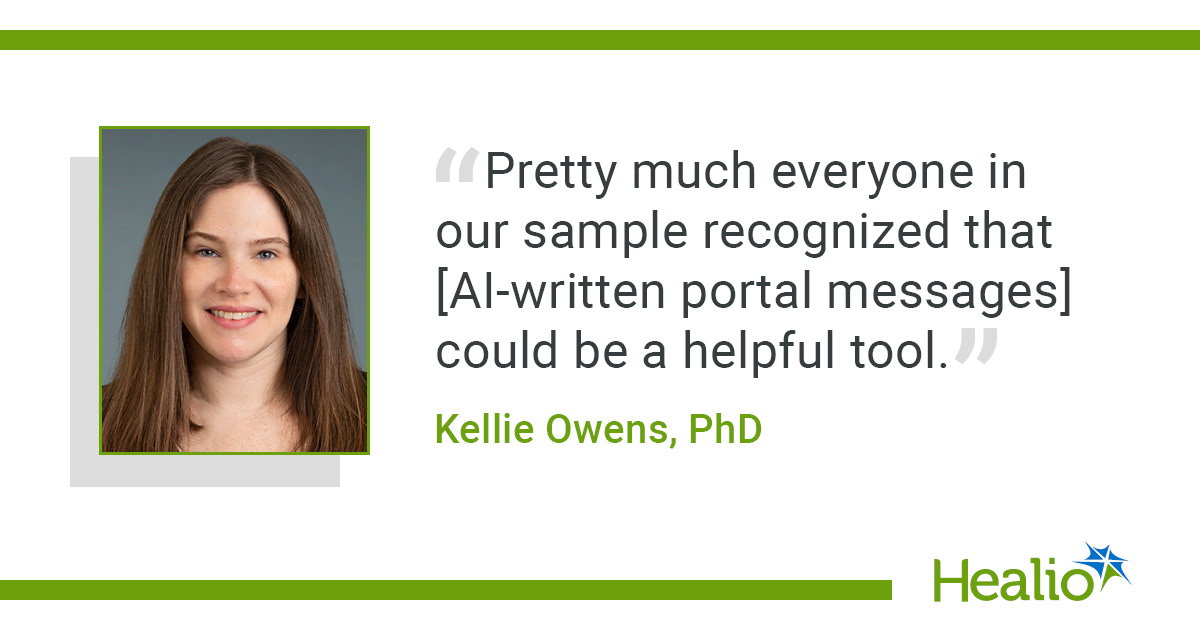
The study participants broadly favored disclosure of AI use, calling transparency important for trust, reported Kellie Owens, PhD, of New York University Grossman School of Medicine in New York City, and colleagues in JAMA Network Open.
"Our study suggests that patients are generally comfortable with the use of generative AI to draft in-basket responses, particularly when framed as a workflow support that could improve response speed and reduce clinician burden," the authors wrote. "Patients emphasized that the primary value of portal communication is timely resolution of health-related questions rather than personalization or relational depth."