WHAT’S HAPPENING TODAY: Good afternoon and happy Tuesday, readers! We’re just about one week into July and still have no official text from the Senate on permitting reform. The head of American Clean Power is now warning that the window for Congress to advance and pass any legislation tackling permitting is closing fast. 📃⬇️ Keep reading to see what the clean energy advocates have to say. We’re also taking a closer look at what the record-breaking Independence Day fireworks did to Washington, D.C., air quality. 🎆 In case you forgot, last week’s newsletter highlighted a report that revealed the National Park Service was aware the display would cause “very unhealthy” air conditions for the district. Plus, with the help of our editor Joe Lawler, today’s edition of Daily on Energy looks at an investigation launched by Democrats over Commerce Secretary Howard Lutnick’s involvement in the government’s equity deal with a rare earths company earlier this year. 🪨💲 Read on for more!
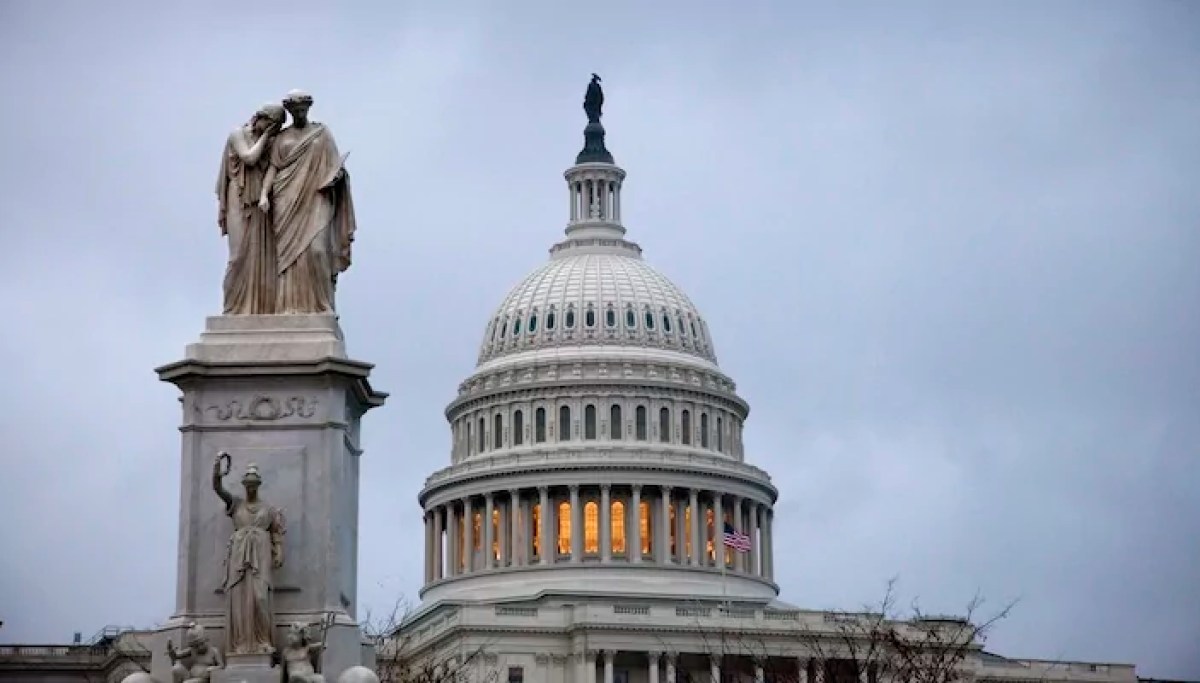
Welcome to Daily on Energy, written by Washington Examiner energy and environment writers Callie Patteson (@CalliePatteson) and Maydeen Merino (@MaydeenMerino). Email cpatteson@washingtonexaminer dot com or mmerino@washingtonexaminer dot com for tips, suggestions, calendar items, and anything else. If a friend sent this to you and you’d like to sign up, click here. If signing up doesn’t work, shoot us an email, and we’ll add you to our list.CLEAN ENERGY GROUP WARNS PERMITTING REFORM WINDOW IS CLOSING: American Clean Power is warning that the window for lawmakers to pass meaningful permitting reform is almost closed, with Congress just weeks away from breaking for August recess and no deal in hand.“We think the window of opportunity there is starting to close this Congress,” American Clean Power CEO Jason Grumet told reporters this morning.Grumet said that while some folks in Washington have begun floating the idea of passing permitting reform during a lame-duck Congress – meaning after the November midterm elections if Democrats take back one of the majorities – he called it a “very freighted strategy.” “I think imagining that a newly elected Democratic House is going to want to pass legislation that was developed without their involvement or with very little involvement, is just – it’s always a very, very tough argument to make,” Grumet said. He explained that the clean energy industry was hoping and anticipating that language – from key Senate negotiators such as Environment and Public Works Committee chair Shelley Moore Capito and ranking member Sheldon Whitehouse – would have been put forth before the 4th of July. As of the first week of July, some smaller bills had been put forward in the upper chamber, but nothing that was endorsed by the key energy and environment committees that have to sign off any permitting-related package headed to the floor for a vote. Read more from Callie here. JULY 4 FIREWORKS CAUSE ‘UNHEALTHY’ AIR QUALITY IN DC: The record-breaking Independence Day firework show held in Washington, D.C., last weekend caused “unhealthy” air conditions for hours after the display, leaving the city briefly with the worst air quality of any major city across the globe. The details: Data released by Clarity Movement today found that hourly concentrations of particulate pollution from the firework show peaked at 6.7 times the normal air pollution levels recorded before the display. The data is based on the company’s network of 26 air quality sensors deployed throughout the city. During the record-breaking show, each one of these sensors reached levels that the Environmental Protection Agency deems “unhealthy for sensitive groups.”Clarity Movement found that air pollution in Washington, D.C., was elevated for around five hours after the show ended.This ultimately caused district officials to issue a “code red” air quality alert early Sunday morning, advising residents who are among sensitive groups – such as older adults, children, and people with certain medical conditions – to remain indoors. Prior to the fireworks, Clarity Movement’s sensors found that Washington’s air quality was in the EPA’s “moderate” category. In the hours after, the city was recorded having the worst air quality of any major city in the world, according to estimates from the EPA’s air quality measurement website AirNow. Some background: The 4th of July National Mall pyrotechnic show, organized by the Trump-backed Freedom 250 committee, was billed as the “World’s Largest Fireworks Display.” Organizers said the 40-minute show featured approximately 850,000 fireworks.HORMUZ STRIKES CAUSE OIL PRICES TO TICK UP: U.S. officials confirmed to Axios this morning that Iran’s military fired at least two missiles at ships traveling through the Strait of Hormuz last night, as well as a third vessel this morning. The strikes are adding pressure to the ongoing negotiations between Washington and Tehran, emphasizing that the two countries are still at odds over who is in control of the crucial waterway. The escalation caused oil prices to jump, sending domestic benchmarks back above the $70 mark. Just before 2 p.m. EDT, West Texas Intermediate rose 3.01% and was priced at $70.61 a barrel. International benchmark Brent crude also increased 3.21%, selling at $74.30 a barrel. ENERGY STATISTICS AGENCY EXPECTS OIL MARKETS TO SHIFT BACK TO PRE-WAR LEVELS: The Department of Energy’s statistical arm, the Energy Information Administration, is now anticipating that global oil trade and crude production will return to near pre-war levels by the end of this year. “Following the signing and increased traffic through the strait, we have raised our expectations for global oil production for the rest of this year,” the EIA said today. “We now expect most crude oil production to return to near pre-conflict averages by the end of this year and for the majority of shut-in crude oil production to be back online in the first quarter of 2027.” As production increases and trade flows resume, the EIA also said that less oil will be removed from global inventories – lowering its forecast of how far crude stockpiles will fall. Last month, the agency warned that global oil reserves would drop by more than 7 million barrels a day in the third quarter of this year. Now, the agency only estimates a drop of 2.2 million barrels per day. Next year, the EIA also expected that growing oil production will shift the markets back into a “pre-conflict state of oversupply.” Not as optimistic on gasoline: The agency didn’t have as much confidence in gasoline prices falling to near pre-war levels, though. In today’s assessment, the EIA forecast that lower crude prices would send gasoline to an average of $3.80 per gallon in the third quarter of 2026. While this is down from more than $4.20 a gallon in the second quarter, it remains far above the $2.98 a gallon seen just before the war. In 2027, the EIA estimates, gasoline will fall to an average of around $3.10 a gallon. DEMOCRATS PRESS LUTNICK ON USA RARE EARTH DEAL: Congressional Democrats are investigating Commerce Secretary Howard Lutnick over his involvement in his agency’s deal to take a 10% stake in the critical minerals miner USA Rare Earth. Cantor Fitzgerald, the investment bank formerly headed by Lutnick and now run by his two adult sons, served as the placement agent for the company as it raised funds for the transaction. “If USAR selected Cantor as its broker as a way to induce, reward, or otherwise curry favor with the Department of Commerce, Secretary Lutnick, or other government officials, it would raise serious questions about USAR’s exposure to federal anti-bribery or gratuity laws,” the Democrats wrote in a letter to USA Rare Earth and Cantor Fitzgerald. The Democrats: The letter was signed by Senate Banking Committee ranking member Elizabeth Warren, Senate Finance Committee ranking member Ron Wyden, Senate Appropriations Subcommittee on Commerce ranking member Chris Van Hollen, and House Committee on Science, Space, and Technology ranking member Zoe Lofgren. Quick reminder: In January, USA Rare Earth entered into a nonbinding agreement with the Commerce Department and a collaboration with the Department of Energy. As part of the agreement, the Commerce Department said it would provide the company with $1.6 billion, including $277 million in federal funding and a $1.3 billion loan. In return, the mineral company promised the government 16.1 million shares of common stock and 17.6 million warrants. GEOTHERMAL STARTUP QUAISE ENERGY SAYS IT HAS HYPERSCALER CUSTOMER: CEO Carlos Araque said that his geothermal startup Quaise Energy has a hyperscaler customer who has bought the company’s first 50 megawatts of production, according to Bloomberg. The company is hoping to benefit from the surge in demand for clean, continuous power from data centers. It raised $134 million to scale a 250-megawatt plant in Oregon. It uses a proprietary millimeter-wave drilling technology to drill deeper into hotter rocks. UKRAINE HITS RUSSIAN REFINERY 1,500 MILES AWAY: Ukraine said that it carried out a drone strike on a major Russian refinery near the border with Kazakhstan, more than 1,500 miles from Ukraine. “This is a significant blow to Russia’s oil economy and an important achievement for the Armed Forces of Ukraine,” Ukrainian president Volodymyr Zelensky said in his evening address, as reported by CNBC.Why it matters: The Ukrainian military said that the refinery in Omsk is the largest of 11 to be hit so far by Ukrainian drones. As Ukraine has improved its drone technology, it has been carrying out attacks on Russian refineries in an effort to damage Russia’s economy and limit Moscow’s war funding from oil sales. THOUSANDS OF EXCESS DEATHS IN EUROPEAN HEAT WAVE: Germany saw 5,486 excess deaths in the last full week of June during the heat wave that saw temperatures above 105 degrees Fahrenheit, according to preliminary data from the Federal Statistical Office. That adds to the more than 3,700 excess deaths estimated in France, the Netherlands, and Belgium. One study found that as many as 20,000 people may have died in the heat wave altogether.As a point of comparison, 70,000 people are thought to have died in the heat wave of 2003. Why it matters: The deadly heat wave has sparked a renewed debate over the role of climate change in generating extreme weather. It has also led to criticism of European authorities’ resistance to air conditioning, which could help vulnerable groups like the sick and elderly ride out a heat wave. RUNDOWN E&E News ‘Can you help us?’: US oil execs turn to Trump to topple Europe’s climate rulesThe Guardian Lake Powell, a vital reservoir, plunges toward unprecedented low levels as water crisis deepens in US westStraight Arrow News Data shows how renewable energy fared in the year since One Big Beautiful Bill