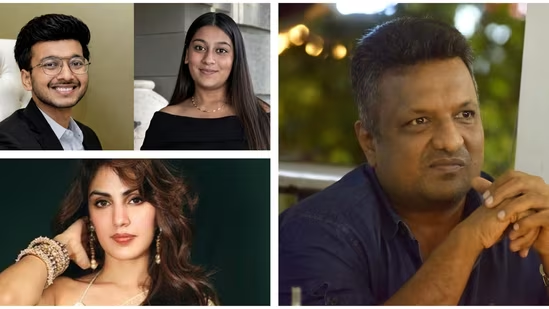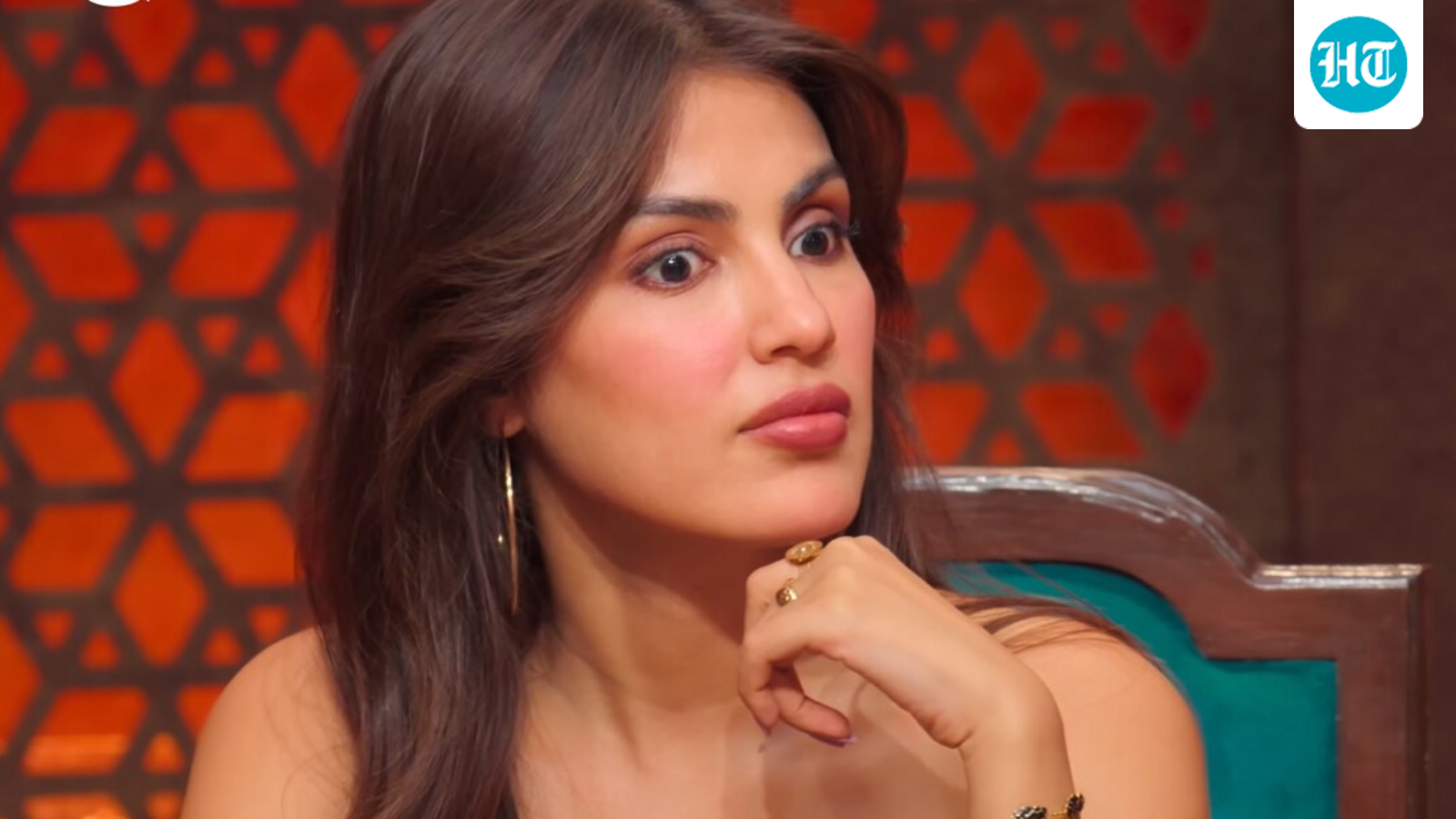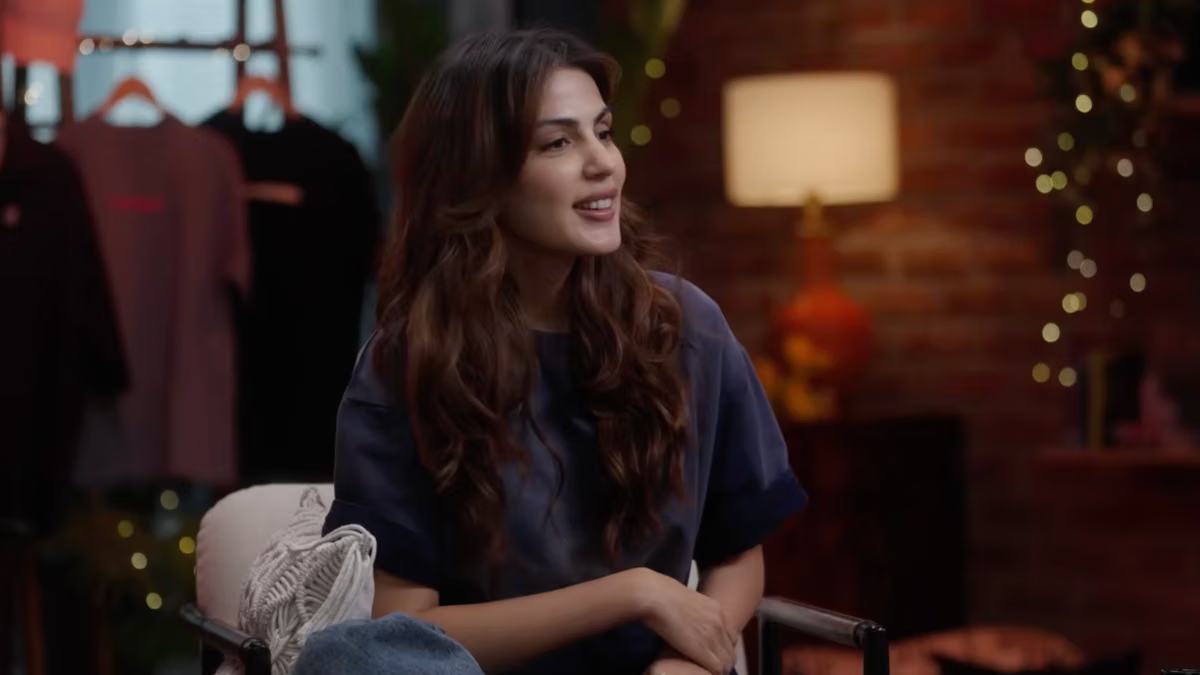
For nearly two years, Rhea Chakraborty was less a person than a verdict, delivered on television and social media, before any court had weighed in. In the aftermath of Sushant Singh Rajput’s death, she became the designated villain of a national tragedy. She was labelled the “witch.” Her social media was filled with abuse. The industry, which had until June 2020 considered her a promising young actor stepped back. But the promising young woman has since clawed her way back to the top, with no family dynasty smoothing the path, no godfather or godmother.
Chakraborty’s is an interesting story, and one that says as much about the country’s appetite for blaming women as it does about her own resilience.In Bollywood, a female comeback usually follows the “marriage and baby” script. Marry well, have the baby, and return to the red carpet as a “settled” woman.
Aishwarya Rai Bachchan, Madhuri Dixit, Kajol and Rani Mukerji all followed the same pattern. Rai Bachchan stepped back from the limelight after her relationship with Salman Khan in the early 2000s became a prolonged public spectacle, including domestic abuse allegations. While Dixit’s rumoured relationship with co-star Sanjay Dutt was tabloid gold, things only got messier when Dutt was arrested in 1993. Once that relationship reportedly ended, the gossip mill simply found a new target, linking to cricketer Ajay Jadeja. It wasn’t until she married Dr Shriram Nene that the tabloids finally let the speculation go. But Dixit and Rai Bachchan’s comeback was built on domesticity. Chakraborty followed no such script. To begin with, her story is a climb from somewhere far darker. A hole the entire country dug for her and then threw her into. There was no maternity shoot to gain the public’s affection. Honestly, I don’t think she was even seeking it.Chakraborty re-stitching her life in an age when social media forgets nothing is a testament to the fact that women survive being disbelieved more often than they are given credit for.The comeback